Key takeaways
- 50,391 people are estimated to have died from heat across 854 European cities this June, July and August — the deadliest summer for heat on record.
- 32,619 of those deaths — about two-thirds — would not have happened without human-caused climate change, researchers found.
- The toll is 71% higher than the previous deadliest summer, 2022, and is an underestimate: it excludes a May heatwave and covers cities housing only 40% of Europe’s population.
- Italy, France, Spain and Germany suffered the highest death tolls. More than half the victims were aged 85 and older — but over 800 victims were aged 20 to 44.
Blistering, record-shattering heat in Europe this summer killed more than 50,000 people in the continent’s cities, and nearly two-thirds of that toll is the fault of human-caused climate change. That is the finding of a new study in the journal Nature Health, published days before governments gather in Turkey for the annual UN climate talks — and just days after a UN report declared the world’s chance of holding warming to 1.5°C had vanished.
Researchers modeled heat-related deaths for different age groups in 854 European cities during repeated heatwaves in June, July and August. They counted 50,391 deaths from warmer temperatures — and found 32,619 of them died because of the extra heat produced by burning coal, oil and gas.
The number is 71% higher than the previous deadliest summer, which killed 29,480 people in 2022, according to the same research team. And the scientists stress it understates reality: it does not count a deadly May heatwave, and the 854 cities cover only about 40% of Europe’s population.
The three-week furnace
About one-third of the deaths came in a single brutal stretch, from June 17 to July 1, when temperatures ran 9.5 degrees Fahrenheit (5.3°C) above normal, said co-author Garyfallos Konstantinoudis, a biostatistician at Imperial College London. Some European cities saw temperatures 21.6°F (12°C) warmer than normal this summer, according to lead author Clair Barnes, a climate scientist at Imperial College London.
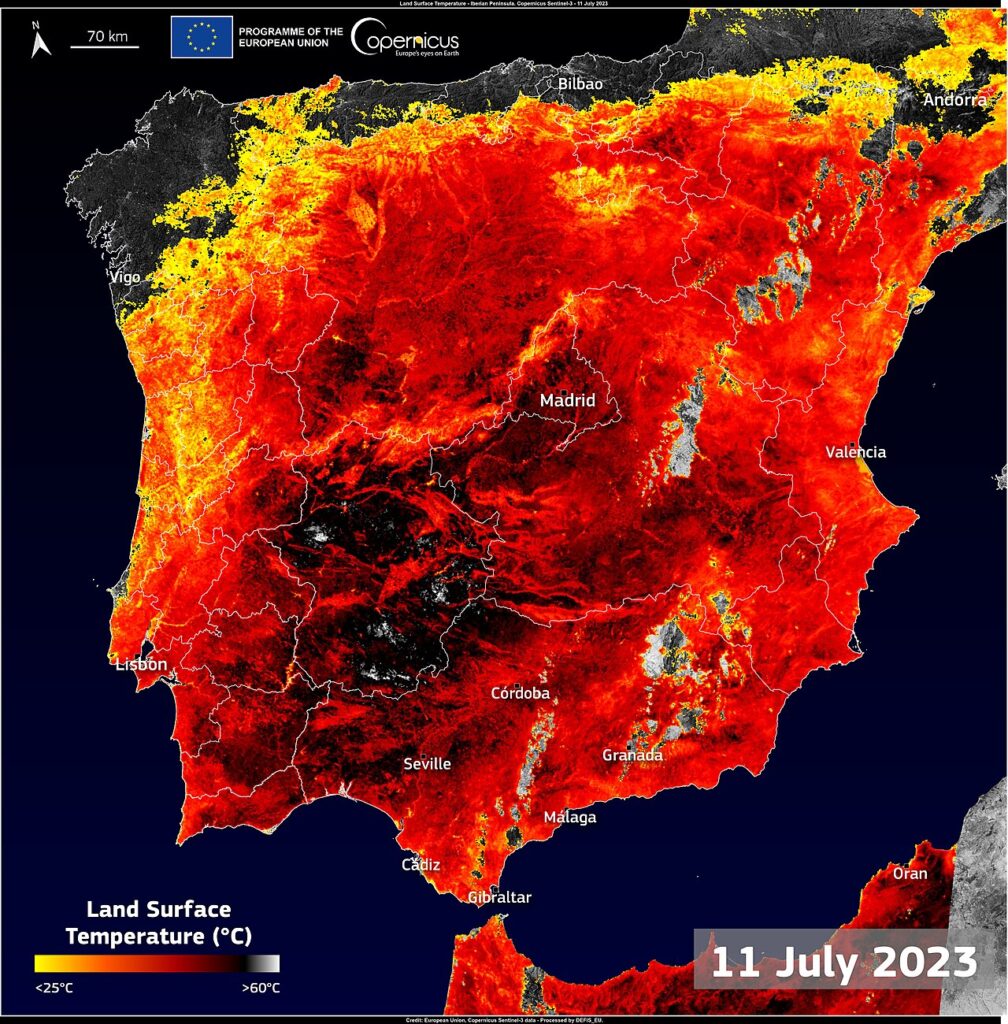
It was western Europe’s hottest summer on record — about 2.9°C above the 1991–2020 average. “Much of Western and Northern Europe, our infrastructure is just not designed to cope with the sort of temperatures that we are seeing now because of the effects of human-caused warming,” Barnes said.
She was blunt about the record: “I think we can be quite confident in stating that the summer of 2026 is likely to have been the worst on record for heat-related mortality across much of Europe.” Italy, France, Spain and Germany recorded the highest numbers of heat-related deaths. Earlier research by the same team found Rome had the highest number of heat-related deaths among European capitals between 2000 and 2025.
Who died
Heat kills the old first. More than half of this summer’s victims were aged 85 and older — people whose bodies cannot regulate temperature and who often live alone in homes that trap the heat. But the toll was not confined to the elderly: more than 800 people aged 20 to 44 also died from heat-related causes.
And the climate fingerprint is growing. Earlier this century, fossil-fuel pollution accounted for about 40% of Europe’s heat deaths; this summer it was nearly two-thirds. Europe is the fastest-warming continent on the planet, with temperatures up 2.5°C compared to pre-industrial times.
Why it matters beyond Europe
Extreme heat is the deadliest form of extreme weather, and Europe’s infrastructure — built for a cooler world — is a preview of what awaits every aging, urbanizing population on Earth. The study’s message to the climate talks in Turkey is the one Barnes put plainly: “We’re well off-track to limit the worst consequences of climate change, and governments need to realize that without faster action and coordination, things will only get worse.”
The summer of 2026 was already confirmed as western Europe’s hottest on record by the EU’s Copernicus service — and the UN’s emissions-gap report now says the 1.5°C target is lost. This study puts a body count on what that failure looks like: 50,391 people, most of them elderly, dead from heat in Europe’s cities in a single summer.