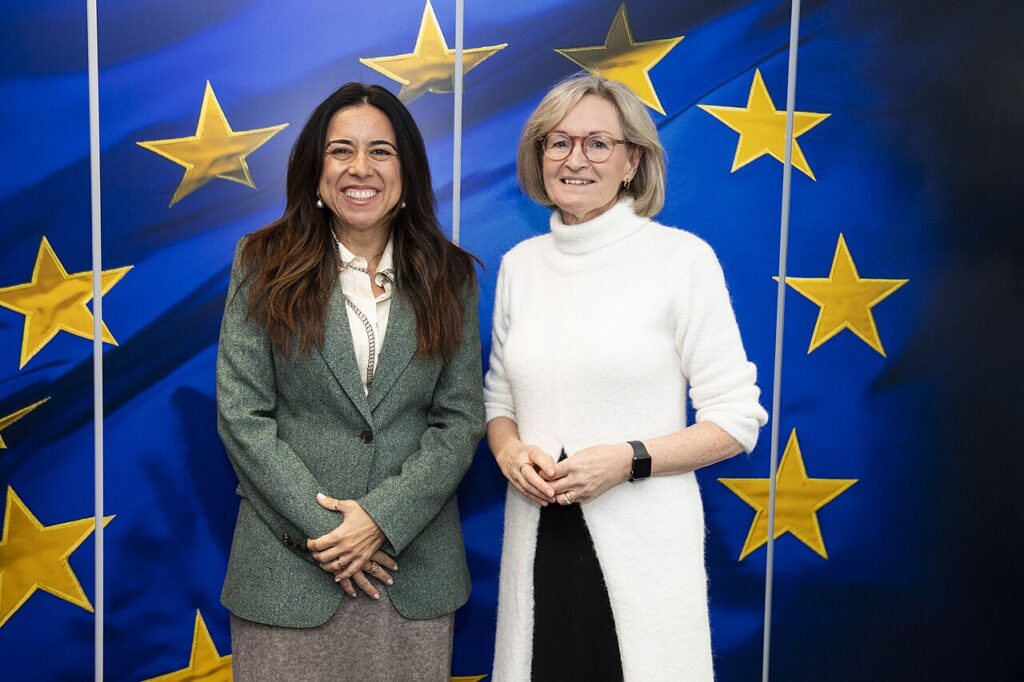
The race to lead the United Nations has a new frontrunner — and she could make history. The United Arab Emirates has formally nominated its top diplomat, Lana Zaki Nusseibeh, to be the next UN secretary-general, a late entry that could finally break the deadlock gripping the search for António Guterres’ successor.
The nomination was submitted in a letter from UAE President Mohamed bin Zayed Al Nahyan to the presidents of the UN General Assembly and Security Council, the UAE’s official WAM news agency announced. Nusseibeh, currently the UAE’s minister of state for foreign affairs, served as the country’s permanent representative to the United Nations from 2013 to 2024 — a decade in which she twice presided over the Security Council and led the Executive Board of UN Women.
If she wins, Nusseibeh would be the first woman ever to hold the job — and the first person of Palestinian descent. She would be only the second secretary-general from the Middle East, after Egypt’s Boutros Boutros-Ghali held the post in the 1990s.
“I am standing to be Secretary-General because I believe this is a moment to act with greater urgency: to act earlier, bring people together across difference, and drive the work forward until it produces concrete results,” Nusseibeh said in her candidacy announcement, adding that she has taken a leave of absence from her ministerial post to pursue the bid. In her vision statement, she said she wants to serve while “speaking frankly with every government and answering to none.”
Her arrival comes at a moment of genuine crisis for the UN. Six rounds of secret Security Council straw polls have failed to produce a winner: the latest ballot on October 16 left Costa Rica’s Rebeca Grynspan narrowly ahead with nine “encourage” votes, but every candidate in the field carried at least one “discourage” vote from the five permanent, veto-wielding members — China, France, Russia, the United Kingdom and the United States. Under the UN Charter, the General Assembly appoints the secretary-general only on the Security Council’s recommendation, and any of the five can veto. Guterres’ term ends December 31, and Senegal’s Macky Sall quit the race earlier this month after the sixth deadlocked vote, leaving seven contenders — until now.
The sixth deadlocked ballot revealed how tightly the veto powers were squeezing the field, and Sall’s withdrawal a day later narrowed it further. Washington’s reported opposition to all seven of the remaining candidates had left diplomats talking about opening the race to new names. Abu Dhabi appears to have been listening.
The UAE’s bet rests on a simple calculation: it has working ties with all five permanent members, and its nominee carries none of the political baggage that sank the others. Nusseibeh told Reuters she wants to restore the world body’s role as “a problem-solver rather than as a spectator to the world’s crises.”
Why does this matter beyond the diplomatic bubble in New York? Because the next secretary-general inherits an organization many now question can still function. The wars in Ukraine and Gaza, the conflicts in Sudan and the Sahel, the policing of a destabilized Haiti — all sit on the UN’s desk, and all have tested a body that many governments openly accuse of paralysis. A secretary-general acceptable to Washington, Moscow and Beijing simultaneously would be the first in years, and the person who lands the job will shape how the world responds to its biggest crises for the next decade.
Whether Nusseibeh is that person remains to be seen. What is certain is that the race has changed shape: the deadlock that froze six straw polls now has a new variable, and the Council’s next moves will show whether Abu Dhabi’s gamble paid off. The UAE’s nomination letter was filed formally with the Assembly and Council presidents in line with UN procedure, and Council members are expected to weigh her candidacy in the coming weeks — with diplomats negotiating whether to hold another straw poll as early as this Friday or push it to next week.