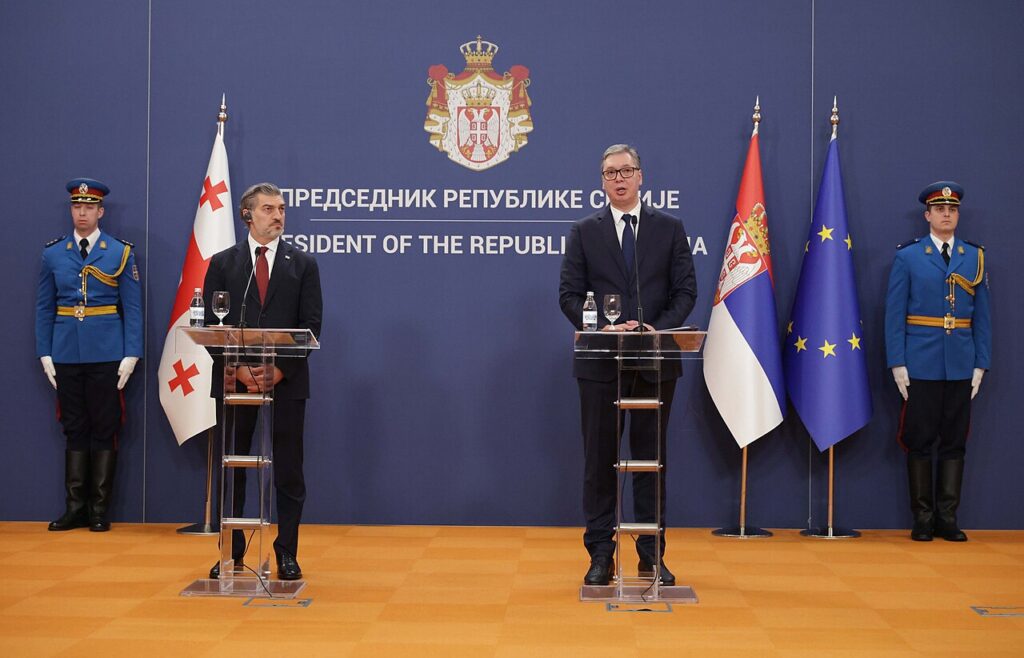
On Sunday, Serbia votes — and for the first time in over a decade, the outcome is genuinely in doubt. A student-led movement born from street protests over a deadly corruption scandal goes into the snap parliamentary election as the greatest threat Aleksandar Vučić’s long rule has ever faced.
The election, called by Vučić in September — he resigned the presidency on September 27 to run for prime minister — will fill all 250 seats of the National Assembly, with 126 needed for a majority. More than 6.4 million ballots have been printed for 8,392 polling stations. It is the country’s third snap election in six years.
The challengers no one planned for
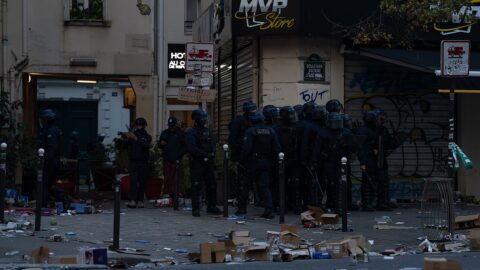
The opposition “Student List – Students Are Winning” did not exist as a political force two years ago. It grew out of the nationwide student-led protests that erupted after a concrete canopy collapsed at Novi Sad railway station in November 2024, killing 16 people — a disaster protesters blamed on the corruption they said rots the country’s public works.
Its 250 candidates read like a cross-section of the Serbia the protesters say they want: doctors, engineers, professors, farmers, actors. The list’s ballot holder is Ilija Srdanović, a cardiology professor. “We are political amateurs, but we are experts,” said candidate Milica Jovanović, an assistant professor — a line that has become the campaign’s calling card.
Vučić’s SNS-led coalition, “Aleksandar Vučić – United Serbia,” closed its campaign with a rally in a Belgrade sports hall on Thursday. Vučić has campaigned the way he always does — relentlessly, with 129 live television appearances in August alone, plus a TikTok-era ground game. But this time the polls suggest the machine may not be enough.
What the polls say — and don’t
The surveys disagree with each other, which is itself part of the story. An Ipsos poll conducted October 20–22 put Vučić’s coalition at 47.4 percent against 40.0 for the Student List — but that poll was commissioned by Vučić’s own list. An earlier survey by the NSPM agency found the Student List ahead, 44.5 to 42.7, among decided voters. An online survey had them nearly tied.
“The protests changed the society. It showed people they are not alone,” Florian Bieber, a professor of Southeast European politics at the University of Graz, told Reuters. A Teneo consultancy analysis noted that a student-led government would pursue “broad reforms to tackle corruption, overhaul key public institutions and companies, and dismantle patronage networks” — while warning that bureaucratic resistance could bring “short-term institutional instability.”
The fault lines beneath the vote
Two issues will define whatever government emerges. The first is Kosovo, which Serbia still claims as its territory: the Student List has taken a hard line, proposing to review EU-brokered agreements and even floating a referendum on EU membership within six months of taking office. The second is Russia — the students have signalled continuity in relations with Moscow and no sanctions, a stance Brussels will not love.
Serbia has been an EU candidate since 2012, but accession talks have been frozen since 2021, with Brussels tying progress to Kosovo normalisation and alignment with EU foreign policy. Moscow, meanwhile, has offered explicit support to the government, portraying the protests as a Western-backed “colour revolution” — while the US Congress has voiced concern about democratic standards.
There are also questions about the playing field itself. An investigation by the BIRN journalism network collected more than 150 testimonies from public-sector employees who said they were pressured to vote for the ruling party or attend its rallies. International monitors from the OSCE are watching; their interim findings noted unequal media access and misuse of state resources.
Why this matters beyond Serbia
Serbia is the largest country of the Western Balkans, the region the EU has spent two decades trying to anchor — and the one where Russian and Chinese influence runs deepest. A student-led government in Belgrade would be the most significant political upset in the region in a generation: proof that the protest movements which have rattled governments from Tbilisi to Belgrade can actually take power. A Vučić victory, on the other hand, would likely mean further drift from Brussels and deeper embrace of Moscow.
Polls close Sunday evening. By Monday morning, Europe will know whether the students who marched against corruption can govern against it.
Background: the Kosovo war-crimes trial that still shapes Serbia’s politics.