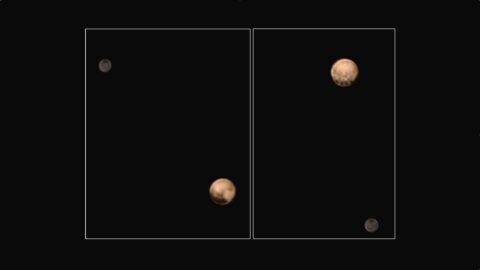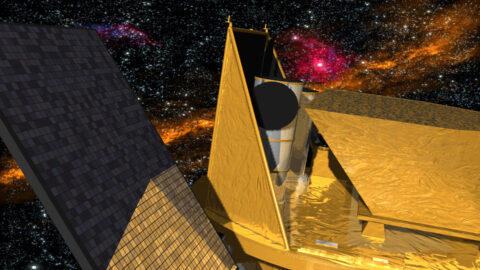
On the evening of October 13, astronomer Matthew Holman was running data from the Vera C. Rubin Observatory in Chile through a search program he had built with a colleague, looking for objects that moved against the fixed stars. The program sifts through billions of detections, comparing them, trying to find the ones that belong to the same distant body. That night, it found something unusually large — and unusually bright.
“My first reaction was one of excited disbelief,” Holman said. “Objects like this are very rare, so I immediately started checking whether I or the code had done something wrong.”
Neither had. The object, announced on Tuesday, October 27, by the International Astronomical Union’s Minor Planet Center, is a candidate for a new dwarf planet — a large, bright world orbiting the Sun beyond Pluto, in a region of sky so crowded with Milky Way stars that it had escaped every earlier survey. It carries the provisional designation 2026 ED138, and if confirmed, it would be among the largest dwarf planets ever found beyond Neptune.
What we know about ED138
ED138 currently sits about 46 astronomical units from the Sun — one astronomical unit being the Earth–Sun distance. Pluto, by comparison, averages about 40. Its orbit is tilted almost 25 degrees off the plane of the solar system, which classifies it as a “hot-classical” trans-Neptunian object: a body that was likely knocked out of its original orbit long ago by gravitational encounters with Neptune.
Based on its distance, brightness and estimated reflectivity, the team estimates ED138 is between 600 and 1,500 kilometres across. Icy bodies that large are expected to be round under their own gravity — and roundness is the key test. To qualify as a dwarf planet, an object must orbit the Sun and be massive enough for its gravity to pull it into a near-spherical shape, without having cleared its neighbourhood of other debris (that last test is what separates planets from dwarf planets). Infrared observations are still needed to pin down ED138’s exact size and confirm its shape.
The discovery itself is a story about persistence. Rubin’s Simonyi Survey Telescope observed ED138 thirty times on twenty nights between March 4 and July 11, 2026. Colleagues then searched Rubin’s catalogues and found twenty more observations going back to March. Archival images from the Dark Energy Camera in Chile, recovered through the Asteroid Institute’s precovery service, extended the trail all the way back to 2016 — more than a decade of orbit, assembled after the fact.
That ability to look backward is part of what makes Rubin different. “Once we identify a new object, we can search back months, and sometimes even decades, finding it in images where nobody knew to look,” said Mario Jurić, Rubin’s solar system lead scientist, who presented the discovery with Holman at a planetary science meeting in Spokane, Washington. “This ability to both discover and ‘precover’ objects is transforming how quickly and accurately we can determine their orbits.”
Why it hid for so long
ED138 was found in a region of sky close to the plane of the Milky Way — a field packed with millions of stars. To most telescopes, it was lost among the background light. Rubin found it because it does something no earlier survey could: it photographs the entire southern sky again and again, with a camera large and sensitive enough to pick moving objects out of the crowd, night after night.
That is why the discovery matters beyond one object. Before its main survey formally began in June 2026, Rubin’s team had already submitted observations of more than 11,000 new asteroids to the Minor Planet Center, including roughly 380 trans-Neptunian objects. At the time they called it “the tip of the iceberg.” ED138, the observatory’s first dwarf planet candidate, is the first sign they were right.
“Rubin is giving us an unprecedented capacity to explore the sky through a combination of speed, depth, and precision,” Jurić said. “And the discovery is just the beginning.” If confirmed, ED138 would join just five recognised dwarf planets — Pluto, Ceres, Eris, Haumea and Makemake — a family so small that adding a member is an event. The observatory will now image the southern sky for ten years, and as Holman put it, “any others hiding in the places earlier surveys skipped are now within reach.”
For readers who followed this year’s other sky stories — the first “phoenix planet” orbiting a white dwarf and Swift’s 22 years of gamma-ray bursts — the thread is the same: the sky we thought we knew still has rooms we have never entered. ED138 was not found at the edge of the observable universe. It was found in our own backyard, hiding in plain sight among the stars. Full details are in Rubin Observatory’s announcement.