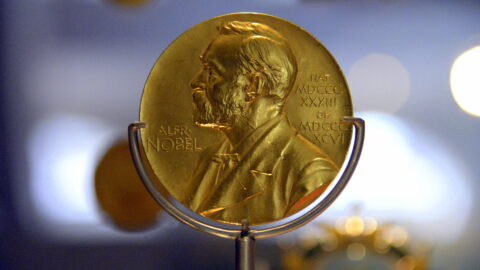
Informopedia Explains: in January this year, a genuine Nobel Peace Prize medal — a disc of gold on a ribbon — changed hands inside the Oval Office. Venezuelan opposition leader María Corina Machado, the 2025 laureate, presented her medal to US President Donald Trump, who had openly coveted the award. The Norwegian Nobel Institute had to issue something close to a legal warning: the prize “cannot be revoked, shared or transferred” — the honour stays with the winner even if the medal changes hands. The world’s most famous peace award had become a diplomatic token, and its own institution had to clarify that it is not a trophy you can pass around.
On Friday, October 9, the five-member Norwegian Nobel Committee will announce the 2026 winner at 11:00 am in Oslo. Oddsmakers and analysts are naming favourites. And whatever name is read out, a sizeable part of the planet will consider it an outrage. Not confusion — the physics prize never sparks protests. Outrage. Why does this one award, above all the rest, keep detonating?
The will that nobody fully understands
Start with the document everything flows from. In 1895, Swedish industrialist Alfred Nobel — whose fortune came largely from inventing dynamite and selling explosives, an irony the peace prize has never shaken — willed the prize to whoever had “done the most or the best work for fraternity between nations, for the abolition or reduction of standing armies and for the holding and promotion of peace congresses.” Three clauses, written by a 19th-century arms maker. Still the legal foundation of every decision.
Nobody knows why Nobel handed this prize to Norway rather than his native Sweden. The other Nobels are awarded by Swedish institutions; the peace prize goes to a committee elected by Norway’s parliament, the Storting. Historians treat it as a quirk of the era — Norway and Sweden were in a political union, and Nobel left no explanation. The arrangement stuck, and so the most political of all the prizes is decided in Oslo while the rest are decided in Stockholm.
Five people, chosen by politicians
The mechanics are worth knowing because they feed half the criticism. Nobel’s will says the prize goes to a committee “of five persons, to be elected by the Norwegian Storting.” In practice, the Storting appoints them for six-year terms, renewable, with the composition reflecting the balance of power in parliament. So the people judging world peace are, structurally, political appointees.
That has caused trouble before. In 1936 the prize went to German journalist Carl von Ossietzky, a critic of the Nazi regime, and the fallout was so severe that sitting government ministers were barred from the committee. In 1977, sitting parliamentarians were barred too. Members today are often retired politicians — party leaders, former ministers — alongside the occasional academic or human-rights figure. The committee’s secretary sits in on deliberations but does not vote, and no minutes are kept.
The current chair is Jørgen Watne Frydnes, who will read Friday’s announcement. This year the committee sifted through 287 nominations — 208 individuals and 79 organisations. The official list stays secret for fifty years, so every “favourite” you read about this week is speculation — lobbying, betting markets, guesswork. When the winner is announced, nobody can check the reasoning against the shortlist. Trust is the only currency, and the committee spends it aggressively.
Giving peace prizes to people at war
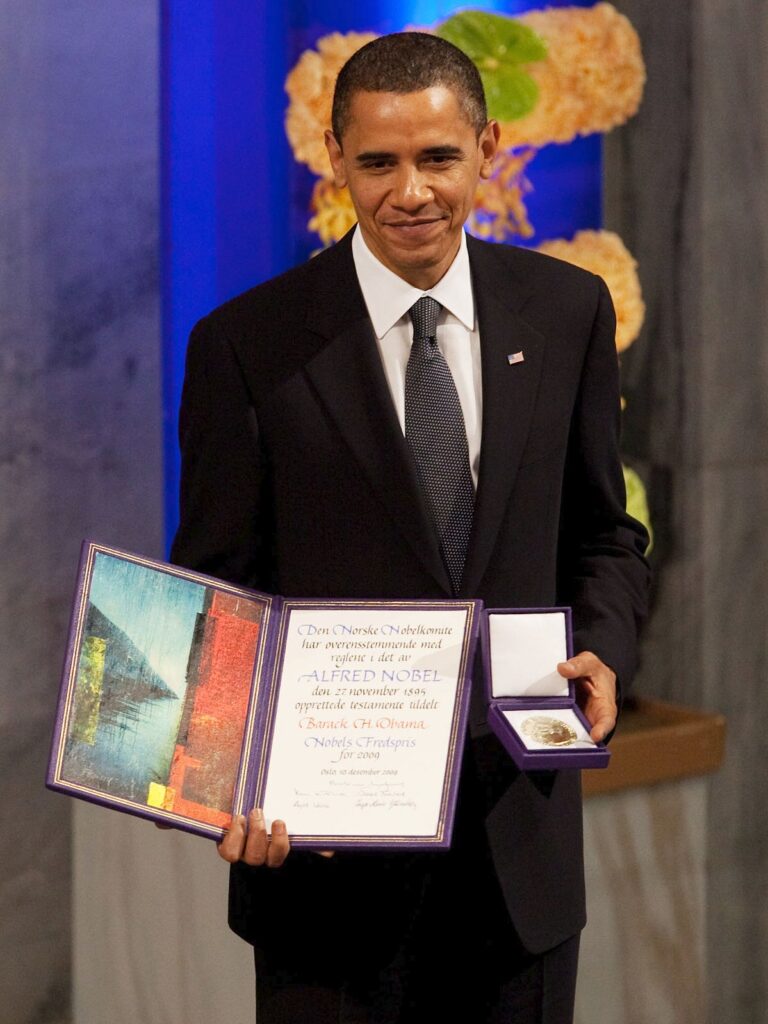
The most famous controversy is Barack Obama, 2009. The committee cited his “extraordinary efforts to strengthen international diplomacy” — but nominations had closed on February 1, when Obama had been president for about eleven days. He was being honoured for a presidency that was, in practical terms, two weeks old. Reporters gasped in the room. Even Obama looked startled, and in his December acceptance speech he conceded the point, speaking as a commander-in-chief running two wars.
Years later, the committee’s own former secretary, Geir Lundestad, admitted in his memoir that the 2009 prize had been a mistake — that even many of Obama’s supporters thought so. By the time Obama travelled to Oslo, he had ordered a troop surge in Afghanistan; the drone campaigns in Pakistan and Yemen followed. To critics, the committee was not rewarding peace achieved; it was rewarding a mood, a repudiation of George W. Bush. Hope is not nothing — but this one looked, to much of the world, like premature celebration.
The older and arguably uglier case is 1973: Henry Kissinger and North Vietnam’s Lê Đức Thọ, honoured for the Paris Peace Accords that were supposed to end the Vietnam War. Lê Đức Thọ declined the prize outright — the only laureate in history to do so — saying peace had not actually been achieved. He was right: the fighting continued, and Saigon fell in 1975. Two of the five committee members resigned in protest. Kissinger, accused over the secret bombing of Cambodia in 1969 and 1970, accepted the prize but skipped the ceremony, donated the money to charity, and later tried to return the award. Internal documents released in 2023 showed the committee knew the war was unlikely to end any time soon. That is the charge that still sticks: the committee knew, and gave it anyway.
Honouring peace that did not last
Another pattern: rewarding a peace that collapses. In 1994 Yasser Arafat, Yitzhak Rabin and Shimon Peres shared the prize for the Oslo Accords. A year later Rabin was assassinated by an ultranationalist opposed to the accords. The process disintegrated, and Arafat led the Palestinian side through the violence of the second intifada. The 1978 prize to Egypt’s Anwar Sadat and Israel’s Menachem Begin, for Camp David, ended with Sadat’s assassination in 1981.
Ethiopia’s Abiy Ahmed won in 2019 for ending a twenty-year conflict with Eritrea — and in November 2020 a brutal war began in Ethiopia’s Tigray region, with Abiy’s forces accused of atrocities. The committee’s defence is always the same: the prize encourages an ongoing process; it does not certify a finished one. But critics argue the committee keeps crossing the line between encouraging peace and prematurely declaring it — between a bet on the future and a verdict the past has not earned.
The heroes who changed
Then there are the laureates who age badly. Aung San Suu Kyi won in 1991 as a symbol of non-violent resistance to Myanmar’s military dictatorship, collecting the prize while under house arrest. For two decades she was the award’s moral centrepiece. Then she entered government, and in 2017 the military carried out mass killings and gang rapes “with genocidal intent” against the Rohingya Muslim minority, according to a United Nations investigation. Suu Kyi failed to condemn the crackdown. Desmond Tutu, a fellow laureate, wrote that if the price of power was silence, “the price is certainly too high.” She was arrested in the 2021 military coup and remains detained.
The 2012 prize to the European Union baffled a different set of critics: the citation praised the EU for advancing “peace and reconciliation, democracy and human rights in Europe” — while European governments exported arms and hardened borders against the very regions the prize claims to care about. A prize for humanity, critics asked, or a prize for Europe?
Why it will happen again this Friday
Put the pieces together and the outrage starts to look structural rather than accidental. The peace prize is the only Nobel that judges politics directly. Nobody riots over the chemistry prize because chemistry has right answers. Peace does not. Nobel’s will is vague enough to justify almost anything, the judges are political appointees operating in total secrecy, and the committee has a long habit of awarding intentions rather than results — which makes every choice a prediction about the future, and predictions are always arguable.
That habit also makes the prize a weapon. Nominators know a public nomination is a publicity move; the 2026 field reportedly includes everyone from Sudan’s volunteer Emergency Response Rooms to Volodymyr Zelenskyy to Donald Trump himself, who has been nominated again. Trump spent months making clear he believes the prize is owed to him, and last year’s pick — Machado, whose medal now sits with the man who coveted it — ensures Friday’s decision will be read, fairly or not, as a statement about him. Analysts say the shadow of last year’s drama will weigh on the committee’s thinking.
So expect the pattern to hold. At 11:00 am Oslo time on Friday, Jørgen Watne Frydnes will read a name. Somewhere, someone will call it inspired; somewhere else, a disgrace. They may both be reading the same facts. That is the real lesson of the prize’s long, loud history: the Nobel Peace Prize does not settle arguments about who deserves peace’s highest honour. It starts them — and a prize that starts arguments, year after year, for 125 years, is doing something no physics medal ever could. Whether that something is the point of the award or its failure is the argument we will all be having again on Friday.