“At normal speed?”
“Yes.”
That two-word exchange, captured on audio recordings published by Spanish newspaper El País and public broadcaster RTVE, is now the most damning piece of evidence in the investigation into Wednesday’s high-speed train disaster near Toledo, in which at least 68 people were killed. The recordings appear to show a Madrid control centre clearing a Renfe train to resume full-speed running even though the train stopped ahead of it had not moved — and, minutes later, being told that it still had not.
Three recordings have been released. Together they reconstruct the final 20 minutes before the crash in uncomfortable detail, and they have turned a technical failure into a question about human decisions.
At about 8:30 a.m. on Wednesday, a communication failure between computers shut down the LZB automatic train-control system along a 63-kilometre stretch of the Madrid–Seville high-speed line. Trains on the section stopped automatically, and the round-the-clock control centre at Madrid’s Atocha station took over. Among them was an Iryo service carrying 147 passengers, halted on the line near Urda, in Toledo province.
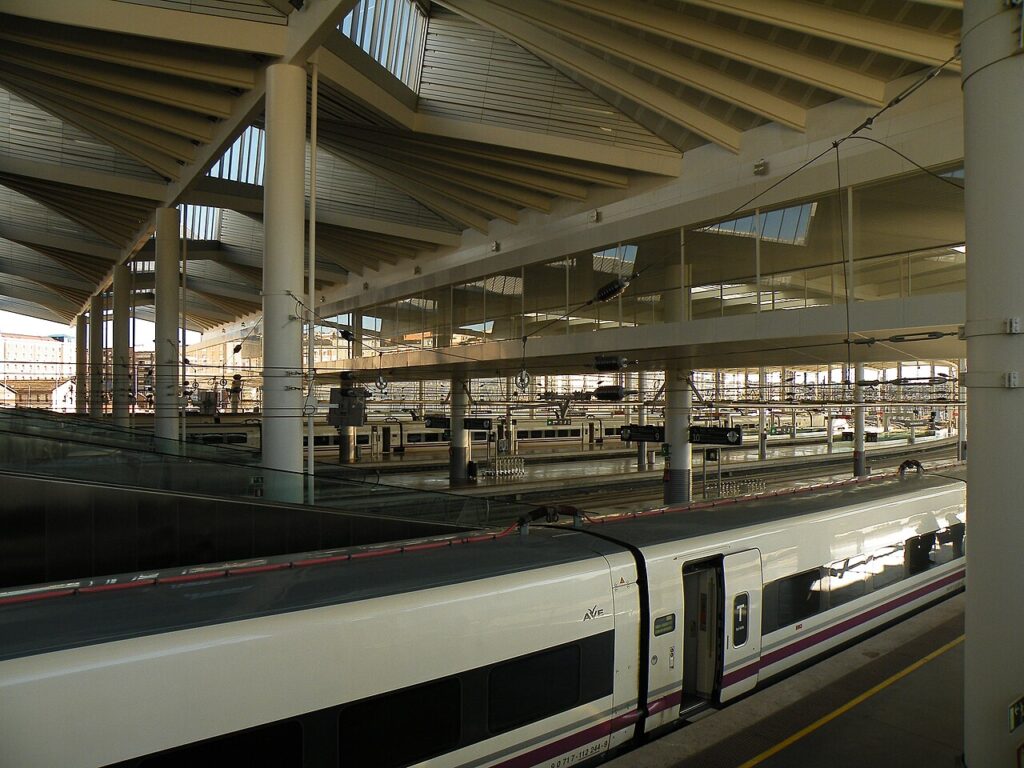
At 8:36 a.m., according to the transcript published by El País, the Atocha operator contacted the driver of Renfe service 2080, an AVE train carrying 397 passengers from Madrid to Seville, which was sitting about 25 kilometres behind the Iryo train. “Turn LZB off and on again. Continue driving. Then continue driving at normal speed under BSL protection,” the operator said. BSL — Lateral Signalling Block — is the back-up procedure used when automatic signalling fails. The driver asked: “At normal speed?” The controller replied: “Yes.”
At 8:41 a.m., the Iryo driver contacted the same control centre to report losing the signal and being stopped at the entry signal to Urda. The driver was also told to resume. Seven minutes later, the Iryo driver called back: the train would not restart. “The train won’t allow me to control the [security] system. That’s why I am still stopped in front of the entry signal,” the driver said.
No warning followed in the minutes before impact. The Renfe train, which the ministry says should have been limited to 40 km/h — slow enough to stop within sight of anything ahead — instead travelled about 25 kilometres and reached around 200 km/h before ploughing into the back of the stationary Iryo train at about 8:53 a.m. Two of the Iryo train’s carriages derailed and tumbled down an embankment. Of the 68 dead, 44 were on the Iryo service. More than 100 people were injured, 15 of them seriously, and emergency crews worked through the night under floodlights to cut open carriages. Many of the dead have yet to be identified.
Spain’s transport minister, Óscar Puente, has called the decision to let trains move again without speed restrictions “inexplicable”. He has cleared the drivers of blame and said the control centre had time to notice and correct the error. “The decision to resume traffic, while that system had not been restored, belongs to the control centre,” he said. A Guardia Civil investigation is under way alongside a formal probe by Spain’s independent railway accident investigation commission, and a control-centre operator has been questioned.
The recordings raise the questions investigators must now answer: why was the order given without checking whether the line ahead was clear, why was it not corrected when the Iryo driver reported still being stopped, and whether staffing, training or procedures at the control centre failed alongside the computers. The answers matter beyond one shift at Atocha, because the system that failed is the one supposed to make high-speed rail safe when humans get it wrong.
Spain began three days of national mourning on Thursday, with flags at half-mast and Prime Minister Pedro Sánchez promising a reckoning. “We will get to the bottom of this. If there has been negligence, it will be known,” he said at the emergency command post in Urda on Wednesday evening. Most parties have suspended campaigning for next month’s general election, though the far-right Vox party refused, accusing the government of using mourning to silence criticism of the rail network. About 1,500 people protested outside the Transport Ministry overnight, according to TVE.
The disaster is Spain’s second deadly high-speed crash of 2026 on the same Madrid–Seville corridor, after the Adamuz derailment in January killed 46 people, and its deadliest rail accident since the Santiago de Compostela derailment of 2013, which killed 79. That record is why the audio matters so much: it suggests this was not only a computer failure but a chain of decisions, each of which could have broken the chain. For the families still waiting for names, the recordings do not bring anyone back — but they narrow the question from what happened to who allowed it.
Earlier coverage: Spain’s Toledo Train Crash Death Toll Rises to 68 as Minister Points to Signalling Blackout and Spain Begins Three Days of Mourning as Sánchez Vows a Full Inquiry Into the Toledo Rail Disaster.