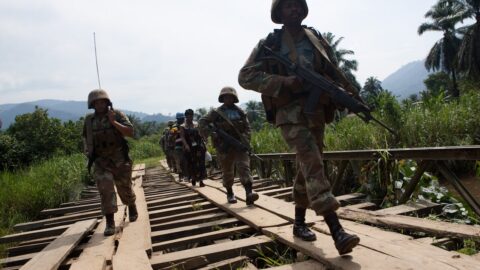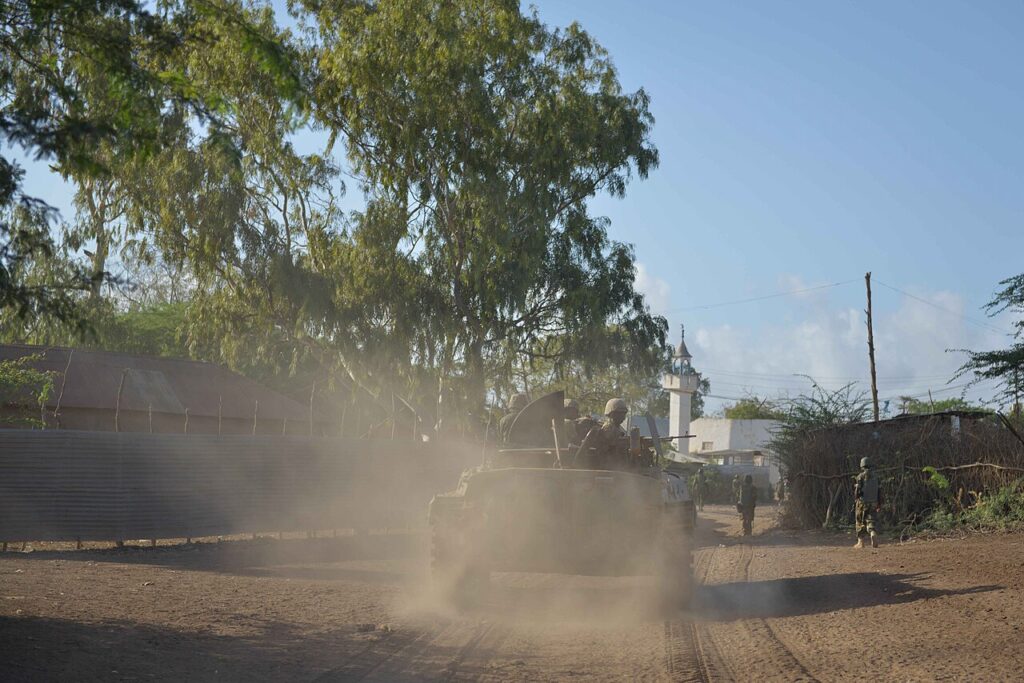
Uganda has begun pulling its soldiers out of Somalia, closing a deployment that has lasted almost twenty years and helped shape the fight against the al-Qaeda-linked militant group al-Shabaab.
The Uganda People’s Defence Forces (UPDF) announced on Monday, 2 November, that the drawdown had started with immediate effect. The first troops to leave are those serving under a bilateral security arrangement between Uganda and Somalia’s federal government, rather than under the African Union mission. Ugandan reports put that first returning group at 109 soldiers, who had already arrived back in Uganda when the announcement was made.
“The UPDF has embarked on the drawdown of troops deployed in Somalia under bilateral arrangements with [Somalia’s] federal government, effective immediately,” said Colonel Chris Magezi, the UPDF’s acting director of defence public information, adding that the first cohort had already returned home.
Magezi said the bilateral withdrawal would be completed within days. The wider exit will take far longer: Uganda will gradually withdraw all of its forces, including those serving under the African Union Support and Stabilisation Mission in Somalia (AUSSOM), by the close of 2027.
That makes Uganda the first of the African Union’s troop contributors to set a firm end date for its own presence. Uganda has about 4,500 troops in Somalia under AUSSOM, according to state media cited by Reuters, with an additional, undisclosed number deployed under the separate bilateral arrangement.
Uganda was the first African country to send troops to Somalia, in March 2007, under the African Union Mission in Somalia (AMISOM). The mission was created to back Somalia’s transitional government and push al-Shabaab out of Mogadishu and other strategic towns. It was later reconfigured as the African Union Transition Mission in Somalia (ATMIS), and then replaced in January 2025 by AUSSOM, whose stated aim is to help Somali forces take full responsibility for the country’s security. The mission’s own planning documents describe AUSSOM as a multidimensional African Union-led peace support mission approved by the United Nations — read AUSSOM’s own account of its mandate here.
For two decades, Ugandan soldiers have been among the principal foreign forces holding ground in south-central Somalia, including the capital and the farming regions of Lower and Middle Shabelle, where al-Shabaab has repeatedly attacked military bases, towns and supply routes. The group’s insurgency against Somalia’s government has lasted about as long as Uganda’s deployment, and it continues to carry out bombings and gun attacks against military and civilian targets.
The withdrawal has not come without warnings. In a letter dated 31 October, AUSSOM told the United Nations Support Office in Somalia that the drawdown could leave parts of Lower Shabelle vulnerable to al-Shabaab attacks, according to two diplomatic sources cited by Reuters. Somali State Minister for Foreign Affairs Ali Omar struck a similar, cautious note.
“Things are not dire now, but it could create problems if their troops suddenly pull out,” Omar told Reuters.
The timing also matters for the mission’s finances. Troop-contributing countries have raised concerns about delayed reimbursements and shortfalls in international support, and the African Union has been pressing partners for predictable funding for AUSSOM. Uganda’s announcement follows talks between Somali President Hassan Sheikh Mohamud and Ugandan President Yoweri Museveni, during which Somalia reportedly asked for an extension of Uganda’s presence — a request the drawdown now appears to have overtaken.
Why this matters beyond Somalia. This is the clearest test yet of a question that now runs through African security policy: can a Somali army built up over twenty years of foreign backing hold territory on its own? If the handover works, it becomes a model for African-led missions winding down on their own terms rather than collapsing. If Lower Shabelle or other areas slip back under al-Shabaab pressure, it will be read far beyond Mogadishu — by every capital weighing whether to send, fund or withdraw troops from the continent’s other long-running missions. Uganda’s exit, phased over fourteen months rather than done overnight, is designed to give Somali forces time to prove which outcome is coming. The next test will be whether the areas Ugandan troops vacate first stay quiet.
Somalia itself is no stranger to regional security pacts shifting under pressure: it was one of the signatories of the El Alamein declaration signed by Egypt, Sudan, Eritrea and Somalia as war escalated in neighbouring Ethiopia. What happens in Mogadishu rarely stays in Mogadishu.