The number of people killed when Russian bombs hit a humanitarian aid point in southern Ukraine has risen again. Mykhailo Semikin, acting head of the Zaporizhzhia regional military administration, told national television on Tuesday that at least 31 people are now confirmed dead in Komyshuvakha, with five injured and almost 50 still unaccounted for.
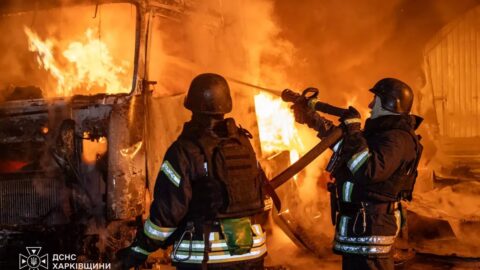
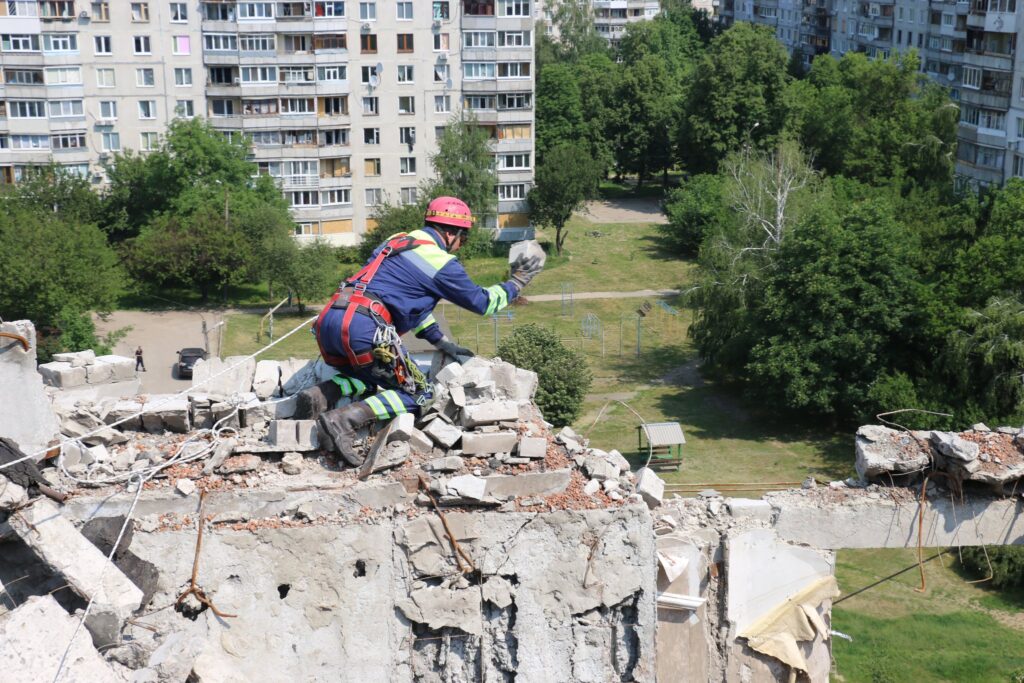
The revised figure replaces the toll of 29 dead and 48 missing reported earlier on Tuesday, and it may move again. Rescue teams were still working through the wreckage on Tuesday, carrying bodies away wrapped in white sheeting.
Semikin described the scale of what happened in the village as terrifying, calling it one of the worst tragedies in terms of civilian victims in the region since the start of the full-scale war.
The attack struck on Monday, 2 November, in Komyshuvakha, a front-line village in the Zaporizhzhia region. Residents had gathered at a local school where humanitarian supplies are handed out every Monday, and where people also shelter. Ukrainian officials say the first bombs fell as people arrived to collect aid, and a second wave then hit the shelter where they had taken cover. At least nine aerial bombs, each weighing around 3,000 kilograms, were reported to have struck the village.
Among the dead are two rescue workers, Denys Konovalenko and Oleksii Sushchevskyi, both aged 44, and four police officers. The two rescuers were killed in the follow-up strike, the kind of repeat attack on a site already hit that emergency services call a double-tap, designed to catch responders as they arrive. Five people were taken to hospital.
Search work has repeatedly stopped and restarted. Semikin has said crews were forced to suspend operations several times because of Russian drones over the area, and officials have warned that the danger of a further strike has not lifted. Zaporizhzhia region declared three days of mourning.
Moscow has given a different account of the strike. Russia’s defence ministry said on Tuesday that its forces had targeted Ukrainian military units in areas around Komyshuvakha and two other settlements in the region, claiming up to 25 Ukrainian servicemen were killed along with 15 vehicles and an electronic warfare station. It has not addressed the Ukrainian account that the site was a civilian aid point and shelter.
The bombing came hours after a six-day humanitarian ceasefire around the Russian-occupied town of Oleshky, in the neighbouring Kherson region, expired on Sunday without reported breaches. Delegations from the United States, Ukraine and Russia are due to meet in Abu Dhabi on 10-11 November, led on the American side by special envoy Steve Witkoff and Jared Kushner, to discuss security arrangements, de-escalation and humanitarian measures.
The aid-centre strike was part of a far wider overnight barrage. President Volodymyr Zelenskyy said Russia launched 289 attack drones, 17 ballistic missiles and 59 cruise missiles across nine regions overnight into Tuesday, with energy infrastructure as the main target, and emergency power cuts were imposed in Kyiv, the Kyiv region and Dnipropetrovsk.
In Kharkiv, the wounded count from a strike on a city clinical hospital has itself been revised upwards, from at least 62 to 73. Zelenskyy said the hospital was directly struck, damaging its cardiology department while patients were receiving treatment. Mayor Ihor Terekhov said more than 1,000 windows were shattered at the facility and nearby apartment buildings, and more than 200 patients had to be moved elsewhere. In the Dnipro region, rescuers pulled a woman alive from rubble on Tuesday morning, after an attack there killed one person and wounded 17.
The wider civilian toll keeps climbing: the United Nations Human Rights Monitoring Mission recorded at least 328 civilians killed and 2,105 injured in Ukraine during September 2026 alone, and 2,570 deaths and 15,211 injuries between January and September — 59 per cent higher than in the same period of 2025.
That is why this matters beyond one village. Aid points exist because front-line communities cannot reach shops or pharmacies any other way. When such a point is hit twice — first as people gather, then as they shelter — it tells every other village weighing whether to queue for food next Monday that gathering itself carries risk, and it tells rescue crews that their work may draw a second strike. With winter approaching and the campaign against Ukraine’s power grid intensifying, the question for the Abu Dhabi talks is not only where a ceasefire line might fall, but whether civilians collecting aid can ever be kept out of the war.
Related coverage on informopedia.net: our original report on the Komyshuvakha aid-centre bombing, our earlier update when the toll reached 29 amid the overnight barrage, and what the Abu Dhabi talks on 10-11 November are expected to cover. All three internal links were verified HTTP 200 before publishing.