At a glance: South Africans are voting today, Wednesday 4 November, in municipal elections across all nine provinces. Polls are open from 7am to 9pm local time, results are expected on Sunday, and pre-vote polling suggests the African National Congress (ANC) — the party that has governed South Africa since the end of apartheid in 1994 — could record its worst result ever. The election is a public holiday, and more than 500 parties are contesting councils in nearly 300 municipalities.
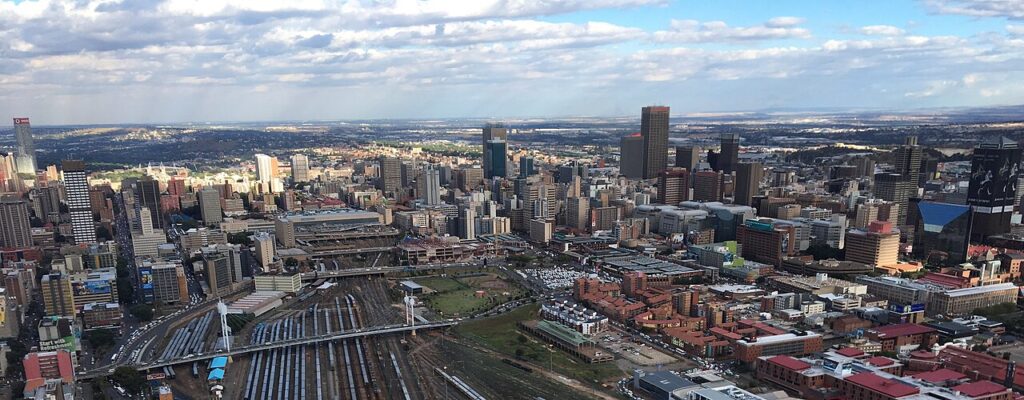
The ANC’s problem is not ideology. It is taps, lights and rubbish. In Johannesburg, the country’s economic hub and the election’s biggest prize, taps have run dry for at least ten days in some neighbourhoods after a water-system collapse that began on 19 October. A South African Human Rights Commission inquiry released on Monday found that nearly 45 percent of the water flowing through Johannesburg’s municipal pipelines is lost through leaks and poor infrastructure. Voters do not need a pollster to tell them what that feels like.
An Ipsos survey released before the vote put ANC support at 30 percent, down from 46 percent in the 2021 local elections. The Democratic Alliance (DA), the main opposition, was projected to rise to 25 percent from 22 percent. The ANC dropped below 50 percent support for the first time in the 2021 municipal elections; this time, according to the polls, it could fall below 40 percent. President Cyril Ramaphosa rejected the predictions at a final rally on Sunday. “What I’m seeing here is that the ANC is going higher and higher and on the 4th [of November] we will show those naysayers,” he said, according to BBC News.
Johannesburg is where the national story will be decided in miniature. The DA’s mayoral candidate there, Helen Zille, is projected to win the most votes but fall short of a majority — which would mean another coalition negotiation in a city that has already cycled through fragile coalitions. The other metros to watch are Tshwane, home to the administrative capital Pretoria, and eThekwini, which includes the port city of Durban, where former president Jacob Zuma’s uMkhonto weSizwe party is strong.
Turnout is the other shadow over the day. Participation in South Africa’s local elections has fallen from 57.94 percent in 2016 to 45.87 percent in 2021, and parties spent their final rallies urging supporters simply to show up. Voters must cast their ballots at the station where they are registered, and must bring an accepted South African identity document — driving licences and passports are not accepted.
Why this matters beyond South Africa: these are the first elections since the ANC formed a multi-party coalition Government of National Unity after the 2024 general election, and the outcome will set the stage for the next national election in 2029 and for the ANC succession race as Ramaphosa’s term as party leader ends in 2027. It also comes days after Washington’s decision to cut South Africa from duty-free trade from January 2027, which has sharpened the question of whether the country’s governing party can still deliver basic services, let alone economic renewal. As voters in the United States also went to the polls this week, South Africa’s election is a reminder that the week’s democratic test is not only an American one — and that for many voters, the verdict is delivered not in speeches, but in whether the water runs.