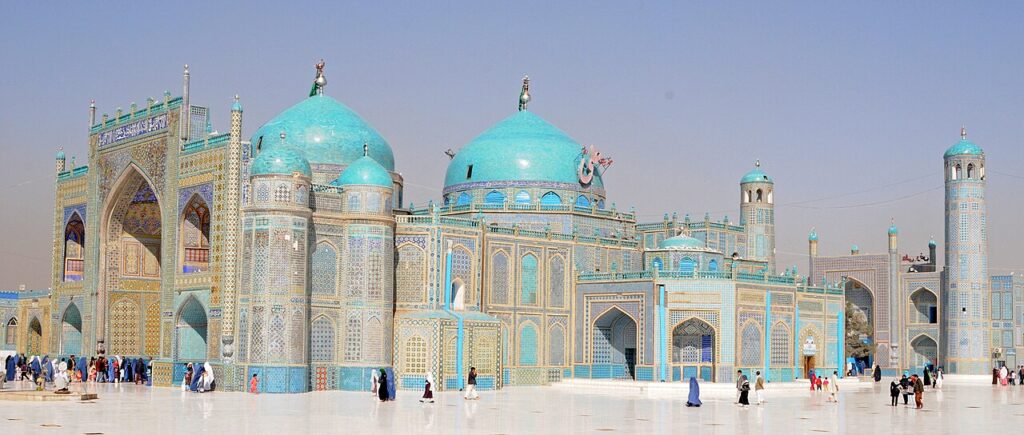
A powerful earthquake struck northern Afghanistan in the early hours of Monday, killing at least 27 people and injuring hundreds, according to the state-run Bakhtar news agency and Afghanistan’s health ministry. The US Geological Survey (USGS) put the quake at magnitude 6.3, at a depth of 28 kilometres, near the northern city of Mazar-i-Sharif.
Balkh province, whose capital is Mazar-i-Sharif, was the worst affected. Bakhtar reported 730 people wounded; a separate account citing health ministry spokesperson Sharafat Zaman Amar put the injured above 950. Early casualty figures after a major quake almost always move as rescuers reach damaged areas, and the gap between those two counts is a measure of how chaotic the first hours were — not a contradiction to resolve from afar. The USGS issued an orange alert, its warning that significant casualties were likely.
The strongest shaking was felt across a wide arc of the north: Aybak, Mazar-i-Sharif, Maymana, Takhar, Kunduz and Sar-e-Pul all reported strong tremors, and the quake was also felt across the border region. The national power company, Da Afghanistan Breshna Sherkat, said electricity imports from neighbouring Uzbekistan and Tajikistan were interrupted by the quake, a reminder of how quickly a natural disaster becomes an infrastructure crisis in a country that depends on imported power.
The timing could hardly be crueller. The quake struck just two months after a devastating earthquake in Afghanistan’s east killed more than 2,200 people, and winter is approaching in a country where many homes are built of mud brick and stone, and where hospitals and rescue services are already stretched thin. Each new disaster lands on communities that have not finished recovering from the last one.
What happens next is a race against cold and collapsed buildings: search and rescue in the worst-hit districts, treatment for the injured, and shelter for families whose homes are unsafe. International aid agencies will be watching whether roads into Balkh stay open and whether the power supply is restored quickly enough to keep hospitals running. And the deeper question — why scientists still cannot predict earthquakes — will be asked again, as it is after every quake, from last month’s magnitude 7.7 earthquake in Panama to this one. The honest answer remains the same: seismologists can map where quakes are likely, but not when. For the people of Balkh, that distinction is cold comfort tonight.