Key takeaways
- Santiago Peña, 47, resigned on Thursday, November 5, three days after Paraguay’s central bank put digital lender ueno into resolution.
- Ueno’s solvency ratio had fallen to 5.56%, less than half the 12% regulatory minimum, leaving about 3 million customers unable to reach their accounts.
- Peña was a shareholder in Grupo Vázquez, the conglomerate that controls ueno, until March 2025. He denies any direct relationship with the bank.
- His own Colorado Party abandoned him, the lower house voted unanimously to impeach, and Vice President Pedro Alliana is set to succeed him.
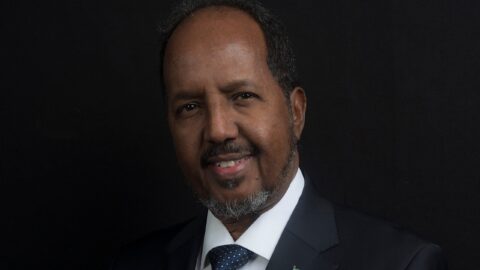
Paraguay’s president resigned on Thursday after a bank collapse froze the accounts of nearly half the country and stripped him of support inside his own party. Santiago Peña, 47, announced the decision in a video posted on social media, hours before lawmakers moved to impeach him.
“I have made the decision to submit my resignation from the Presidency of the Republic,” he said. “I do so with the stability of our country, social peace, and the need to preserve our public institutions in mind.” He added that he would present himself at the Senate impeachment trial and defend himself there.
Three days from intervention to resignation
The crisis moved fast. On Tuesday, November 2, the Central Bank of Paraguay put ueno into resolution — a fast-growing digital lender that had grown from a niche fintech into a mid-sized bank. Resolution is the legal process for winding down a troubled financial institution. The trigger was its solvency ratio: after adjustments to its financial statements, it had fallen to 5.56%, less than half the 12% minimum required by law.
About 3 million people banked with ueno in a country of roughly 6.5 million. For three days they have been unable to reach their money. The bank also administered close to $850 million in public funds, including money belonging to state institutions and pension-related bodies — the detail that turned a banking failure into a political scandal.
The central bank said the case was an isolated one, not a sign of wider trouble in Paraguay’s financial system, and has begun paying out guaranteed deposits, starting with smaller balances. Under the deposit guarantee scheme, savings are covered up to 228.3 million guaraníes per depositor. The bank’s own chief, Carlos Carvallo, resigned on Tuesday.
The conflict-of-interest question
What sank Peña was not the bank’s failure alone but his history with its owners. He was a shareholder in Grupo Vázquez, the conglomerate that controls ueno, until March 2025, when he sold his stake. Ueno says he never had a direct relationship with the bank itself.
That distinction did not hold. Opposition lawmakers accused him of a conflict of interest, of the misuse of pension funds and of an institutional cover-up. Prosecutors allege ueno lent excessively to companies linked to Grupo Vázquez. Attorney General Emiliano Rolón Fernández has opened three criminal cases, and arrest warrants were issued for eight ueno executives, who later turned themselves in.
The decisive break came inside the Colorado Party, the conservative movement that has dominated Paraguayan politics for decades. Once its leadership withdrew its support, Peña’s position was finished. The Chamber of Deputies voted unanimously to trigger impeachment proceedings, and the Senate trial began on Thursday night, expected to continue into Friday — even though the president it was convened to remove had already quit.
Why this matters beyond Paraguay
Paraguay has long been sold to investors as one of South America’s most stable economies — a small, landlocked country with steady growth, low debt and a reputation for predictability. That reputation took a direct hit on Thursday: sovereign bond prices fell, and the guaraní weakened past 6,500 to the dollar before closing at 6,490, down nearly 5% on the day.
The collapse also exposes a gap that regulators everywhere are watching. Ueno was a digital-first bank that grew at a speed traditional supervision struggled to match, and its failure left more than half of the country’s adults locked out of their accounts overnight. The question now facing Paraguay’s regulators — how a bank can look healthy one year and insolvent the next — is the same one banking supervisors in other fast-digitising economies are asking about their own lenders.
There is a geopolitical thread, too. Peña, elected in 2023 and in office since August that year with a term running to 2028, was a prominent ally of Donald Trump and nominated the US president for the Nobel Peace Prize last year. His fall removes one of Washington’s closest partners in the region at a moment when the United States is pressing Latin American governments hard on trade, migration and security.
Vice President Pedro Alliana, also of the Colorado Party, is set to succeed him for the rest of the term if Congress accepts the resignation. He inherits a country where millions of people still cannot reach their savings, a criminal investigation reaching into the bank’s boardroom, and a ruling party that has just removed its own president. Getting depositors their money back is the first test — and the one Paraguayans will judge him on.