Informopedia Explains: your morning coffee has never cost this much — and the reason is not one thing going wrong, but six things going wrong at once, in a market with almost no slack.
In April 2026, the average price of a pound of ground coffee in the United States hit $9.72, the highest since the government started tracking it in 1980. A year earlier, arabica futures — the wholesale price of the beans that make most of the world’s coffee — had topped $4.30 a pound, an all-time high, more than double where they stood a year before. Futures have since fallen back to around $2.95 a pound, but the price on the shelf has barely budged. That gap is the mystery. Here is what is actually behind it.
It starts with the weather in Brazil
Brazil grows roughly 40% of the world’s coffee, and it is the price-setting country: when Brazil sneezes, your latte catches a cold. In 2024, Brazil suffered its worst drought in more than 70 years. Drought, frost and fire damaged up to a fifth of its arabica-growing areas, and the trees themselves were hurt — a coffee tree that survives a drought still produces less the following year, and the year after that.
Vietnam, the world’s biggest grower of robusta — the cheaper bean that goes into instant coffee and espresso blends — was hit by dry weather and typhoon risk at the same time. Two bad harvests in the two countries that dominate global supply, in the same season, is the kind of coincidence markets remember. The world’s largest coffee trader, Volcafe, cut its forecast for Brazil’s 2025/26 arabica crop by about 11 million bags in December 2024. Prices jumped before the smaller harvest even arrived, because coffee is traded on expectations, not on what is already in the sack.
The warehouses are empty
Coffee has a cushion against bad harvests: certified stockpiles held in exchange warehouses, which buyers can draw on when supply runs short. Years of shortfalls have eaten that cushion away. In September 2026, certified arabica stocks fell to 217,646 bags — a 27-year low. When the buffer is that thin, every piece of bad news — a dry week in Minas Gerais, a storm warning in Vietnam — moves the price, because there is nothing to absorb the shock.
Then came the tariffs
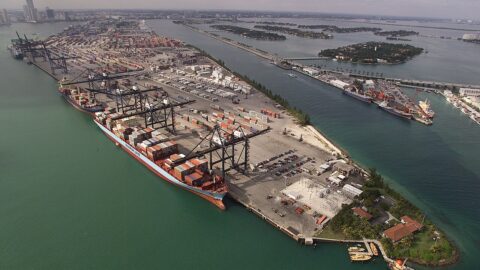
In late July 2025, the United States imposed a 50% tariff on imports from Brazil, including green coffee. American buyers suddenly had to pay half as much again on the beans that supply a large share of the US market, or reroute shipments, or warehouse coffee under bond to delay the tax. Arabica prices jumped about 50% after the tariff was announced. The tariffs were lifted in November 2025 — two executive orders took them back to zero — but the disruption lingered: contracts had been cancelled, shipping routes changed, and roasters had bought beans at peak prices that they are still working through.
That last point explains the most confusing part of the story: why retail prices stay high even after wholesale prices fall. Roasters buy beans months ahead, and a bag of coffee on a supermarket shelf today was often bought when futures were at their peak. Retail prices lag the futures market by 8 to 19 months. The record $9.72 a pound in April 2026 reflected beans bought during the worst of the crisis.
What happens next
There is relief on the way, and also a warning. The US Department of Agriculture forecasts a record world crop of about 189.7 million bags for 2026/27, with Brazil producing nearly 72 million bags, and the International Coffee Organization estimates the market is back in a small surplus for the first time in five years. The World Bank expects arabica prices to fall further in 2027.
But the longer trend points the other way. A peer-reviewed study of coffee-growing conditions found that the land rated highly suitable for growing coffee will shrink by more than 50% by 2050 under every emissions scenario tested — not mainly because of rainfall, but because rising temperatures push growing regions past the narrow band arabica tolerates. Smallholder farmers, who produce roughly 80% of the world’s coffee, are the ones who will feel that first. And a very strong El Niño, which forecasters say is more than 90% likely through the winter of 2026/27, threatens the flowering cycle in both Brazil and Vietnam — the crop after next.
So your coffee will probably get a little cheaper before it gets more expensive again. The forces that pushed it to record highs — a warming climate squeezing the places coffee can grow, a supply chain with no slack, and trade policy that can add 50% to the price overnight — have not gone away. Like why diesel costs more than petrol, the price of coffee is a story about everything at once: weather, war, tariffs and a plant that only grows where the climate lets it. And like chocolate is facing the same squeeze from the same warming world, coffee’s problem is not a single bad year. It is a crop running out of room.