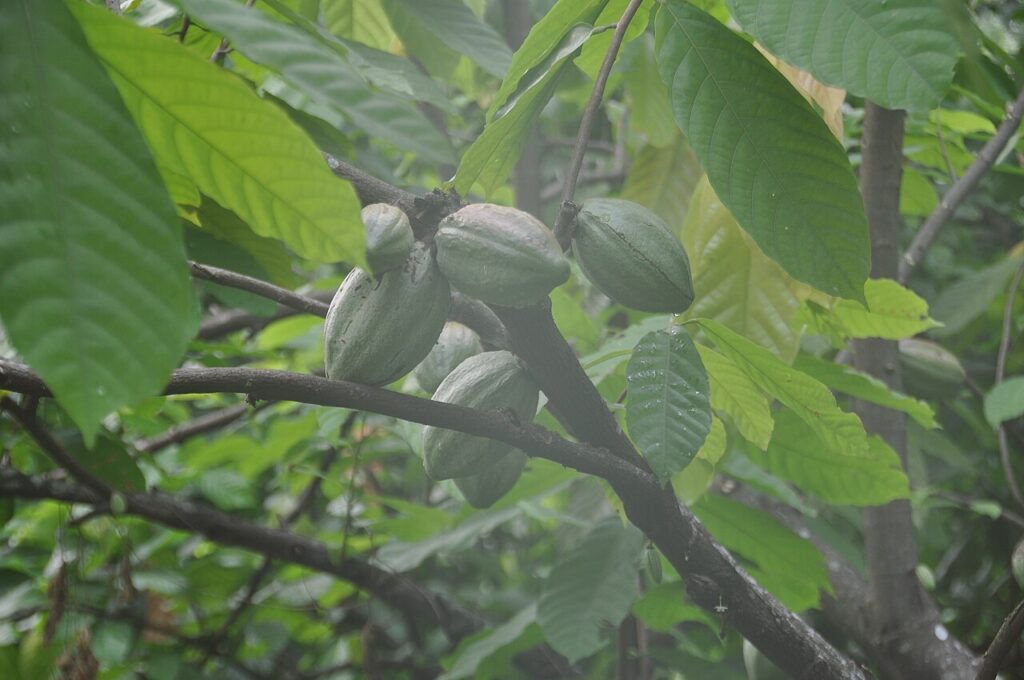
Informopedia Explains: Your chocolate bar is getting smaller and pricier, and the reason is not inflation. It is that the trees which make chocolate are dying. In Ivory Coast, the country that grows two of every five cocoa beans on Earth, scientists are cross-pollinating flowers in greenhouses to breed a cocoa tree that can survive the drought — and the clock is ticking.
The price shock you can taste
Cocoa prices went feral in 2024. In London, the benchmark hit nearly $12,906 a tonne that December — a record — after years when $2,525 a tonne was the average. Prices corrected to around $5,000 early in 2025 and roughly $4,000 by that October, but the baseline had structurally shifted: even the “cheap” cocoa of 2026, trading between $3,000 and $4,000, costs nearly twice the old normal. In July 2026, futures spiked to a six-month high of $6,094 a tonne on fears that El Niño was returning to West Africa.
Chocolate makers passed it on. Bars shrank, prices rose, and “premium” became the polite word for what used to be ordinary. This was not a speculative bubble that popped and reset. It was a supply crisis — and the supply has not recovered.
Why the trees are failing
Nearly all the world’s cocoa comes from a narrow belt of West Africa — Ghana and Ivory Coast alone account for well over 60% of global production, the wider region about 70%. That concentration makes the chocolate market hostage to one region’s weather. And the weather turned hostile.
The 2023–24 El Niño brought weeks of heat above 32°C, drought, and erratic rain to the cocoa belt — how El Niño supercharges heat and drought around the world. Cocoa trees are fussy: they need steady warmth, shade, and 1,200 to 2,000 millimeters of rain a year. They got scorching sun and dry months instead. Flowering dropped, pods shriveled, harvests collapsed for consecutive seasons.
Disease piled on. The cocoa swollen shoot virus has been decimating plantations in Ghana, and across the region trees are aging with far too little replanting. When the harvests failed, speculative trading amplified the spike — but the root cause was physical: there simply were not enough beans.
The country that cannot afford to lose
No country has more riding on cocoa than Ivory Coast — Côte d’Ivoire, the world’s largest producer, growing nearly 40% of global output. Cocoa accounts for about 15% of its GDP and supports roughly five million people in a nation of more than 33 million. Europe buys 70% of its cocoa exports. When the trees fail, it is not a commodity story; it is a national emergency.
The government’s own projections are stark: temperatures in the country already rose 1°C between 1991 and 2020 and could climb another 1.7 to 3.7°C by 2080. Without action, cocoa production could fall 20% by 2050. Forecasts for the 2026–27 season put Ivorian output at 1.7 to 1.8 million tonnes, down from an expected 2.2 million in 2025–26. The industry regulator’s chief, Yves Brahima Koné, summed up the mood in September: “The future of our orchards lies in research.”
The lab in Divo
That research is happening in Divo, a cocoa town in Ivory Coast’s south, at the National Centre for Agronomic Research — the CNRA. There, geneticist Caudou Trebissou and his team are doing something painstakingly old-fashioned: taking pollen from the flowers of male parent trees and using it to pollinate female parents by hand, then growing the offspring in greenhouses under carefully graded water stress. The survivors of the thirst — the seedlings that keep growing when the water runs short — are the future.
So far, the team has identified 11 promising drought-resilient varieties, with an eye toward eventual release to farmers. The selection work spans roughly a decade — breeding trees is slow, because trees are slow. CNRA agronomist Maryse Assi has the data that makes the urgency plain: the Divo region now receives about 1,100 millimeters of rain a year, below the 1,200 minimum cocoa needs, and rainfall has been declining since the 1980s. Surviving trees show it — flowering that drops off or shifts timing, fewer pods, branches drying out. Drought even degrades the soil’s fertility.
The farmers see it first. Kofi Alexis Amani, who grows cocoa near Divo, put the stakes in five words: “You can lose everything.” Nearby, Anselme Kouakou describes dry branches, curled leaves, and pods that stay small without rain. While they wait for science, some are shading their cocoa under cashew, iroko, and banana trees — agroforestry as a stopgap against the sun.
Why this matters
Chocolate is the canary in the climate coal mine, and it is also a parable about who eats and who grows. The Global North buys about 70% of the world’s chocolate; the Global South grows almost all of the cocoa. The people least responsible for the warming — smallholder farmers in West Africa — are absorbing its costs first, while consumers in Europe and America pay a little more for a slightly smaller bar.
The deeper question is whether breeding can outrun the climate. Eleven drought-resilient varieties are a genuine achievement — and a decade of work for a problem that is accelerating. Ivory Coast’s projection of 20% less cocoa by 2050 assumes no action; the CNRA’s greenhouses are the action. If the new trees hold, chocolate survives as a mass-market pleasure. If they do not, it becomes what it was for most of history: a luxury.
Either way, the price on the shelf is telling you something true. The cocoa crisis is not a market glitch. It is the weather, written in chocolate.


One Comment