Informopedia Explains: A key change in a song you love. A cold wind on wet skin. The final scene of a film. Different moments, same response: the hairs on your arms stand up, your skin dimples into tiny bumps, and for a few seconds your body does something you did not ask it to do. Goosebumps are one of the strangest things about being human — a reflex with no obvious purpose, firing in moments of cold, fear and beauty alike. The reason it fires in all three is that, biologically speaking, they are the same moment.
The machinery under your skin
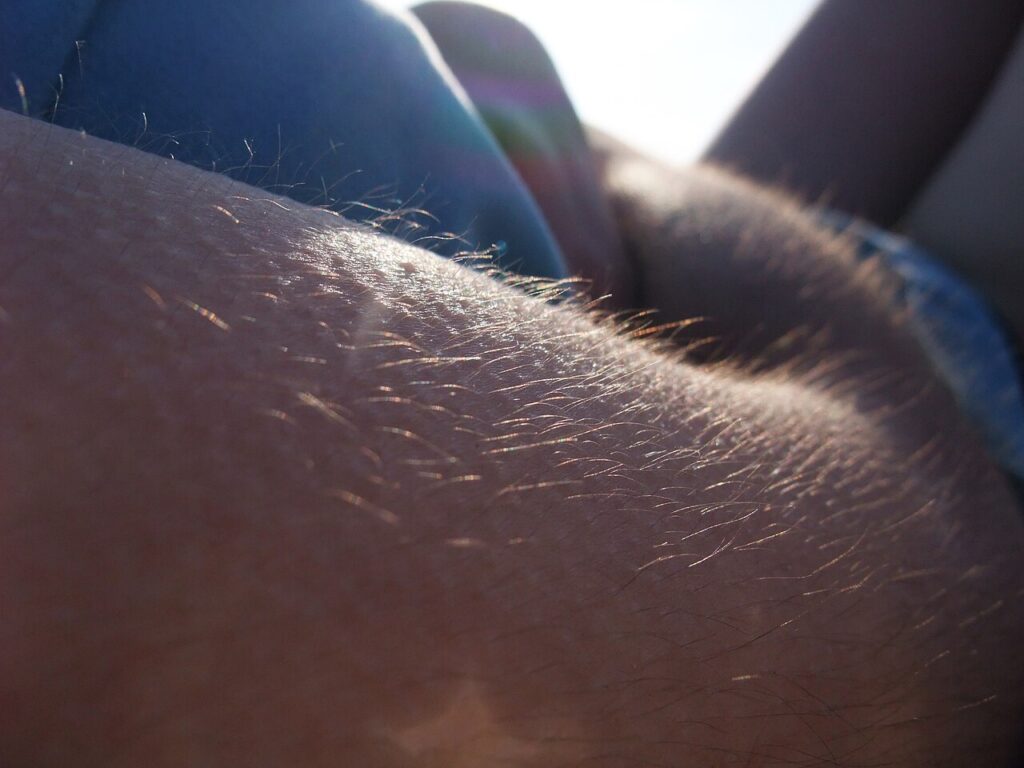
Every hair on your body has a tiny slip of smooth muscle attached to the base of its follicle: the arrector pili, Latin for “hair raiser”. It is wired directly into the sympathetic nervous system — the branch that runs fight-or-flight — and it answers to noradrenaline, the same chemical messenger that quickens your heart when you are startled. When the sympathetic nerves fire, the muscle contracts, tugging the follicle upright and dimpling the skin around it into a bump. The medical name is piloerection, or cutis anserina — “goose skin”, because the dimpled flesh resembles a plucked goose.
You have no conscious control over it, which is why goosebumps always feel like a surprise. There are no arrector pili muscles in the hair follicles of your face, eyelashes, eyebrows, nostrils or ear canal — everywhere else, the wiring is in place, waiting for a signal from the hypothalamus, the brain region that governs both temperature and emotion.
What it was for
In a furry mammal, piloerection does two jobs, and both of them are matters of life and death. The first is insulation. Erect hairs trap a thicker layer of still air against the skin, and still air is an excellent insulator — a fur coat fluffed up is a warmer coat. The second is intimidation. A cat with its fur on end looks substantially larger than a cat at rest; a porcupine bristling is a porcupine best left alone; chimpanzees raise their hair when confronting a rival. Cold and threat both pull the same trigger because, for a furred animal, both demand the same response: get bigger, get warmer, get ready.
Humans kept the circuitry and lost most of the fur. Somewhere in our evolutionary past — probably as we adapted for endurance running and sweat-based cooling on the hot savanna — dense body hair went, but the neural wiring stayed. So when you step into the cold, your body still tries to fluff up a coat you no longer own. The bumps appear. The insulation does not. It is a reflex performing for an audience that left millions of years ago.
Why music does it too
The cold trigger is easy to understand. The emotional one is more interesting. A stirring piece of music, a sudden memory, a moment of awe — none of these changes your skin temperature, yet the hairs rise anyway. That is because emotional arousal recruits the same sympathetic output as cold does. The hypothalamus does not distinguish much between “I am freezing” and “I am moved”: both are states of heightened arousal, and both release noradrenaline onto the arrector pili. Researchers call the musical version frisson — aesthetic chills — and it is the same reflex, reached by a different road. Fear works the same way, which is why a horror film and a cold draught can produce identical skin.
The second job nobody expected
For a long time, goosebumps were filed away as a textbook vestige — a leftover, like the tailbone or wisdom teeth, interesting but idle. Then, in 2020, a study published in the journal Cell found that the story was not finished. The arrector pili muscle and its sympathetic nerve, the researchers showed, are wrapped closely around the stem cells that sit at the base of each hair follicle and regenerate hair. The muscle acts as a scaffold, holding the nerve in place; the nerve signals directly to the stem cells with noradrenaline. When cold exposure is sustained, that same signalling switches the stem cells towards making new hair.
The consequence is elegant: the muscle that raises the hair also helps guarantee there will be a hair to raise. Goosebumps are vestigial as a heating system. The hardware behind them is not idle — it is part of the machinery that keeps your hair growing. Evolution rarely throws anything away; it repurposes it.
Why this matters
Goosebumps are a small, visible fossil of our evolutionary history — proof, written on your own forearm, that you descend from animals that survived by fluffing their fur against the cold and their enemies. They also show how evolution works: not by designing from scratch, but by keeping old wiring and finding new uses for it, the way the same sympathetic system that once kept our ancestors warm now makes us shiver at a song. And they are a reminder that the body keeps its own records. Like why déjà vu feels so uncannily familiar or what dreams are actually for, goosebumps belong to the part of being human that runs without our permission — ancient, involuntary, and still, in its quiet way, working.