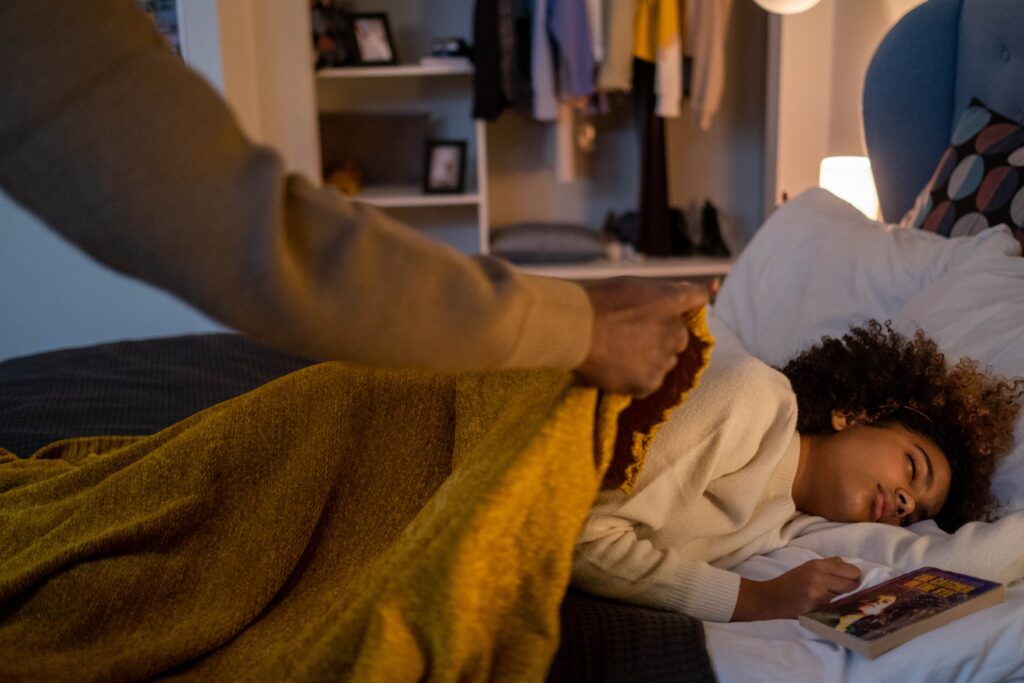
Informopedia Explains: why do we dream — and what is your brain actually doing while you do it?
In the early 1950s, a graduate student named Eugene Aserinsky was running out of options. He had tried social work. He had tried dental school. He had spent a stint in the army handling explosives. None of it stuck, and the only professor willing to take him on was Nathaniel Kleitman at the University of Chicago — a man who studied sleep, then a scientific backwater. Aserinsky’s job was to watch the pens of an EEG machine trace the brain waves of sleeping volunteers, hour after hour, night after night.
Then the needles started twitching. Every ninety minutes or so, the sleepers’ eyes began darting beneath their lids, and their brain waves — which should have shown the slow, rolling patterns of deep sleep — suddenly looked almost awake. Aserinsky woke a few of them mid-twitch and asked what was happening. They had been dreaming. Vividly.
In September 1953, Aserinsky and Kleitman published the finding in Science: sleep contained regularly occurring periods of rapid eye movement — REM sleep — tied to dreaming. Until that paper, sleep had been treated as essentially a switched-off state, the brain idling in the dark. It turned out the brain was throwing a party every night and simply not inviting the body. Kleitman, asked later how much research he thought the discovery would generate, reportedly answered: “none whatsoever.” It became the foundation of modern sleep science.
Seven decades on, researchers have mapped dreaming in extraordinary detail — which circuits switch on, which chemicals vanish, which memories get replayed. And yet they still cannot agree on the most basic question of all: what dreams are for. Some of the sharpest minds in neuroscience suspect the answer might be nothing at all.
The paradox of REM sleep
The French researcher Michel Jouvet, who picked up the thread in the late 1950s, gave REM its perfect name: paradoxical sleep. During REM, the brain’s electrical activity looks startlingly like wakefulness. Some brain structures burn oxygen and glucose at rates equal to — or even above — waking levels. And yet the body lies essentially paralyzed. The voluntary muscles go limp in a state called atonia, a lock the brainstem throws so that we do not physically act out whatever we are dreaming. When the lock fails, people develop REM behavior disorder: they shout, punch, and leap out of bed in the middle of a dream.
REM arrives on a schedule. Sleep runs in roughly 90-minute cycles, four to six a night. The first REM episode shows up about 70 to 90 minutes after you fall asleep and lasts only ten or fifteen minutes; as the night wears on, the episodes stretch, reaching up to an hour near morning — which is why your most elaborate dreams tend to arrive just before the alarm. All told, REM makes up 20 to 25 percent of an adult’s night, around ninety minutes to two hours. Newborns spend far more of their sleep in REM — over half, and in the earliest weeks over 80 percent — a hint, some researchers think, that dreaming does some of its most important work while the brain is still under construction.
Do the back-of-envelope math: roughly two hours of dreaming a night, across a seventy-year life, adds up to about six years spent inside dreams. Six years. Whatever dreams are for, the brain is spending an enormous share of its budget on them.
What the dreaming brain looks like
In 1996, a team led by Pierre Maquet put seven sleeping volunteers into a PET scanner and watched their brains during REM. The result was a map of dreaming itself. Regions tied to emotion and imagery lit up: the amygdala on both sides, the anterior cingulate cortex, the pontine tegmentum in the brainstem. Meanwhile the brain’s executive suite went dark — the dorsolateral prefrontal cortex, the parietal cortex, the posterior cingulate and precuneus all showed reduced activity.
Read that map against the experience of a dream and it clicks into place. Emotion and visual imagery run hot, which is why dreams feel so vivid and so urgent. Logic, self-monitoring, and the sense of where you are in space and time go offline, which is why you can accept without question that your childhood home has grown an extra floor — and why the whole thing evaporates within minutes of waking.
The chemistry is stranger still. During REM, norepinephrine — the brain’s alarm chemical, the stuff of stress and vigilance — is essentially switched off. The locus coeruleus, the tiny brainstem nucleus that supplies it, falls silent; it has to, or REM cannot begin. Serotonin drops too. Acetylcholine, meanwhile, surges to levels above waking in some regions. So the dreaming brain is emotionally supercharged, chemically calm, and logically unmoored — all at once.
Theory one: the night shift for memory
The oldest serious idea is that dreams are the visible side of the brain filing its memories. The evidence began with rats. In 1994, Matthew Wilson and Bruce McNaughton at the University of Arizona recorded hippocampal neurons firing while rats ran a maze — then watched the same neurons fire in the same sequences during the animals’ subsequent sleep. Two years later, the same lab showed the replay ran in compressed time: a run that took seconds in life replayed in hundreds of milliseconds. Later work even caught the sequences running in reverse, as if the brain were rewinding the tape.
The working model is called systems consolidation. The hippocampus, the brain’s fast but fragile scratch pad, replays the day’s experiences during sleep, gradually transferring the durable ones to the neocortex for long-term storage. Dreams, on this view, are the flicker of a filing system at work — fragments of the day surfacing as they are sorted, strengthened, or discarded.
There is a curious wrinkle that supports the idea. Personally significant events do not just appear in dreams the next night; they resurface on a U-shaped schedule, peaking one or two nights after the event and then again five to seven nights later — the so-called dream-lag effect, documented in studies published in 2015 and 2017. Simple replay would fade steadily. A second peak a week later looks like slow, deliberate emotional processing.
Theory two: overnight therapy
That processing may be dreaming’s most important job. Sleep researcher Matthew Walker calls it “sleep to remember, sleep to forget”: during REM, the brain replays emotional memories inside an unusual chemical environment — one with the stress chemistry switched off. The information is preserved while the visceral charge is stripped away. In Walker’s experiments, subjects who slept after viewing disturbing images showed a dramatic drop in amygdala reactivity the next day, with prefrontal control restored. Sleep, in effect, took the sting out.
The most human evidence comes from a study of heartbreak. In the early 1990s, psychologist Rosalind Cartwright — known as the Queen of Dreams — wired up 49 volunteers going through divorce, 31 of whom met the criteria for depression. A year later, she checked who had recovered. The depressed subjects who had incorporated their ex-spouse into their dreams around the time of the break-up were significantly less depressed and better adjusted than those who had not. Dreaming about the wound, it seemed, was how the mind dressed it.
When the mechanism breaks, the cost is visible. In post-traumatic stress disorder, REM sleep fragments and nightmares repeat the trauma instead of defusing it — the overnight therapy fails. Strikingly, prazosin, a blood-pressure drug that suppresses noradrenaline signaling, was found to reduce nightmares in PTSD patients after a tip-off from a Veterans Affairs physician. Chemically recreating REM’s calm, it seems, helps the therapy work.
Theory three: rehearsal for danger
In 2000, the Finnish researcher Antti Revonsuo proposed that dreaming evolved as a simulator — a safe space to rehearse perceiving and escaping threats. Dreams are systematically biased toward threatening content: pursuits, fights, attacks, disasters. On this account, ancestors who dreamed vividly of predators woke up fractionally better prepared for them, and natural selection did the rest.
It is an elegant idea, and it has taken hits. An analysis of 401 dream reports by researchers Sue Malcolm-Smith and Mark Solms found that only 8.48 percent contained realistic life-threatening events — far fewer than the theory would predict. Dreams, they argued, are mostly about social embarrassment, not saber-toothed tigers. The threat simulator may be real, but if so, it spends most of its time rehearsing the wrong threats.
Theory four: the brain telling itself stories
The first truly biological theory of dreaming arrived in December 1977, when Harvard psychiatrists J. Allan Hobson and Robert McCarley published the activation-synthesis hypothesis. Their claim was deflatingly simple: during REM, the brainstem fires random bursts of neural activity, and the forebrain — desperate for narrative — synthesizes the noise into a story. Dreams are not messages; they are the cortex making the best of static. Hobson later distilled dreaming to five hallmarks: illogical content, intense emotion, uncritical acceptance of the bizarre, vivid sensory detail, and near-total forgetting.
A 2021 twist gave the old idea new life. Neuroscientist Erik Hoel, borrowing from artificial intelligence, proposed in the journal Patterns that dreams are the brain’s defense against overfitting — the machine-learning problem in which a network trained too narrowly on its data loses the ability to generalize. Dreams, Hoel argued, are noisy, out-of-distribution simulations that keep the brain flexible: “It is the very strangeness of dreams in their divergence from waking experience that gives them their biological function.” The theory makes a testable prediction, and it holds: people subjected to marathon sessions of Tetris reliably dream of falling blocks.
Why you forget almost all of it
Here is one mystery neuroscience has actually solved: forgetting is not a glitch. It is a feature.
In 2019, researchers publishing in Science found that a population of neurons in the hypothalamus — melanin-concentrating hormone (MCH) neurons — switch on specifically during REM sleep and actively block dream content from being stored in the hippocampus. The NIH’s summary of the work put it plainly: activation of these cells may prevent the content of a dream from being stored — “consequently, the dream is quickly forgotten.” Your brain erases your dreams on purpose.
A second, passive mechanism is layered on top. With the locus coeruleus silent and noradrenaline absent, and with the hippocampus and prefrontal cortex poorly coupled during REM, new memory traces struggle to form in the first place. Dreams are written in disappearing ink, in a room with the lights off.
Why this matters
None of this is academic. The dreaming brain is the emotional brain, and its nightly work shows up in daylight mental health. Fragmented REM and repetitive nightmares are hallmarks of depression and PTSD; the Cartwright divorce study suggests that the capacity to dream through distress predicts recovery from it. Understanding what REM does — and what happens when it cannot — is already shaping treatments, from noradrenaline-suppressing drugs for nightmares to the growing clinical interest in sleep as a pillar of psychiatric care alongside medication and therapy.
There is a quieter implication too. We spend roughly a third of our lives asleep and a substantial fraction of that dreaming — yet most of us treat dreams as entertainment or nonsense. The neuroscience suggests something closer to maintenance: a nightly defragmentation of memory and mood, running whether or not we remember a frame of it.
What science still can’t explain
And now the honest part. For all the scanners, electrodes, and elegant theories, there is no scientific consensus on why we dream. A Yale lecture on the neuroscience of dreaming states it flatly: many models have been advanced, and none has achieved consensus. Mark Blumberg, a sleep researcher at the University of Iowa, told Medscape: “We are still at the very beginning of understanding this phenomenon.”
Part of the problem is that dreaming and REM sleep are not the same thing. The neuroscientist Mark Solms studied 361 neurological patients and found that damage near the temporo-parieto-occipital junction could abolish dreaming entirely while leaving REM sleep intact — and that some patients who lost REM kept on dreaming. Whatever dreams are, they depend on the forebrain, not the brainstem machinery that generates REM.
And then there is the null hypothesis, the one researchers mention carefully. Francis Crick — of DNA-double-helix fame — argued that dreams might be epiphenomenal: a side effect of a sleeping brain doing other work, with the conscious experience of dreaming serving no function whatsoever. On this view, asking why we dream is like asking why a computer hums.
So why do we dream? The best-supported answer is that the sleeping brain is doing vital work — consolidating memories, draining the emotional charge from the day, keeping its own learning flexible — and dreams are the flicker of that machinery on the screen of consciousness. But whether the flicker itself matters, or is just the hum of the machine, remains unanswered. Aserinsky’s twitching needles opened the question in 1953. Seventy-three years later, it is still open — and some nights, lying awake at 3 a.m. after a dream you can almost remember, that feels about right.




One Comment