Informopedia Explains: In 1922, an Iowa farmer named Charles Osborne fell while slaughtering a hog — and started hiccuping. He did not stop for 68 years. By the time the hiccups finally ended, in 1990, he had hiccuped an estimated 430 million times, at first around 40 times a minute, later about half that. He married twice, fathered eight children, worked his farm, and lived to 97 — hiccuping through almost all of it. His doctors believed the fall had damaged a tiny patch of his brainstem, the very region that normally keeps the hiccup reflex in check.
Osborne’s case is the extreme end of something almost everyone knows from the ordinary end: a spasm you cannot control, in a muscle you never think about, producing a sound you cannot suppress. The surprise is that, for all its familiarity, nobody fully knows why hiccups exist at all.
What a hiccup actually is
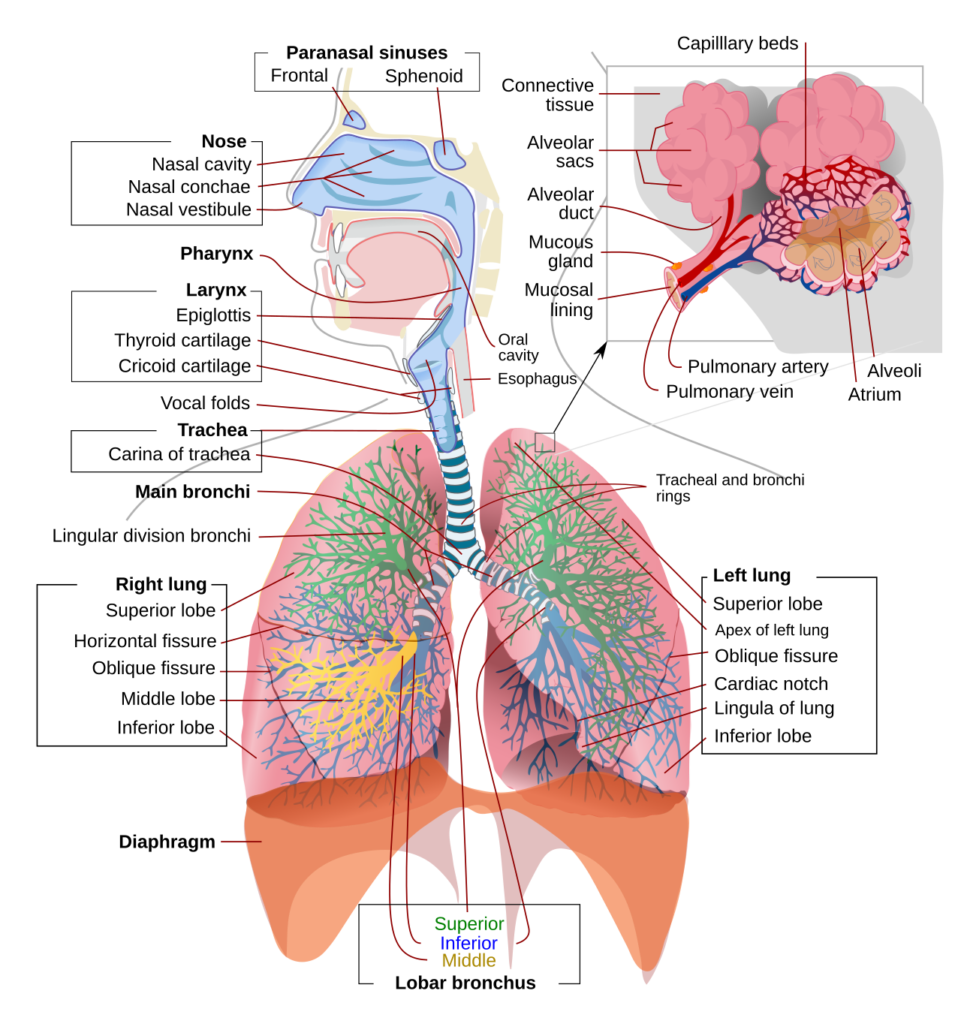
A hiccup is a sudden, involuntary contraction of the diaphragm — the dome of muscle beneath the lungs that does most of the work of breathing — followed about 35 milliseconds later by the glottis, the gap between your vocal cords, snapping shut. The spasm pulls air in fast; the glottis slams the door on it. That collision is the “hic”.
Doctors call it singultus, and it runs on a reflex arc: sensory signals travel up the vagus and phrenic nerves to the brainstem, which fires motor signals straight back down — the phrenic nerve to the diaphragm, the vagus to the voice box. Attacks usually run at a steady rhythm of 4 to 60 hiccups a minute, and almost always stop within minutes. Fetuses hiccup too: ultrasounds have caught them at it from as early as eight weeks, and the leading guess is that the practice strengthens the diaphragm and prepares it for breathing after birth.
What sets them off
Most of the time, the trigger is embarrassingly mundane. Eating or drinking too quickly, fizzy drinks, alcohol, spicy food, a sudden change in temperature — anything that distends the stomach or irritates the nerves that feed the reflex. A swollen stomach presses on the diaphragm and can push stomach acid back up into the oesophagus, irritating the shared wiring. Laughing hard, coughing, or sudden excitement can do it too. The exact trigger is often unknown, which is why hiccups can feel so random: the reflex is hair-triggered, and the brainstem does not ask permission.
Usually that is the whole story. But hiccups that last more than 48 hours are a different matter, and doctors take them seriously. Persistent hiccups can signal acid reflux, damage to the vagus or phrenic nerve after surgery, metabolic problems such as low sodium or kidney trouble, or disorders of the central nervous system. In rare cases they have been the first symptom of something far more serious, including a heart attack. The rule is simple: minutes, ignore them; days, see a doctor.
Why do we have them at all?
Here the science gets speculative, and the theories are stranger than the symptom. One leading idea is that hiccups are a leftover from our deep evolutionary past — a reflex inherited from tadpole-like ancestors, whose rhythmic gulping moved water over their gills. The circuitry is suspiciously similar: a burst of inhalation, a sudden closure to keep water (or air) out of the wrong pipe.
A second idea is more practical. Human babies face a genuine engineering problem: they must suckle, swallow and breathe through the same passage without choking. The hiccup reflex may have evolved to help young mammals coordinate all three — a burst of diaphragm activity that clears air from the stomach and keeps milk moving in the right direction. The fact that fetuses and newborns hiccup so often, and adults so rarely, fits that story: a reflex we mostly outgrow, like the grasp reflex in a baby’s hand.
Neither theory is proven. What is clear is that hiccups are not a design flaw so much as a design fossil — wiring laid down for a job we no longer quite do, still firing when the stomach gets too full too fast.
What actually stops them
Every culture has its cure: hold your breath, drink water from the far side of the glass, get scared, have someone shout “boo”. The honest answer is that almost none of them has good evidence behind it — and that may not matter, because most hiccups stop on their own within minutes anyway. What the remedies have in common is that they stimulate the vagus nerve or interrupt the breathing rhythm: holding your breath and bearing down raises pressure in the chest; swallowing water demands a coordinated sequence from the same nerves that run the reflex. The one device with real evidence behind it is HiccAway, a straw-like tool that forces strong suction followed by swallowing — essentially a engineered version of the glass-of-water trick. If that fails and the hiccups persist, doctors can block the phrenic nerve with an anaesthetic injection, which stops the diaphragm from firing at all.
Charles Osborne tried everything, including surgery and hormone therapy. Nothing worked, and he simply got on with his life — 430 million hiccups, two marriages, eight children, and a world record nobody wants. The rest of us get the merciful version: a few minutes of indignity, a glass of water, and a reflex that forgets about us as quickly as it found us.
Why this matters
Hiccups are a reminder that the body is not a machine we operate but a set of reflexes we inherit — most of them silent, some of them occasionally misfiring in public. The same brainstem that keeps you breathing without thinking also keeps a hair-trigger spasm wired into your diaphragm, a leftover from ancestors who breathed water and babies learning to swallow. It is, in its small way, the same story as how general anaesthesia switches consciousness off or what dreams are actually for: the most familiar parts of being human are often the least understood, and the least understood are usually the oldest.
Sources: University of Arkansas for Medical Sciences — https://news.uams.edu/2018/04/26/hiccups/