The scale: unions say around 4 million workers took part. The cause: rents that have nearly doubled in a decade. The timing: less than three weeks before a snap general election. On Wednesday, Spain stopped work — and the housing crisis stopped being a policy debate and became the election.
Millions of Spanish workers shut down businesses, factories and public transport on 11 November in the country’s first general strike in 14 years. The walkout, called by Spain’s two largest unions, the UGT and the CCOO, under the slogan “Salaries. Housing. Prices.”, was the first nationwide stoppage since the austerity protests of 2012 — and the first ever driven principally by the cost of a roof over people’s heads.
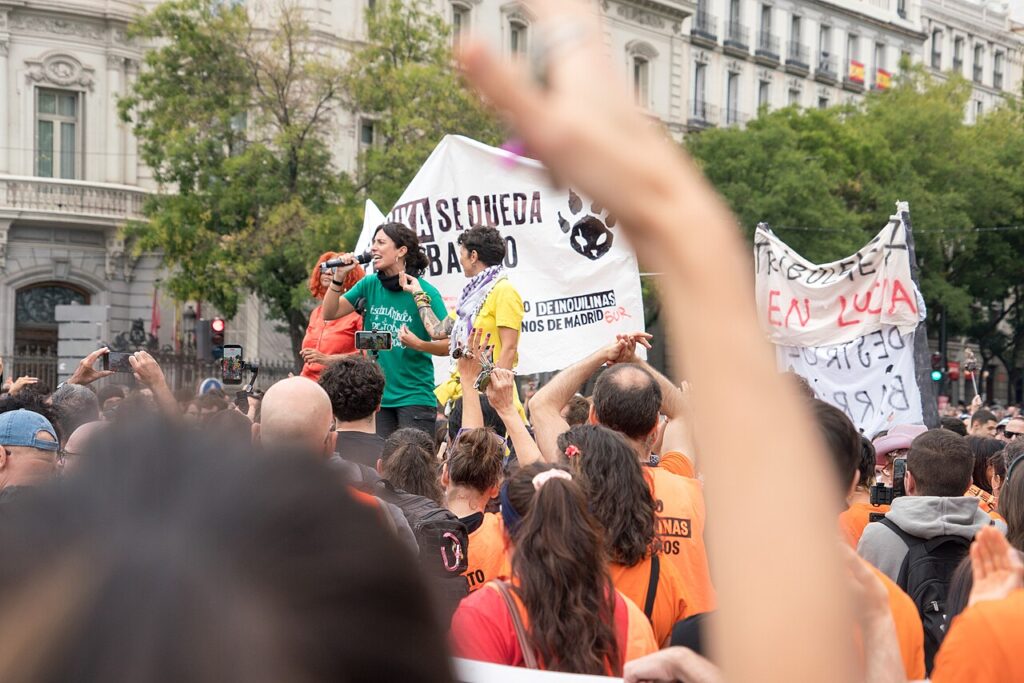
The strike began at midnight and ran for 24 hours. Ports and car plants reported the heaviest stoppages, with the unions claiming 90% participation in the automotive and port sectors and total stoppages at factories including Volkswagen’s plant in Navarre and SEAT’s in Barcelona. Electricity demand fell by as much as 15.5% between 10 and 11 in the morning, according to grid operator Red Eléctrica, and about 5% of flights were cancelled at airports across the country. By evening, tens of thousands of marchers filled the streets of Madrid and Barcelona despite heavy rain, holding up key rings and banners reading “Live. Not Just Survive.”
The numbers behind the anger are stark. Spain has a housing deficit of about 750,000 homes, according to the central bank, a shortfall expected to pass one million by 2028. The average rent of €1,176 a month is equivalent to about 98.7% of a young person’s average monthly salary, the Youth Council of Spain has calculated. Rents have nearly doubled over the past decade while wages have crawled, and for many young Spaniards the maths of renting a flat simply no longer works.
Employers’ groups disputed the unions’ turnout figure, claiming participation was far lower, and the government in Madrid — run by the conservative Popular Party at regional level — dismissed the strike as political theatre. But the marches told their own story: organisers said 400,000 people marched in Barcelona, while the city government put the figure at 55,000; officials estimated 120,000 turned out in Madrid. Police reported dozens of arrests across the country.
Why this matters
Prime Minister Pedro Sánchez called a snap election for November 29 after his minority government failed to pass measures responding to the housing crisis. He is now betting that voter anger over rents can rescue a campaign otherwise dominated by corruption cases in his inner circle and a deadly train crash last month. The strike was, in effect, the first big test of that bet — and it showed that housing has become the issue that can empty factories and fill squares.
The grievance is not Spain’s alone. Across Europe, from Lisbon to Berlin, the same squeeze — stagnant wages, scarce homes, rents climbing faster than pay — is turning housing from a personal problem into a political one. Spain just staged the continent’s loudest answer yet. Whether it changes any votes on 29 November is the question the strike leaves hanging.
France has been living through its own version of the same unrest: France’s own wave of student protests boiled over last month, with hundreds arrested as young people took to the streets over their futures.