Informopedia Explains: it starts as a tickle, somewhere high in the nose — a faint itch that grows teeth. Your breath catches. Your eyes squeeze shut. And then your whole body fires at once, in a convulsion so violent it briefly takes over your breathing, your muscles and your face. The sneeze is over in a second. But packed into that second is one of the most complex reflexes the human body owns — a defence system, a disease-spreading machine, and, for about a quarter of us, a reaction to sunlight.
Sneezing, technically known as sternutation, is the body’s way of clearing the nose. The nose is a filter: every breath you take passes over sticky mucous membranes designed to trap dust, pollen, smoke and microbes before they reach your lungs. When something gets past the first line of defence and irritates the nerve endings in those membranes, the alarm goes up. The signal travels along the trigeminal nerve — the fifth cranial nerve, which carries sensation from the face — to the brainstem, the ancient control room at the base of the brain that runs breathing and swallowing. The brainstem sends the order out, and the body obeys all at once.
Anatomy of an achoo
The sneeze has two phases, and both are whole-body events. First comes the inhale: the diaphragm and the muscles between the ribs contract, drawing a large volume of air into the lungs. Then the explosion. The eyes are forced shut — you cannot sneeze with your eyes open, whatever the schoolyard legend says about them popping out. The glottis, the slit between the vocal cords, snaps closed. The muscles of the chest and abdomen contract powerfully, compressing the lungs, and the soft palate drops while the back of the tongue rises, channelling the blast through the nose. The pressure builds behind the closed glottis and then releases in a single violent burst: the “achoo.”
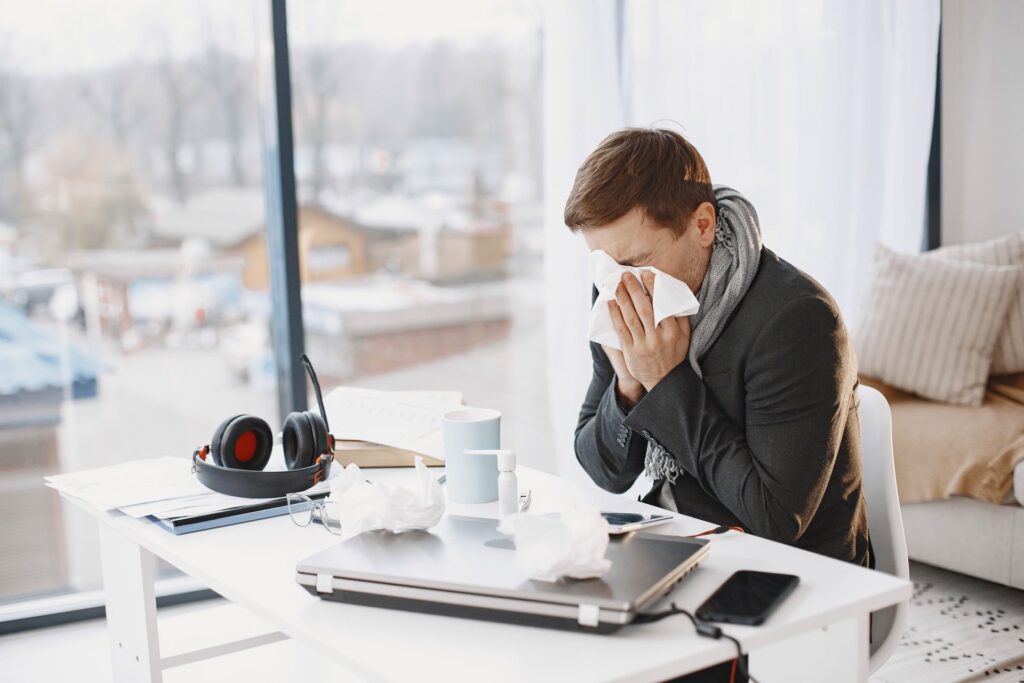
What comes out is staggering. A single sneeze can produce some 40,000 droplets, many of them packed with bacterial and viral particles, expelled at speeds commonly cited at around 100 miles per hour — roughly twenty times faster than a normal breath. That figure comes from older estimates, and newer high-speed camera studies have measured lower air speeds in some cases; but whichever number you take, a sneeze is a hurricane in miniature, and it is why doctors have spent a century telling people to sneeze into their elbow rather than their hand. The droplets can hang in the air and travel metres. Your nose’s cleaning system is also, unavoidably, one of the most efficient disease-delivery systems in nature.
Why your nose is so trigger-happy
Most sneezes are straightforward: something is in the nose that should not be. Dust, pollen, animal dander, smoke, pollution, mould, a sudden breath of cold air — all of them can set the reflex off. Allergies make the system hypersensitive: histamine, the chemical the immune system releases in response to an allergen, irritates the same nerve endings, which is why hay fever turns a spring walk into a sneezing fit. Colds do the same from the inside, as the virus inflames the nasal lining.
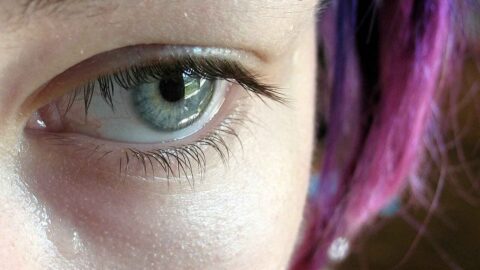
But the reflex has stranger triggers, and they reveal how loosely wired it really is. About a quarter of people sneeze when they step into bright light — the photic sneeze reflex, formally known as ACHOO syndrome, short for autosomal dominant compelling helio-ophthalmic outburst. It is a genetic trait: the signal from the optic nerve, flooded by sudden brightness, appears to spill over into the neighbouring trigeminal nerve, and the brain reads it as an irritation in the nose. A full stomach can do it too — the snatiation reflex, where eating a large meal sets off a fit of sneezing. So, according to researchers, can sexual arousal. The sneeze centre in the brainstem sits close to the circuits for all of these things, and sometimes the wires cross.
Why you cannot sneeze in your sleep
There is one state in which the reflex simply switches off: sleep. Sneezing cannot occur during deep sleep, because the reflex signals are not relayed to the brain while the body is in REM atonia — the paralysis that keeps you from acting out your dreams. The nose can itch all it likes; the brainstem will not answer. It is also, incidentally, why you cannot sneeze and keep your eyes open: the same brainstem circuitry forces the eyelids shut as part of the reflex. The body treats a sneeze as an emergency, and emergencies do not leave room for negotiation.
Should you hold one in?
Most of us have tried — in a meeting, in a theatre, on a quiet train — clamping a hand over the nose and mouth and willing the sneeze away. Doctors advise against it. The pressure of a stifled sneeze has nowhere to go, and while serious injury is rare, the force can damage eardrums, burst small blood vessels in the eyes, and in extreme cases injure the throat. Letting it out, into an elbow or a tissue, is the safer and the politer option: it keeps the droplets off your hands, and your hands off the next door handle someone else will touch.
The sneeze is, in the end, a small masterpiece of engineering — a coordinated explosion involving the nose, the lungs, the chest, the abdomen and the face, tuned over millions of years to keep the airways clear. It is also a reminder of how much of our behaviour is reflex rather than choice, running on circuits we share with every mammal that has ever cleared its nose. The science of tears has its own surprises, and goosebumps, another reflex from our evolutionary past, turn out to be a leftover from fur we no longer have. The body keeps its history in its reflexes — and the sneeze, loud and unmistakable, is one of the oldest entries in the book.