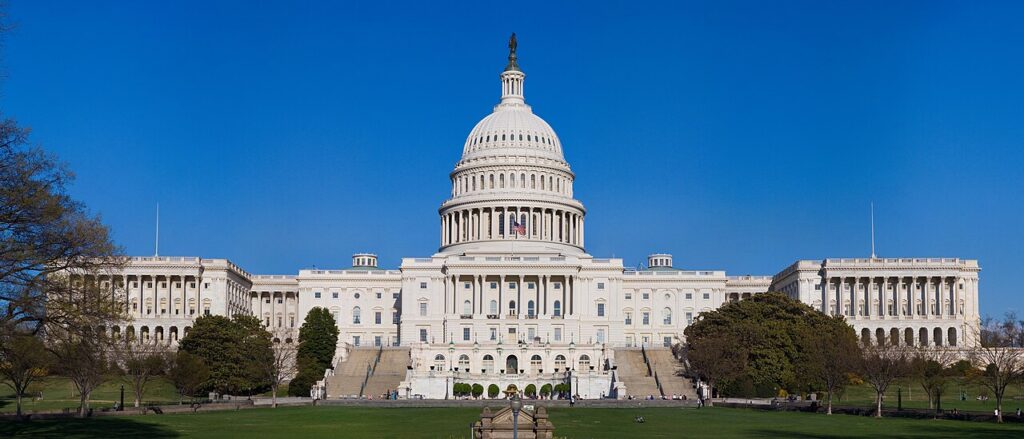
America’s intelligence chief came to Congress on Wednesday with a blunt assessment: the danger Iran poses to Americans, at home and abroad, has grown sharply — and it is still growing.
“These threats have substantially increased,” Director of National Intelligence Jay Clayton told the House Homeland Security Committee at its annual hearing on worldwide threats. “Our women and men abroad, our women and men here in the United States, are under greater threat.”
Clayton said the United States remained “committed to detecting, deterring, and combating the Iranian lethal plotting outside the United States and inside the United States.” It was the second warning in less than a month. On 23 October, Clayton sent an unclassified memorandum to Secretary of State Marco Rubio warning that Iranian assassination plots against Americans abroad had reached “advanced stages.”
The dirty-bomb report
The hearing came two days after CNN reported, citing seven US officials, that American intelligence had picked up Iranian planning for a possible attack in Washington itself — detonating a so-called dirty bomb, a conventional explosive laced with radioactive material, or a chemical weapon, aimed at senior Trump administration officials.
The sources characterised the planning as an effort by Tehran to give itself options, rather than evidence of an imminent attack. But they said the plotting was unusually specific, including locations and targets, and had set off a flurry of contingency planning inside the US government. One source said intelligence had picked up Iranian chatter claiming bomb-making materials had been stashed inside the United States.
President Donald Trump, asked about the report on Tuesday, said Iran would “pay a price the likes of which no country has ever paid before” if it attacked Washington, and that his administration was taking the matter “seriously.” Homeland Security Secretary Markwayne Mullin, who testified alongside Clayton, called the planning “aspirational” and said it was not a new threat — but added that carrying it out could trigger “all-out war.”
The White House said on Monday that it was “monitoring any and all potential threats, but at this time there are no credible threats to the homeland.” Rubio, travelling in Asia with Trump, said on Tuesday that he did not think there was an imminent threat to the capital. “We have threat streams every day, and the majority of them are not credible,” he said. “We have to follow up on them.”
Why the warnings are landing now
The threats are not abstract. Treasury Secretary Scott Bessent was moved into military housing last week after Iranian death threats. And on Tuesday, a federal judge in Brooklyn sentenced Asif Merchant, a 48-year-old Pakistani national, to 27 and a half years in prison for his role in a thwarted Iranian-directed plot to assassinate Trump and other American political figures.
The backdrop is a war now in its ninth month. American and Israeli strikes on Iran began in February, and the confrontation has escalated through the autumn: the United States sank five Iranian tankers on Wednesday, and a third US aircraft carrier has arrived near Iran. Iran has warned it will hit American forces and regional allies in retaliation, and its officials describe the US military campaign and economic blockade as “devastating” the country.
Iran has rejected the dirty-bomb reporting outright. Its mission to the United Nations said Tehran “considers the use of chemical weapons under any circumstances to be wholly illegitimate and categorically rejects and unequivocally refutes the false and fabricated allegations.” Foreign Minister Abbas Araghchi compared the report to “Iraq War-style propaganda,” and foreign ministry spokesman Esmaeil Baghaei accused those who started the war of “attempting to manufacture a veneer of legitimacy for further aggression.”
What to make of it
The honest reading of this week’s warnings is that American officials are describing two things at once: a threat that is real and growing, and an attack that is not — on the evidence available — about to happen. Clayton would not discuss specific intelligence at the hearing, but he acknowledged that the possibility of attacks involving weapons capable of causing mass casualties had long been monitored. FBI Deputy Director Christopher Raia, testifying beside him, cautioned that US adversaries were becoming “more aggressive” and “more capable.”
That combination — a specific, credible pattern of plotting, and no confirmed imminent attack — is the space Washington now has to operate in. The question is how long it can stay there.