For the first time ever, the leaders of the United States, China and Russia sat down in the same room — and after about 80 minutes together, they issued a document that calls itself a “Declaration toward Peace” while saying nothing at all about the wars actually being fought.
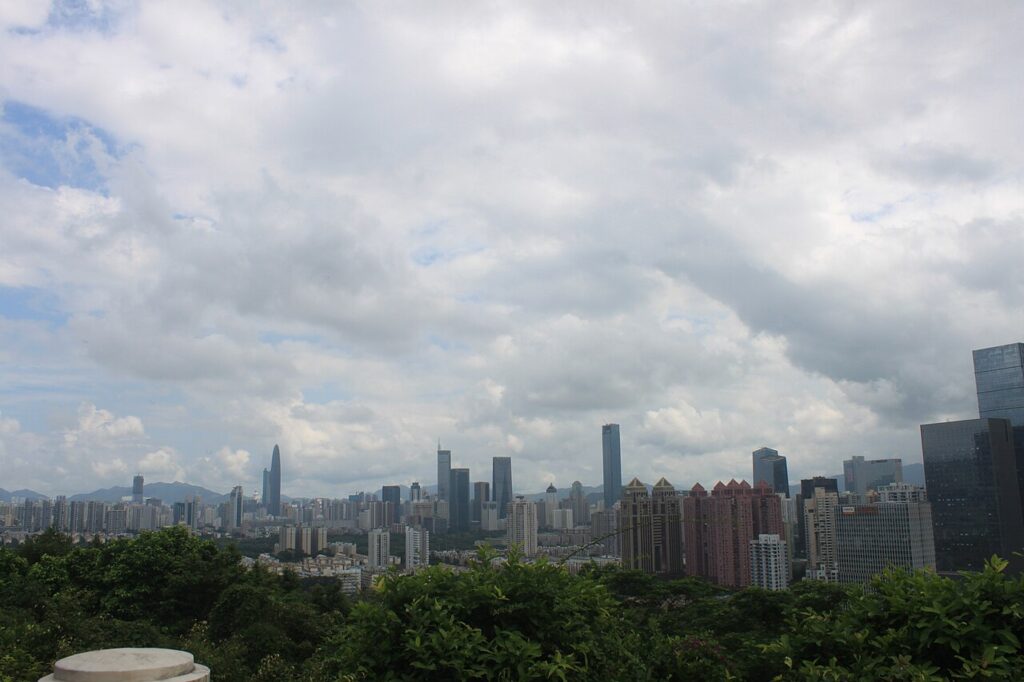
Donald Trump, Xi Jinping and Vladimir Putin met on Thursday at the Kylin Villa in Shenzhen, on the sidelines of the Asia-Pacific Economic Cooperation summit. It was the first trilateral meeting of its kind: the three countries together hold roughly 90% of the world’s nuclear weapons, and their leaders had never met three-way before.
Trump arrived smiling, embraced Putin and called him “my friend” during a face-to-face meeting before the main session. Xi, hosting, sat in the middle of the oval table. The talks lasted about 80 minutes, including 10 minutes of opening remarks to the press. Trump then left for the airport.
What came out of it was four points, published simultaneously by the White House, China’s foreign ministry and the Kremlin. Here is what the three leaders actually put in writing:
1. Reform the United Nations. As permanent members of the Security Council, the three countries “committed to reform the UN” so it can respond more effectively to global challenges. No specifics, no timetable.
2. Produce more refined fuel. The three countries “plan to increase the production and supply of refined petroleum products for the benefit of all nations” and “reaffirmed the importance of stable energy flows.” Again, no volumes and no dates.
3. Hands off state officials. The leaders said respect for the immunities of state officials is “of paramount importance” and agreed that the International Criminal Court and similar bodies “must not abuse their jurisdiction.” The ICC has an arrest warrant out for Putin over alleged war crimes in Ukraine. Washington has spent the year sanctioning the court itself — a campaign we examined in can the ICC survive Washington’s sanctions.
4. Talk about nuclear risk. The three “reaffirmed that a nuclear war cannot be won and must never be fought” and promised “a dialogue on reducing nuclear risks and preventing the proliferation of nuclear weapons.” No date, no venue, no agenda.
Read the document in full and three words never appear: Ukraine. Iran. North Korea. The wars the three leaders are most directly involved in — Russia’s invasion of Ukraine, the war with Iran that has choked the Strait of Hormuz, the standoff over North Korea’s arsenal — went unmentioned. The Korean Peninsula was reportedly discussed in the room, according to Chinese state media, but it did not make the text.
Trump had gone into the meeting talking about nuclear disarmament. In an interview earlier on Thursday he said all three countries “only need about 10” nuclear bombs and “you don’t need 4,000.” In his opening remarks he attacked what he called the “old school” of diplomacy: “No problems were ever solved under the old school refusing to talk about them. So, no peace was ever forged by declining opportunities for engagement and speech.”
Xi, for his part, said nuclear weapons “should be comprehensively banned and thoroughly destroyed, building a nuclear-free world” — a position that costs Beijing little, since China holds by far the smallest arsenal of the three. Putin, the man the ICC wants arrested, described the trio as guardians of world peace. “We hold joint responsibility for maintaining international peace,” he said.
Outside the room, reactions split along familiar lines. Some commentators called the meeting “Yalta 2.0,” a reference to the 1945 conference where the great powers carved up post-war Europe. Ukraine’s European allies, meeting separately in Berlin, said they had a united position for negotiations with Russia — and made clear they expect a seat at any table where Ukraine’s future is discussed.
So what did Shenzhen actually achieve? As a piece of theatre, a great deal: three leaders who barely speak to each other, photographed together, agreeing in writing that nuclear war must never be fought. As a piece of peacemaking, almost nothing yet. A declaration is a statement of intent, not a treaty. It binds nobody, funds nothing and stops no war. The one concrete commitment in it — a dialogue on nuclear risk — has no date attached.
The test now is whether the dialogue happens at all, and whether the next meeting — if there is one — dares to name the wars this one avoided. Until then, Shenzhen will be remembered as the day the three most powerful men on Earth agreed on peace in principle, and left the practice for another day. Read the full text of the declaration on the White House website.