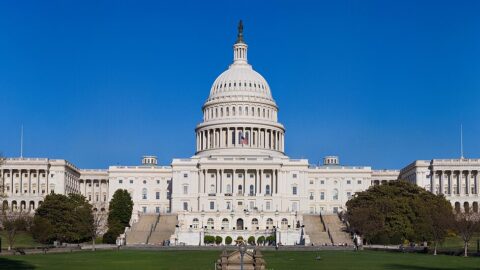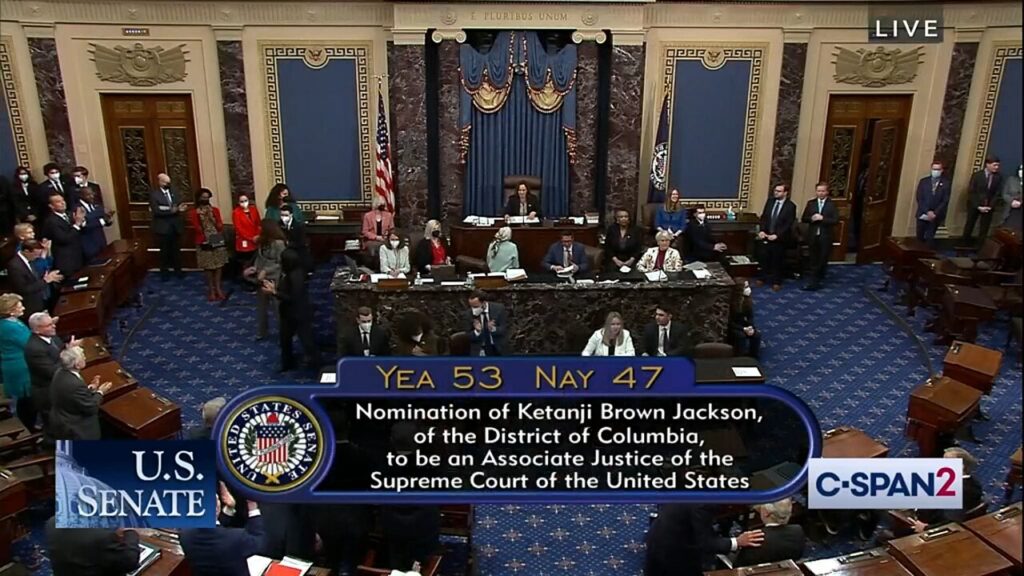
The vote: 51–48, largely along party lines, to defeat a war powers resolution that would have directed President Donald Trump to end US hostilities against Iran or seek Congress’s approval to continue them.
Who broke ranks: three Republicans — Susan Collins of Maine, Lisa Murkowski of Alaska and Rand Paul of Kentucky — voted with the Democrats. The lone Democrat to oppose the measure was John Fetterman of Pennsylvania.
What it changes: nothing, immediately. The resolution had already passed the House of Representatives in September. Its defeat in the Senate means Congress will not, for now, force an end to a war the United States has been fighting since February.
What Trump said next: that he is in no rush. “I am not rushing into any decision [on Iran]. We will see what happens after the beginning of the year,” he told Axios in a telephone interview aboard Air Force One as he flew home from China. It was his second signal in a week that another major round of strikes is, in his words from last week, “quite unlikely” before 2027.
The vote, on Thursday afternoon, was the first time the Senate has tested itself on the Iran war since the conflict began nine months ago — and the first since a midterm election in which the war, and the surge in oil prices it caused, weighed heavily on voters. Republican senators held together anyway. The tally was almost identical to a war powers vote in late September, with one exception: Senator Thom Tillis of North Carolina, who backed the earlier resolution, voted with his party this time.
The resolution itself, H.Con.Res.93, was a concurrent resolution. That matters, because it means it would never have reached Trump’s desk and carried no force of law. Its power was political: a formal instruction from Congress that the president bring the fighting to a swift end unless lawmakers authorised it. Defeating it was, in effect, Congress declining to use the one tool it has to restrain a president at war.
The fighting, meanwhile, has not stopped. American forces have struck Iranian military targets repeatedly in recent days, including a strike on 17 November against a missile launch site on Iran’s Qeshm Island. Days earlier came the sinking of five Iranian tankers, and the war at sea in the Gulf continues to disrupt shipping through the Strait of Hormuz.
Two pressures are pulling Trump in opposite directions. On one side, his own intelligence chief told Congress this week that Iranian threats against the United States have “substantially increased,” and American officials say Iranian operatives were plotting to smuggle a dirty bomb into the United States to target administration officials. On the other, Secretary of State Marco Rubio has argued that Washington is already achieving its aims through economic pressure, without needing major combat operations.
Then there is the pressure from Israel. Prime Minister Benjamin Netanyahu is pressing Washington to join a renewed bombing campaign lasting four to seven days, according to reports in the Israeli press, and has told his own security officials that another operation is “unavoidable.” Gulf Arab governments, meanwhile, have warned that fresh strikes could provoke devastating retaliation against the region’s energy infrastructure — the refineries, terminals and pipelines that the world economy depends on.
Trump’s answer, for now, is to wait. The White House has asked the Pentagon for assessments of how Iran might retaliate under different strike scenarios, including its deeply buried Pickaxe Mountain nuclear complex. But no major operation has been authorised, and the president’s own words suggest none will be until the new year.
That leaves the war in a strange half-light: too big for Congress to stop, too costly for the president to escalate, and with no negotiations under way to end it. The Senate vote settled who gets to decide. It did nothing to settle what happens next.