For 167 years, the Riemann hypothesis has sat at the top of mathematics’ to-do list — a single unproven guess about prime numbers that has defeated every mathematician who took it on. On Friday, a researcher at Anthropic said he had cracked it. With an AI’s help.
Levent Alpöge, a number theorist on leave from Harvard University who now works at the AI company, posted a four-page note and the full proof — written in the Lean programming language, which checks each logical step by machine — on his personal website. “I believe I have, working with Claude, discovered a proof of the Riemann Hypothesis,” he wrote. Claude is Anthropic’s large language model. Alpöge told reporters he had worked with it for about six weeks to build the argument, and that the proof also covers the Generalized Riemann Hypothesis, a far broader version of the same idea.
Within a day, independent mathematicians were checking his work — and, to the astonishment of many, it held up.
The checks came back clean
Lean proofs are unusual in mathematics: if the code compiles without errors, the logic is almost certainly sound. But a proof still has to prove the right thing. That is the part experts moved fast to verify, confirming that the code’s statement of the theorem matches the actual Riemann hypothesis and that no definitions had been quietly redefined along the way.
On Saturday, the Lean and Mathlib communities — the groups that maintain the Lean language — issued a joint statement: “We have full confidence that Alpöge’s proof of the Riemann Hypothesis is correct, and we congratulate him on this achievement.” Andrew Sutherland, a mathematician at the Massachusetts Institute of Technology, independently compiled the proof in Lean and reached the same conclusion. “Honestly the chance that anything is fishy here is approximately zero,” he said.
James Maynard, a Fields Medal winner at the University of Oxford, put it more cautiously: “If this fully checks out, it is clearly a historic milestone in mathematics.” He added that he suspects the proof will turn out to be correct, even though it currently exists as what he called “incomprehensible code” that mathematicians will need months, perhaps years, to properly understand.
What the hypothesis actually says
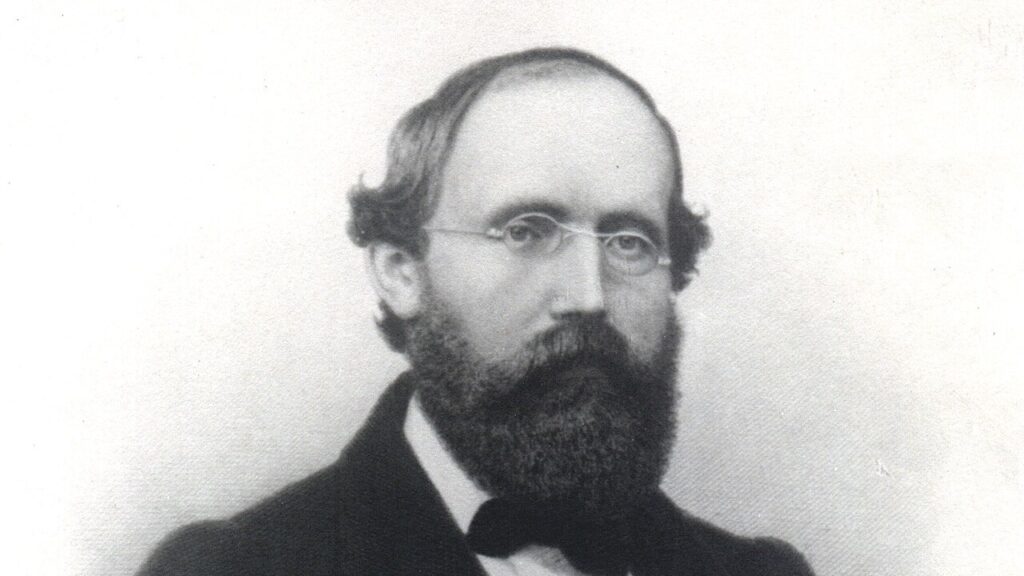
Bernhard Riemann posed the problem in 1859, in a paper about how prime numbers — the numbers divisible only by themselves and 1 — are distributed among all whole numbers. He discovered that the pattern of the primes is encoded in a mathematical object called the Riemann zeta function, and he conjectured that, apart from a few trivial exceptions, all of the function’s “zeros” lie on a single vertical line in the complex plane.
Computers have checked the first ten trillion zeros, and every one of them sits on the line. But checking cases, however many, is not a proof. A single zero found off the line, anywhere in the infinite expanse of numbers, would destroy the hypothesis. That is why it has survived as the most famous open problem in mathematics — and one of the seven Millennium Prize Problems, each carrying a $1 million prize from the Clay Mathematics Institute.
If the proof stands, its reach goes well beyond one conjecture. Hector Pasten, a mathematician at the Pontifical Catholic University of Chile, told Scientific American that the ideas behind it could connect branches of mathematics that have only ever been partially linked — “something like a Rosetta Stone.”
Not everyone is celebrating yet
The announcement landed the day after Anthropic’s record $81.3 billion IPO, a debut that initially valued the company at around $1.5 trillion before the shares slipped on their first day of trading. That timing has drawn suspicion. Andrew Granville, a number theorist at the University of Montreal, called the four-page document Alpöge released “garbled” and said he should have prepared a clearer write-up before going public. Granville suggested the timing was tied to the share price slide. Alpöge rejected that in the document itself: “There is an obvious cynical view, to do with the timing, but it is false.”
There is also a rival. Hours after Alpöge’s announcement, Ravi Vakil, a mathematician at Stanford University, posted a preprint claiming a proof of the same problem — written entirely by a human, Alessandro Maria Masullo, who earned his PhD at Stanford in 2020. Vakil called it a “hurried announcement,” saying the plan had been to spend a year polishing the draft before publishing. Which claim, if either, stands up first is now an open race.
Why the $1 million is not coming yet
For all the excitement, nobody should expect a prize ceremony soon. The Clay Mathematics Institute still lists the Riemann hypothesis as unsolved, and its rules are deliberately slow: a proposed solution must be published in a qualifying journal, at least two years must pass, and the work must win general acceptance across the mathematical community before the institute will even consider it.
That is a high bar for a proof that currently exists mostly as machine-checked code that few humans can read. Tristan Buckmaster, a mathematician at New York University who has collaborated with Alpöge, warned that digesting it will take time. “At the moment, it apparently is crazily complicated,” he said. “It’s going to take a long time for mathematicians to digest.”
The deeper question is what this means for mathematics itself. Earlier in 2026, researchers using AI tools announced a claimed solution to another Millennium problem, on the Navier-Stokes equations. Now an AI system has helped settle the most famous problem of all — or, at least, produced an argument that the machines say is correct and that humans have not yet found a flaw in. Like the dark matter that holds galaxies together, the Riemann hypothesis is invisible scaffolding: you cannot see it, but much of mathematics is built on the assumption that it holds.
If the understanding catches up with the verification, Maynard said, “this will surely be viewed as one of the absolute pinnacles of mathematical results.” The proof may be finished. The argument about what it means has only just begun.