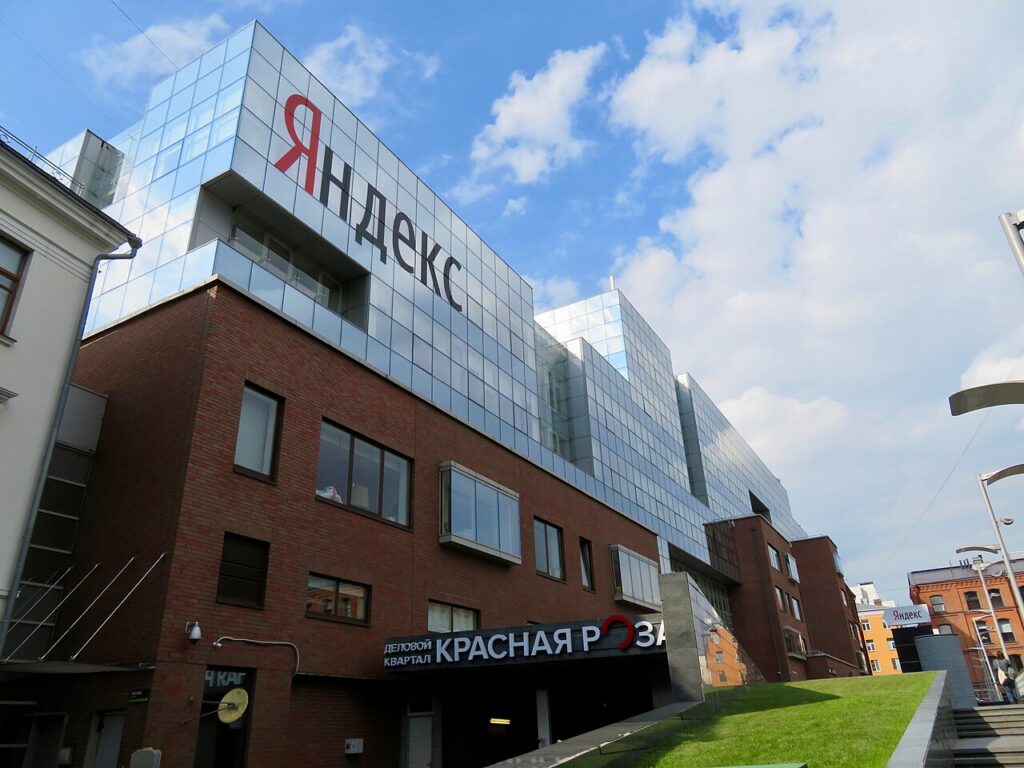
On Sunday, Russia’s biggest tech company admitted something it rarely says in public: part of the country’s internet is broken, and it can’t yet say when it will be fixed.
Yandex, the search-and-services giant often called “Russia’s Google,” said a drone attack had completely shut down its data centre in the Vladimir region, east of Moscow. No one was hurt, the company said, but some of its services are currently unavailable to users. It was the third Yandex data centre to be taken out of action in four days.
The pattern started overnight on October 7–8, when drones seriously damaged the company’s facility at Sasovo, in the Ryazan region southeast of Moscow. Yandex said on Friday that the site — home to tens of thousands of servers — had been “completely shut down” and that it could not confirm whether the equipment could ever be restored.
The Sasovo site matters more than most. It houses two of the three supercomputers Yandex uses to develop its artificial-intelligence models, the hardware behind YandexGPT, the country’s leading large language model. According to company statements carried by Reuters, Yandex is still assessing whether those machines survived.
Then, on Friday morning, a second blow. Ukrainian drones hit Yandex’s data centre in the Kaluga region, southwest of Moscow — a facility the company has called its largest, with a design capacity of about 63 megawatts. Yandex said part of its infrastructure was out of service. The regional governor said nine people were injured in the wider attack.
Ukrainian arms maker Fire Point said Kyiv used its FP-1 one-way attack drones for the Kaluga strike. On Sunday came Vladimir.
For a company that powers daily life for tens of millions of Russians — search, maps, ride-hailing, food delivery, music, cloud hosting — the disruption has been immediate and visible. Yandex told cloud customers that creating new resources on its infrastructure “may currently be limited” and advised them to move their workloads elsewhere. Internet monitor NetBlocks said Yandex’s network connectivity fell to about 70 percent of normal levels on Thursday. Yandex shares sank more than four percent on the Moscow exchange on Friday.
The human cost of a data centre going dark showed up in small places. Alexander Savitsky, who runs a start-up dating app called Pulse with 8,000 users, told Reuters that none of them had been able to reach the service since Thursday. His company couldn’t reach its backup database in Yandex Cloud and kept getting an “internal error” when it tried to restore it somewhere else. “The main risk is losing users and their trust,” he said. “People can’t use the app, and there’s no telling how many will return once service is restored.”
Kyiv has not hidden its logic. After Russia spent the past month striking Ukrainian data centres and telecommunications hubs — attacks that left roughly 100,000 households with temporary internet outages — President Volodymyr Zelenskyy said on Thursday: “We always respond in mirror-like fashion. You all know, they have been hitting and continue to hit our data centres. We are responding.”
That phrase — mirror-like — explains why data centres are burning now. This war’s drone campaign has already moved through refineries, ports, grain vessels and warehouses. The fight has now arrived at the infrastructure of information itself: the buildings where a country’s AI models are trained and its cloud is hosted.
Yandex sits uncomfortably at the centre of that fight. It handles roughly 70 percent of searches in Russia, is heavily involved in the country’s AI development, and operates, as Al Jazeera put it, “under close government observation.” In a statement on Friday, the company called its data centres “the iron heart of Yandex” — the phrase now reads like an admission of exactly why they were hit.
Why this matters: Three data centres in four days is not harassment; it is a systematic campaign, and it changes the geography of the war. Striking refineries squeezes fuel. Striking data centres squeezes the digital nervous system of a modern state — and one of the few Russian technology champions that still matters globally. If the Sasovo supercomputers are damaged beyond repair, the loss compounds: Western sanctions already mean Yandex cannot buy replacements for its American-made AI hardware.
There is also the question of what comes next. Ukraine has been escalating its deep-strike campaign for weeks, and Moscow has answered with ever-larger barrages of its own. But Kyiv appears to have chosen its targets with an eye on Washington as well as Moscow: after President Trump pressed Ukraine to halt strikes on Russian fuel hubs, the drones went after something the president hadn’t mentioned. The campaign continues — only the coordinates have changed.




2 Comments