North Korea says it has test-fired two types of submarine-launched strategic cruise missiles from beneath the sea off its east coast, its state media announced on Thursday — the latest sign that Pyongyang is pushing hard toward a sea-based nuclear deterrent as tensions with the South keep climbing.
The launches were conducted on Wednesday by the country’s Missile Administration and fired into the East Sea — the body of water between Korea and Japan, also known as the Sea of Japan — according to the Korean Central News Agency (KCNA), the North’s official state news agency. KCNA said the exercise was meant to check the “routine operational readiness of underwater combat systems” and sharpen the navy’s ability to carry out what it called strategic missions. The agency insisted the launches had “no adverse impact on the security of neighboring countries,” but offered no details on the missile types, how far they flew, or what they hit.
In the florid language Pyongyang reserves for weapons tests, KCNA declared the launches demonstrated the “high reliability, trustworthiness and ability of the war deterrents of the DPRK” — the Democratic People’s Republic of Korea, North Korea’s formal name. Photos released alongside the announcement showed one missile blasting vertically out of the water trailing thick smoke, and another erupting at a 45-degree angle. Other images showed a missile flying horizontally over the sea and a submarine traveling on the surface.
South Korea’s military, which does not normally announce cruise missile launches the way it does ballistic ones, said it had been watching all along. The Joint Chiefs of Staff said it monitored and tracked the launches “from before launch through the cruise and terminal phases of flight,” and assessed that one type of missile was fired from a vertical launch system while the other came from a torpedo tube. Senior North Korean military officers observed the test, KCNA said, including Kim Jong-sik, a senior official in the ruling Workers’ Party’s military department, and Jang Chang-ha, head of the Missile Administration.
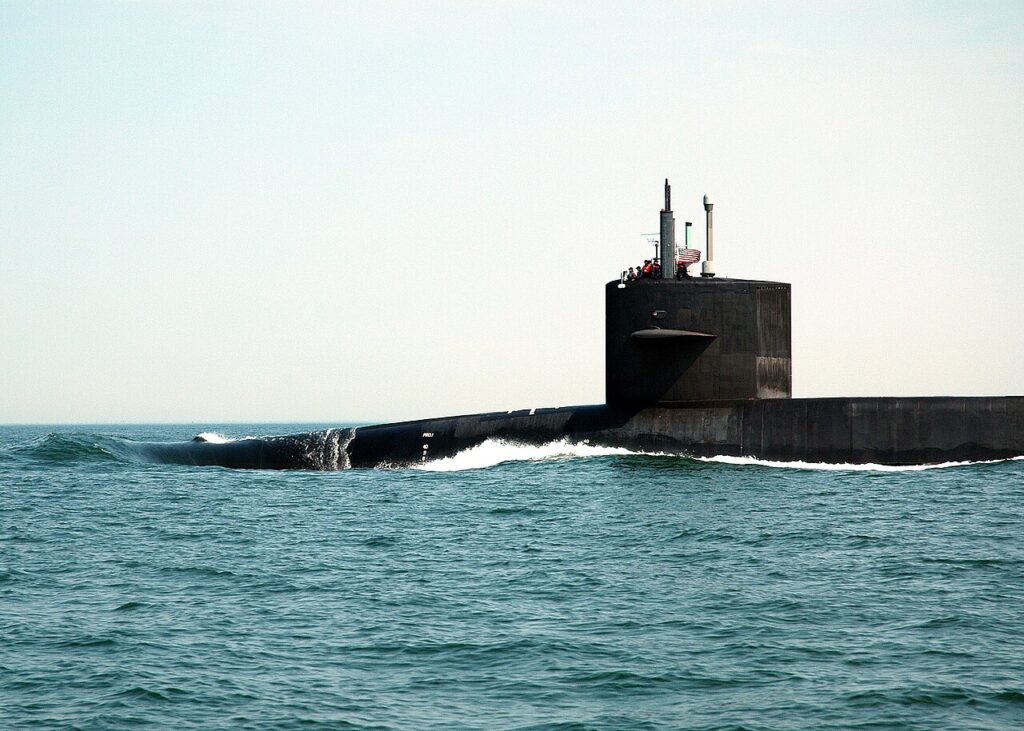
Analysts in Seoul believe the boat in the photographs is the Hero Kim Kun Ok, hull number 841 — the submarine North Korea unveiled with great fanfare in September 2023, describing it as its first “tactical nuclear attack submarine.” In reality it is a converted Soviet-era Romeo-class diesel-electric boat, estimated at around 3,000 tonnes, fitted with an enlarged sail carrying what analysts count as four large and six small missile hatches. If the identification is right, this would be the first publicly disclosed weapons test from the vessel — although satellite imagery had shown it still sitting under cover at the Sinpo shipyard as recently as August, and independent experts remain unconvinced it is anywhere near operational.
The test lands in the middle of a genuinely dangerous stretch on the peninsula. On September 21, a landmine exploded in the Seoul-controlled area of the demilitarized zone separating the two Koreas, injuring three South Korean soldiers. Both sides have been testing upgraded missile technology in the weeks since — Seoul test-flew its first hypersonic weapon earlier this month — and the rhetoric has only hardened.
Kim Jong Un has made a credible sea-based nuclear deterrent one of his top military priorities. State media has also shown what it claims is an 8,700-tonne nuclear-powered submarine under construction. Analysts say the program still has a long way to go: North Korea has fired missiles from submarines before, but has never demonstrated a fully operational modern missile submarine.
“Combat system tests for operational deployment are under way,” said Shin Jong-woo, secretary-general of the Korea Defence and Security Forum, in comments carried by international media. He added a warning about what could come next: “They are also likely to fire an SLBM before long” — an SLBM being a submarine-launched ballistic missile, the longer-range and more threatening cousin of the cruise missiles tested this week.
Why does a test like this matter beyond Korea’s shores? Cruise missiles are jet-propelled and fly at low altitude, which makes them harder to detect and intercept than ballistic missiles that arc high into space (how different missile types actually work). Fired from a submarine, they become harder still to find before launch. And a working sea-based deterrent would give Pyongyang something it does not yet credibly have: a second-strike capability — the ability to hit back even if its land-based arsenal were destroyed in a first strike. That changes the calculations of every military planner from Tokyo to Washington, and each test like this one chips away at the web of UN Security Council resolutions meant to restrain North Korea’s weapons programs.