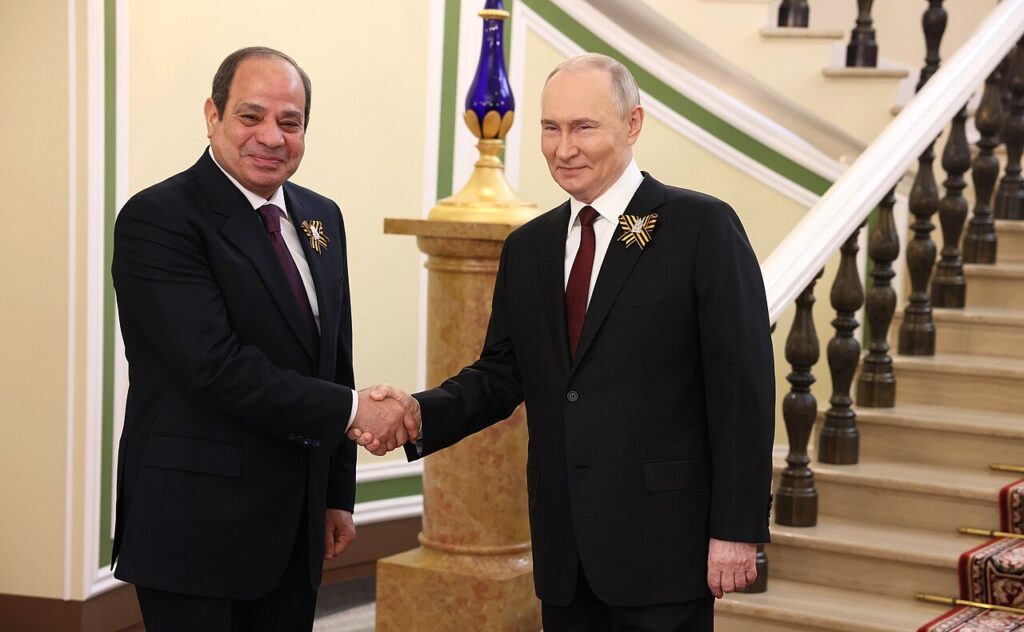
Abdel Fattah el-Sisi picked a military graduation ceremony, in front of cadets and generals, to say the words Egypt has been waiting a decade to hear. Standing at the Egyptian Military Academy in the New Administrative Capital on Saturday, the 71-year-old president declared his rule has a fixed end date — and in the same breath offered the Egyptian army to Saudi Arabia.
“The year 2030 will mark the end of my presidential term. This matter is completely settled,” Sisi said, according to state-run newspaper Al-Ahram. He stressed that the constitution “will not be touched,” ruling out any amendment to keep him in office longer.
That last line matters. In 2019, a constitutional referendum extended presidential terms from four years to six, letting Sisi stay until 2030. Ever since, Egyptian politics has run on a low hum of speculation that the charter might be amended again. On Saturday, Sisi tried to kill it outright.
“The period leading up to 2030 will be the end of my term as president of the state, if I am still alive. This is completely settled and there will be no discussion about it,” he told the graduates.
Then he turned to the war.
Sisi said Egypt is ready to take “any measure” to defend Saudi Arabia’s security and sovereignty if the kingdom asks — and that he would call on parliament to convene an emergency session to authorize it. “We stand firmly to protect and defend the territories of our brothers in the Gulf,” he said. Attacks on Saudi Arabia, he added, undermine both Arab and Egyptian national security.
Why the parliament line is the real news
Promising help is cheap. Asking parliament for a standing mandate to send it is not.
Under Egypt’s system, committing forces abroad needs parliamentary cover. By requesting that authorization now — before Riyadh has asked for anything specific — Sisi is putting Egypt’s military, the largest in the Arab world, on a legal hair-trigger behind Saudi Arabia. It is the closest Cairo has come to a formal war pledge in years.
The timing is not accidental. Saudi Arabia is in the middle of the most intense bombardment it has faced in over a decade. Houthi missiles and drones have struck Riyadh’s airport, Saudi Aramco facilities and the kingdom’s oil lifelines on the Gulf coast — attacks so heavy that Saudi Arabia is running low on missile interceptors and has been quietly asking allies, including Egypt, for air-defence help. On Saturday, Iran’s foreign minister offered to mediate the war, arguing twelve years of fighting prove there is no military solution.
Sisi’s answer, in effect, is that Egypt is preparing for the opposite.
A message in two directions
The speech was aimed at two audiences. To Egyptians, it was a succession promise: a generation of new leaders is being groomed at the military academy, he said, and the armed forces are “the shield and sword” of the state. To the Gulf, it was a guarantee: Egypt has not forgotten the billions Saudi Arabia, the UAE and Kuwait sent to prop up Cairo’s economy after 2013, and it intends to repay in kind if called.
Skeptics will note that Egyptian presidents have made promises about term limits before — the 2019 referendum being the obvious example. “The constitution will not be touched” is a line that only needs saying because everyone expects it might be.
But the substance is hard to wave away. A presidential term limit stated this bluntly, in uniform, before the officer corps, narrows Sisi’s own room to maneuver. And an Egyptian parliament pre-authorizing force in defense of Saudi Arabia would turn the Houthi-Saudi war — already a regional conflict with Red Sea shipping, oil prices and American warships in the mix — into something with one more army’s guns in it.
The question Sisi left hanging is whether Riyadh will ever make the call. Parliament has not yet convened. But Cairo has now said, on the record, that the answer would be yes.