A Sunday morning that sounded like a wartime drill
On Sunday morning, phones across central and northern Lithuania buzzed with an alert few Europeans under fifty have ever received in peacetime: take shelter. For about an hour, residents were told to stay indoors and wait. The reason, according to the country’s defence ministry, was a suspected drone in Lithuanian airspace.
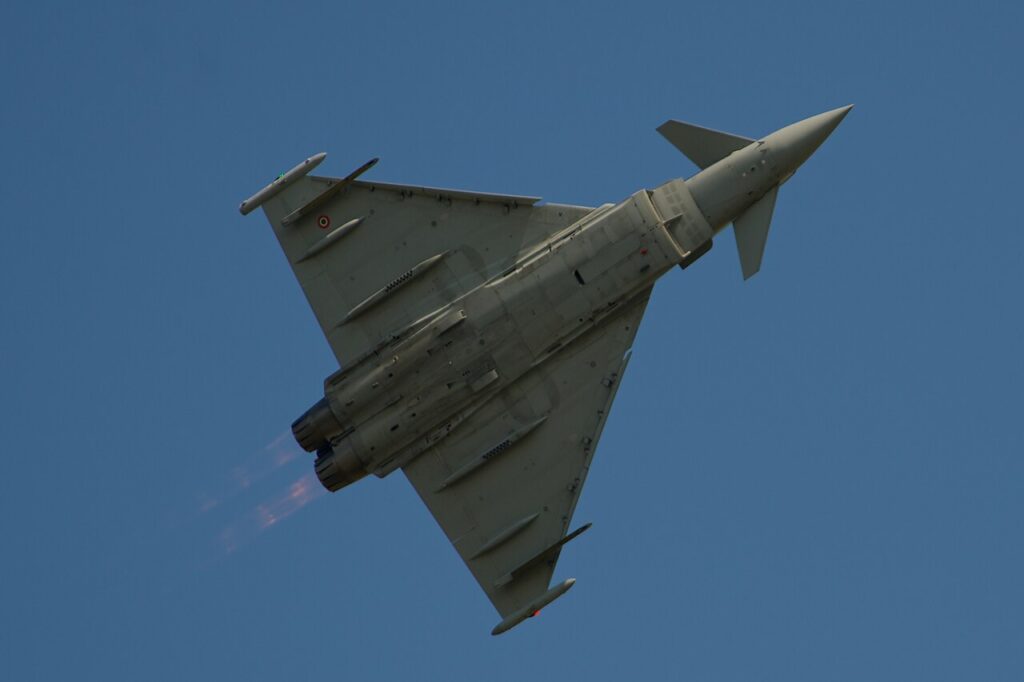
The object had reportedly crossed into Lithuania from neighbouring Poland, Defence Minister Robertas Kaunas told reporters. NATO fighter jets — two Italian Eurofighters operating under NATO command — were scrambled to the area, a NATO official confirmed. Lithuania’s second-largest city, Kaunas, had its airport closed temporarily during the alert.
Then the object vanished from radar over northern Lithuania — possibly after exploding, the crisis management centre said. Soldiers were dispatched to comb the area around Juodzionys, a village in the country’s north, for debris. Some of that debris struck a civilian vehicle, Kaunas confirmed. The pilots never got a clear look at what they were chasing: cloud cover meant the NATO jets could not visually identify the object and did not fire.
Blame and denials before the debris cools
The political fallout began within hours. President Gitanas Nauseda posted on X: “Russia’s war of aggression against Ukraine is spilling over onto the Eastern flank of NATO and EU.” He called the episode “a danger to the civilian population.”
Ukraine’s Foreign Ministry moved quickly to shape the narrative. It said it regretted the incident and suggested the drone — if it was Ukrainian — may have been knocked off course by Russian electronic warfare jamming its navigation. Lithuania and Poland, meanwhile, disagreed publicly about the flight path. Warsaw said it was investigating a possible airspace violation of its own — a ground search-and-rescue team was sent south of Lublin after radar signals and local reports — but a Polish defence ministry spokesperson later said Polish radars had not confirmed the object crossing into Lithuania.
NATO, for its part, stayed carefully procedural. “An investigation is ongoing, and NATO remains in close contact with the Lithuanian authorities,” the alliance official said, adding that it was “ready and able to react to any potential threat.”
Romania’s drones went down the day before
The Lithuania scare was the second NATO-airspace incident in two days. On Saturday afternoon, Romania’s Defence Ministry said two of its F-16s — scrambled from the 86th Air Base at Borcea at 5:43 pm — shot down two unidentified drones over Romanian territorial waters in the Black Sea. Radar had picked up a group of aerial targets roughly 120 kilometres east of Snake Island heading southwest; the first target crossed into Romanian airspace at 5:59 pm and was downed at 6:01, the second at 6:01 and downed at 6:05. Both were identified as drones. Where they came from is still unknown.
Romania’s defence minister, Radu Miruta, wrote on Facebook that the drones were engaged “moments after they had illegally entered our country.” Bucharest said it would raise the incident at the North Atlantic Council meeting on Tuesday.
Why this matters
Both episodes land at the most dangerous moment for European airspace since the war began. The weekend opened with Ukraine’s biggest-ever drone barrage on Russia — Kyiv says it launched more than 1,015 drones, setting an oil terminal ablaze in St. Petersburg — and Moscow answering with strikes on Ukraine’s energy grid. As both sides saturate the skies, the margin for error shrinks. A jammed Ukrainian drone veering west, a Russian decoy drifting off course: either one can set off shelter sirens in a NATO capital’s heartland, scramble allied jets, and force a government to decide — within minutes — whether it has just been attacked. Lithuania’s alert ended with no confirmed attack and no casualties. The next one might not be so clean.
Latvia, Lithuania’s northern neighbour, briefly raised its own “yellow” air warning in regions bordering Lithuania on Sunday, citing a “possible threat.” Investigators are still working through the debris field near Juodzionys. Until they do, one question hangs over all three capitals: whose drone was it? Read how cheap drones rewrote the rules of war to understand why airspace incidents like this keep multiplying.




One Comment