What happened
Ukraine launched one of the largest aerial attacks of the entire war overnight, sending what Russia’s defense ministry says were 1,015 drones across 15 Russian regions, the Black Sea, and Crimea. The heaviest blows landed on St. Petersburg, Russia’s second-largest city, where officials confirmed on Sunday morning that one person had been killed and five others injured.
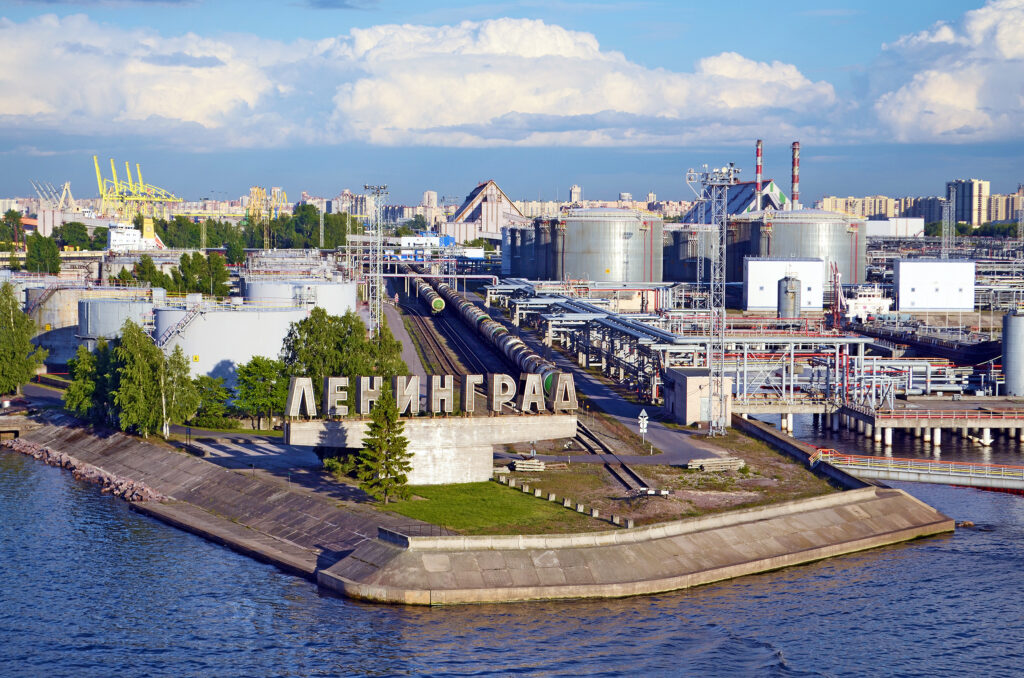
St. Petersburg Governor Alexander Beglov said a “massive” drone attack set fires at the St. Petersburg Oil Terminal in the city’s port, the Ruchyi oil depot, and industrial warehouses in the Kolpinsky District south of the city. Firefighters were still battling the blazes on Sunday, and the city’s main airport suspended arrivals and departures for safety reasons.
The attack damaged 12 apartment buildings and two private houses, Beglov said. Several residential buildings were hit by debris, and two houses burned.
A wider blast radius
The strike did not stop at St. Petersburg’s city limits. In the surrounding Leningrad region, Governor Alexander Drozdenko said four people had been hospitalized after drone debris fell on an apartment building in Gatchina and damaged 55 parked vehicles in Novosyolye. An emergency power outage hit 50 apartment buildings, leaving roughly 20,000 people without electricity. Drozdenko said air defenses had shot down 145 drones over the region.
Moscow came under pressure too. Mayor Sergey Sobyanin said 512 drones were headed toward the Moscow region overnight, most of them destroyed by air defenses far from the capital. Flight restrictions were imposed at two Moscow airports as well as at Pulkovo in St. Petersburg.
Ukrainian monitoring channels Exilenova+ and Supernova+ reported that the attack on St. Petersburg began at about 2:50 a.m. local time, with residents posting footage of explosions lighting up the night sky in a city of 5.6 million people that sits more than 850 kilometers north of the Ukrainian border. Russia’s state news agency TASS called the raid the largest on the region in four years.
Not just oil
The drones hit targets beyond energy infrastructure. A logistics center belonging to Ozon, one of Russia’s biggest online retailers, caught fire in St. Petersburg, forcing staff to evacuate; the company said no one at the site was injured. The Russian social media company VKontakte — Russia’s answer to Facebook — confirmed that its data center in the Leningrad region had been attacked by drones, adding that its services remained available to users as usual.
Ukrainian drone maker Fire Point claimed its FP-1 attack drone was used to strike the oil terminal. The independent Russian outlet Astra reported that a power substation was also hit, causing blackouts and low water pressure in parts of the region. Ukrainian forces have repeatedly struck St. Petersburg during the war; on July 4 they hit the same oil terminal in an overnight attack.
The retaliation and the failed ceasefire
Russia answered with strikes of its own. Two attacks on the southern Ukrainian city of Zaporizhzhia killed a woman and wounded at least two other people, including a 6-year-old girl, said Mykhailo Semikin, head of the regional military administration. Two apartment buildings, 18 cars and an educational institution were damaged.
The exchange comes barely a week after US President Donald Trump announced that Russia and Ukraine had agreed to an “energy ceasefire” — a deal he offered no details about. Ukraine confirmed on Thursday that it had resumed attacks on Russian oil facilities after a three-day pause, and Moscow has kept striking Ukraine’s power grid; Russia bombed Ukraine’s power grid overnight on October 17, killing eight people and cutting electricity for more than a million.
Asked about the latest Ukrainian attacks on St. Petersburg, Kremlin spokesman Dmitry Peskov sought to downplay their impact, telling reporters that Kyiv could not “change the current course of events.” Ukraine, meanwhile, has signaled that it intends to “respond in kind” to Russian attacks on Ukrainian data centers — and has in recent weeks knocked out multiple Yandex data centers around Russia.
Why this matters
The energy ceasefire that Trump proclaimed a week ago is now visibly dead, and the new battlefield logic is symmetrical: Ukraine will keep trading blows with Russia’s oil export machine — its main source of war funding — for as long as Russia keeps hammering Ukraine’s power grid. A terminal that moves 12.5 million tons of fuel a year sitting ablaze in St. Petersburg’s port is not just a military headline; it is a warning flare for global energy markets and a sign that air defenses in Europe’s largest country are stretched thin enough that a thousand-drone swarm can reach Russia’s second city. For civilians on both sides, the day after the “ceasefire” looks exactly like the day before.
Read more: how the overnight attack began — Ukraine’s drones set St. Petersburg’s oil terminal on fire and shut the city’s airport. For the Ukrainian side of the energy war, see Russia’s October 17 bombardment of Ukraine’s power grid and Ukraine’s strikes on Russia’s Yandex data centers.




3 Comments