Ukraine Says Sorry for the Drone That Wandered Into Lithuania — and Blames Russia’s Jamming
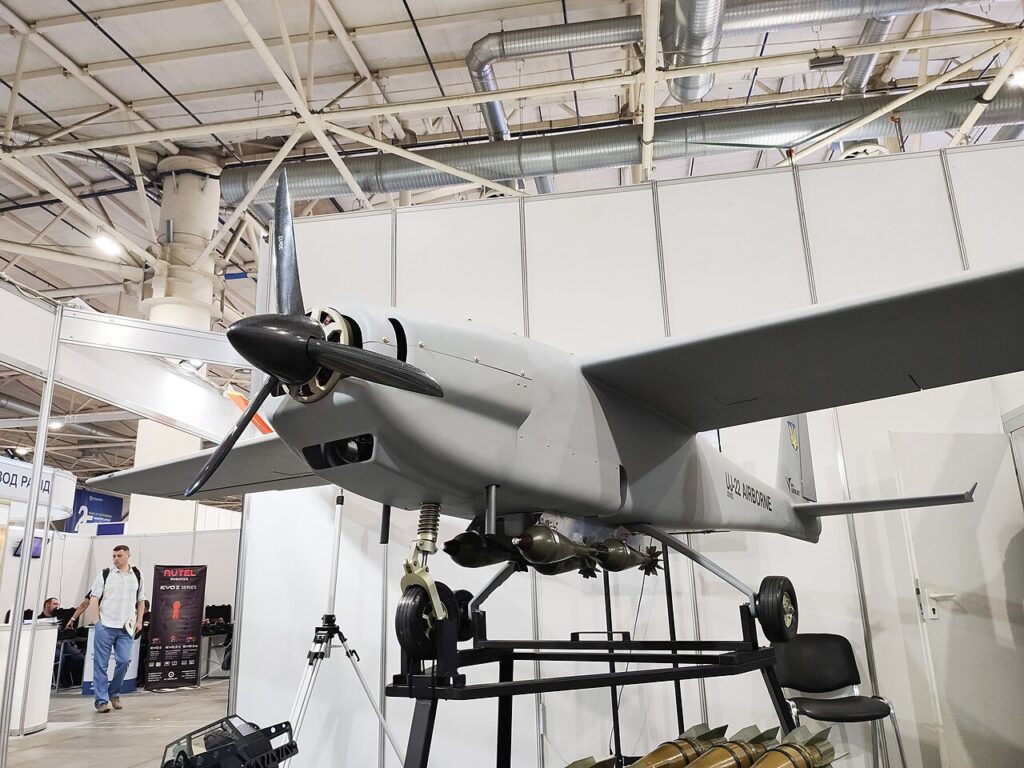
Ukraine has apologized to Lithuania after one of its long-range attack drones veered off course on Sunday and ended up in NATO airspace, prompting air-raid alerts and scrambling Italian fighter jets. Kyiv’s message was simple: it was sorry — but it says Russia’s electronic warfare, not Ukrainian intent, sent the drone astray.
“We regret the incident that occurred this morning in Lithuanian airspace, which may have resulted from Russian electronic warfare diverting drones during an operation against legitimate military targets in Russia,” foreign ministry spokesman Heorhii Tykhyi wrote on X on Sunday evening. “We apologise for any disruption, risks, and concern this may have caused. We are committed to sharing all relevant information with our Lithuanian partners to establish the full circumstances of the incident.”
It is the first time Kyiv has publicly apologized for a drone straying into a NATO country’s airspace — an admission, in effect, that the machine was one of theirs.
What happened over Lithuania
The drama began on Sunday morning, when Lithuanian authorities detected an unidentified drone inside their airspace and blasted shelter warnings to mobile phones across the central and northern parts of the country for roughly an hour. Two Italian Eurofighter Typhoons — NATO’s Baltic air-policing jets, stationed in the region — scrambled, though heavy cloud cover meant they never got a visual on the object, and no shot was fired.
The drone eventually came down over northern Lithuania. Debris struck a moving car; the person inside was unhurt. Authorities in the Pasvalys district, near the Latvian border, are investigating a possible crash site, and it remains unclear whether the wreckage contained explosives, according to Lithuania’s national crisis management centre. Kaunas airport closed briefly, and Latvia put its border region on a “yellow” alert.
Lithuania’s defence minister, Robertas Kaunas, had earlier suggested the drone probably crossed in from neighboring Poland. Tykhyi’s statement points instead to Russian electronic warfare — the electromagnetic spoofing and jamming Russia increasingly uses along the war’s frontier.
The GPS-spoofing angle
That explanation is not implausible. Darius Kuliesius, deputy head of Lithuania’s communications regulator, said last month that Russia has expanded its GPS-spoofing antennas in its Kaliningrad exclave — a wedge of Russian territory squeezed between Poland and Lithuania — from just three in early 2025 to 36 now. Within a radius of up to 450 kilometres, he said, Russian systems can falsify the GPS signals that drones and civilian aircraft rely on for navigation.
A spoofed drone doesn’t fall out of the sky; it keeps flying, confidently wrong about where it is. That makes deflection, rather than a malfunction, the more likely story — and a far more worrying one, because it means Russia’s war is mechanically bleeding across borders even when nobody intends it to.
Lithuania’s president, Gitanas Nausėda, said as much earlier on Sunday: “Russia’s war of aggression against Ukraine is spilling over onto the Eastern flank of NATO and EU.”
Why this apology matters
Stray drones in NATO skies are no longer rare. On Saturday, Romania shot down two drones over Black Sea waters. Poland is still investigating its own possible airspace violation from the weekend. Last month, a wave of Russian drones pushed into Polish airspace — an incident NATO treated as a deliberate test.
What makes Sunday different is the apology. Ukraine rarely confirms its strike aircraft by name, and admitting one wandered into an ally’s airspace carries a cost. But it buys something too: it pre-empts the accusation that Kyiv is careless with NATO’s skies at the exact moment its air war with Russia is reaching deeper — overnight, Ukraine sent more than 1,000 drones at targets across Russia, its largest-ever aerial bombardment. For a fuller account of Sunday’s scramble, see our earlier report on the Lithuania drone incursion.
The real question now is technical, not diplomatic. If Russian electronic warfare can reliably nudge Ukrainian drones hundreds of kilometres off course, the eastern flank is in for more shelter alerts — and more evenings when fighter jets take off into clouds, hunting machines that were never meant to be there.