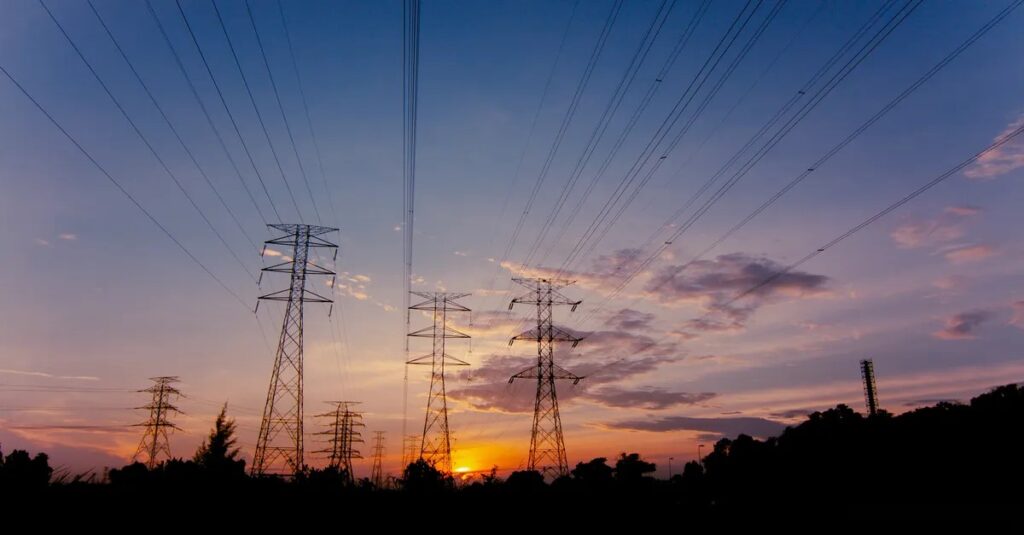
The lights went out across Ukraine on Friday — and this time, they went out in nine regions at once.
Russian forces launched what Ukraine’s state electricity transmission operator, Ukrenergo, called a massive overnight drone attack on the country’s energy facilities, killing at least eight people and injuring about 60, according to Ukrainian officials cited by Reuters. The strikes hit homes, a food-processing plant, a customs terminal, and two shopping centers — and knocked out power for more than a million people, the largest single-day blackout of the war’s fourth year so far.
In the eastern city of Kharkiv, Ukraine’s second-largest city and a target Russia has never stopped pounding, a 71-year-old woman and a 58-year-old man wer
The ceasefire that wasn’t
The timing was impossible to miss. One day earlier, Ukraine had resumed its own strikes on Russian oil refineries — hitting the Ryazan refinery on October 15 after a three-day pause during which Ukraine struck no Russian refineries. Kyiv said it stopped pausing because Russia had never paused its own attacks on Ukrainian power plants and energy sites.
That matters because of a diplomatic promise that evaporated almost as it was made. Earlier in the week, U.S. President Donald Trump announced an “energy ceasefire” — a halt to attacks on energy infrastructure by both sides. But neither side fully confirmed the arrangement, and Moscow never stopped. On Friday, Russia’s top military commander told President Vladimir Putin the military was allocating the assets needed to keep pressing the aerial campaign against Ukraine’s energy system.
Meanwhile, in Brussels, Ukrainian President Volodymyr Zelenskyy was sitting down with European Union leaders at a summit that had already been dominated by energy prices. European Commission President Ursula von der Leyen said the bloc had backed Trump’s proposed energy ceasefire — “but Russia had not respected it for a single minute, and had escalated instead.” She said the EU is preparing a 22nd package of sanctions against Moscow and that existing sanctions will not be lifted unless the war stops. European Council President Antonio Costa said leaders had discussed winter aid for Ukraine’s energy system. The strikes gave them a fresh test case before the summit had even ended.
Why this matters
Winter is coming, and Russia knows exactly what it is doing. The strategy is not new — Moscow tried to freeze Ukraine into submission in the winters of 2022 and 2023 — but the scale of this barrage, nine regions in a single night, shows the campaign entering a more aggressive phase. Ukraine’s grid operators are competent and battle-hardened; they reconnected more than a million people within hours. But each wave of strikes grinds down reserves of transformers, switches, and the spare parts that no factory can deliver quickly enough in wartime.
Beyond Ukraine’s borders, the ripples are economic. Von der Leyen told the Brussels summit that the Middle East conflict alone has added 106 billion euros to Europe’s fossil-fuel import bill, and the International Energy Agency is now accelerating the release of emergency oil stocks — 100 million barrels over four months — to steady the market. A war that keeps knocking out power for a million people at a time does not stay contained to one country. It shows up in your gas bill, your electricity contract, and the price of everything transported by truck — including, on Friday, about ten of them burning on a highway to Poland.
e killed and 12 more people wounded when three districts came under attack, regional Governor Oleh Syniehubov said. Later in the evening, a second wave of strikes injured nine more people there. Two more died in Kramatorsk, the frontline city in the Donetsk region; two more were killed in the southeastern Dnipropetrovsk region.
The attacks reached deep into the west. In the northwestern region of Volyn, which borders NATO member Poland, a Russian drone struck a food-processing facility, killing one worker and injuring eight others, Governor Roman Romaniuk said. The same wave of drones hit a customs terminal in the town of Kovel — on a major trucking route between Kyiv and Poland — and set fire to about 10 trucks. In Rivne, drones hit a shopping center and nearby sites, killing one person and wounding seven, Governor Oleksandr Koval said. Another shopping center was hit in Sumy, close to the front line; photos released by emergency services showed blood on the mall’s floor.
This was not collateral damage to a battlefield. The blackouts were the point. New outages were recorded in the capital Kyiv and eight regions — Kyiv, Volyn, Odesa, Zaporizhzhia, Dnipropetrovsk, Kharkiv, Sumy, and Chernihiv — and in some places, emergency rolling-blackout schedules of up to two rounds a day are now in effect. In Lutsk, the capital of Volyn, the city went completely dark; Mayor Andriy Razumovskyi warned the blackout could last at least 24 hours. In Kovel, the pumps stopped too — the city lost its water supply along with its electricity.
Ukrenergo said the overnight attack involved 149 strike drones, 108 of them jet-powered — the kind that fly faster and give air defenses less time to react. A facility run by DTEK, Ukraine’s largest private energy company, was damaged in the Odesa region. By Friday morning, the Energy Ministry said repair crews had restored power to more than a million people, though it was not clear how many were still without electricity. Crews are working where the security situation allows — but continuous air-raid alerts keep forcing them to stop, the ministry said.




2 Comments