Brazil’s Superior Electoral Court declared Luiz Inácio Lula da Silva the winner of the country’s presidential runoff on Sunday, handing the 80-year-old Workers’ Party leader an unprecedented fourth term — and setting up an immediate fight over the result. His defeated rival, Senator Flávio Bolsonaro, told supporters in Brasília that he would not accept the outcome and would ask the courts to annul it.
With nearly all votes counted, Lula took 51.76 percent of valid votes against 48.24 percent for Bolsonaro, a margin of more than four million ballots. The result reversed the order of the October 4 first round, when Bolsonaro, the 45-year-old senator from Rio de Janeiro and eldest son of imprisoned former president Jair Bolsonaro, finished first with 47.03 percent to Lula’s 45.16 percent.
It is the first time since Brazil returned to direct presidential elections in 1989 that the candidate who finished second in the first round has gone on to win the runoff. Lula, a former metalworker who first governed Brazil from 2003 to 2010 and returned to the presidency in 2022, will now become the first democratically elected Brazilian president to win four terms. He is due to be sworn in on January 5, 2027.
Bolsonaro’s rejection came within hours of the declaration. “It is impossible to recognize the election result given how these events unfolded,” he told supporters in the capital. “We will take legal action. We will ask for this election to be annulled.” His team pointed to the Superior Electoral Court’s last-minute decision to extend voting by two hours after transport disruptions and heavy rain hit parts of the country, and to claims from Lula’s allies that bus services were suspended in some areas, dampening turnout among the president’s working-class base.
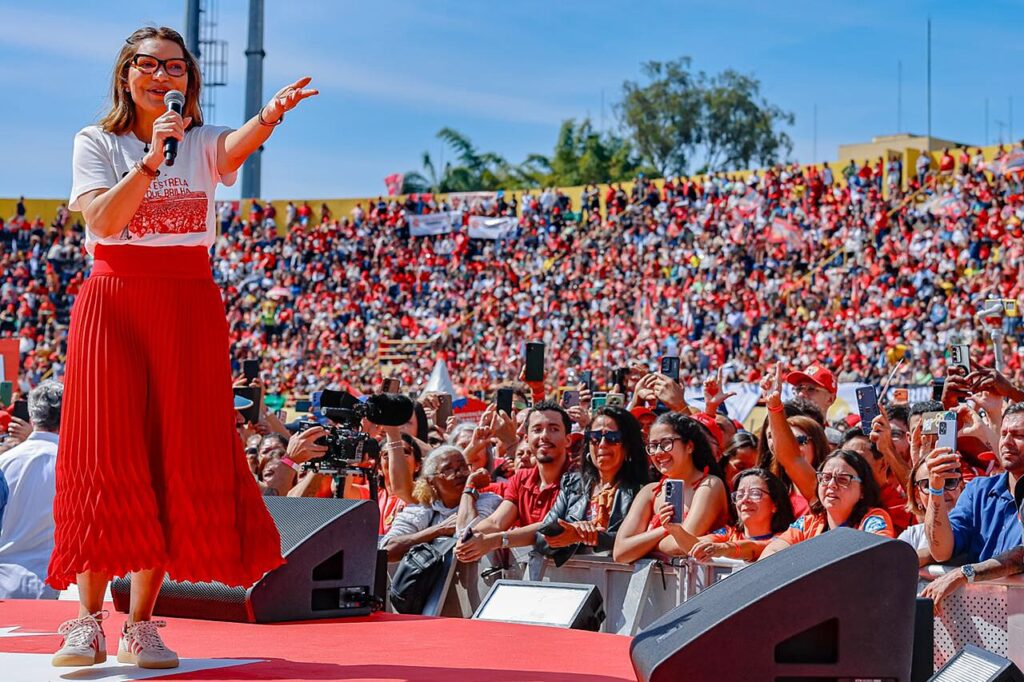
Lula, speaking to celebrating supporters, framed the win as a defence of Brazilian democracy. “People went to vote because we convinced them it was important to preserve democracy,” he said. “This country doesn’t accept being anybody’s colony.” In Rio de Janeiro, supporters honked car horns and raised the “L” sign; in Belo Horizonte, capital of the key swing state of Minas Gerais, crowds chanted and sang into the night.
The campaign was fought above all on the cost of living, crime and corruption — the daily pressures that have defined Lula’s third term and that Bolsonaro promised to attack with a tough-on-crime platform and measures to bring down food prices. Both men also carried heavy baggage into the runoff: Lula spent more than a year in prison on corruption convictions that were later annulled, while the Bolsonaro name remains tied to the former president’s imprisonment and to a political movement that has never yet beaten Lula at the ballot box.
The United States loomed over the race without ever formally entering it. President Donald Trump offered no official endorsement, but Bolsonaro campaigned openly on his closeness to the Trump administration, while Lula accused Washington of intervening on his rival’s behalf. Lula’s victory interrupts a string of right-wing wins across Latin America — in Bolivia, Chile, Costa Rica, Colombia, Ecuador, Honduras and Peru — that had given Trump a growing bench of ideological allies in the hemisphere. Markets reacted fast: an exchange-traded fund tracking Brazilian stocks fell 13 percent in Japan trading as investors who had bet on a Bolsonaro win repriced the outlook.
What happens next is uncertain. Bolsonaro has not produced evidence that would overturn a four-million-vote margin, and Brazil’s electoral court has a record of rejecting unsubstantiated challenges. But a legal fight, even a losing one, would keep the country’s deep divisions on full display through the transition — and test whether the institutions that ran a messy, weather-hit election day can close the book on it cleanly.
Why this matters beyond Brazil: the country is Latin America’s largest economy and its most populous democracy, home to most of the Amazon rainforest and a pivotal voice in global trade, climate and food markets. A fourth Lula term means continuity for a government that has positioned itself as a counterweight to Washington in the region — and a setback for a US administration that has spent the past year building a network of allied governments across the hemisphere. For the rest of the world, the question is no longer who governs Brazil, but whether the loser accepts it.
Related coverage: the first-round shock that set up this runoff is covered in Flávio Bolsonaro’s first-round win over Lula, and the state of play on voting day in Brazil votes in a runoff too close to call.



One Comment