Vladimir Putin has agreed “in principle” to resume trilateral negotiations with the United States and Ukraine after November 10, the Kremlin said on Wednesday — the first time the Russian president has publicly committed to a dated three-way format since his delegations last sat down with Ukrainian officials in the United Arab Emirates earlier this year.
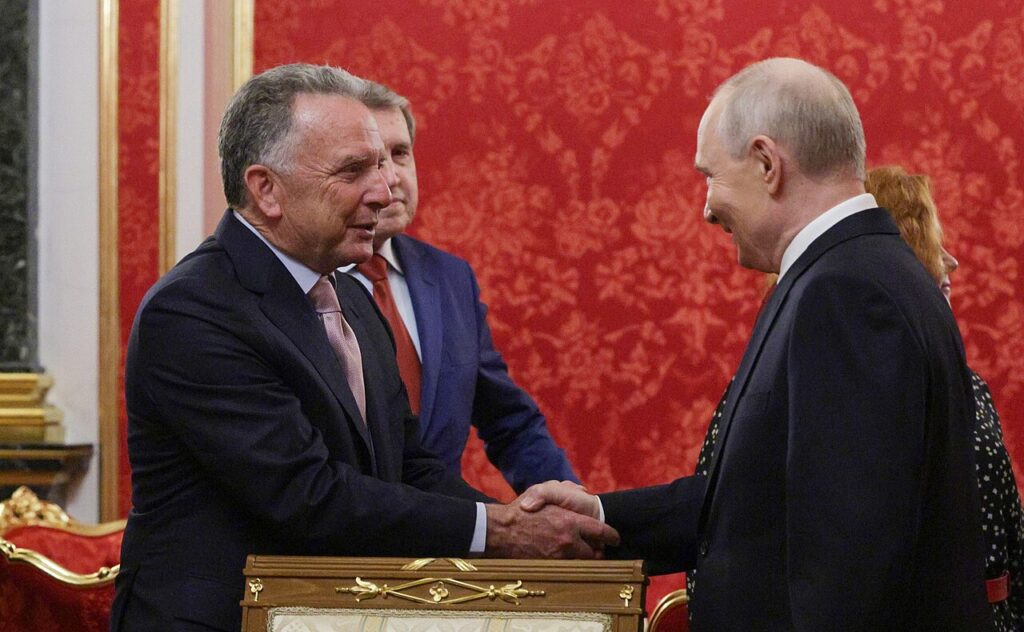
The announcement came from Yuri Ushakov, Putin’s foreign-policy adviser, after a roughly three-hour meeting between the Russian leader and U.S. special envoy Steve Witkoff at the Constantine Palace in St. Petersburg on October 21. Ushakov told reporters that Putin had agreed talks would continue after the November date, and that the future sessions would focus on “building a security system for Russia and Ukraine after the conflict ends.”
Witkoff, the real-estate billionaire Donald Trump has made his principal negotiator, flew into Russia directly from Oslo, where on Tuesday he met Ukrainian President Volodymyr Zelensky, Finnish President Alexander Stubb, Norwegian Prime Minister Jonas Gahr Støre and a clutch of European officials to weigh a proposal covering security guarantees for Kyiv, economic recovery funds and postwar arrangements. He arrived carrying a document built out of those consultations — Witkoff’s trip to St. Petersburg was the second half of a deliberate shuttle sequence: Kyiv’s and Europe’s positions shaped first, Moscow’s reaction sought after.
“I think there’s some degree of momentum, and I hope that this today can be another step forward in the peace process,” Witkoff said as the St. Petersburg session began. Afterward, he told reporters there was “a foundation upon which a ceasefire in Ukraine can be built” — the most optimistic American statement on the war in months.
Zelensky, speaking after the Oslo leg, said the proposal on the table included “strong” security guarantees and “positive signals” from the American side. He told Fox News in an interview broadcast Wednesday that freezing the conflict was the “minimum” Russia needed to deliver, calling it “the real way to end this war,” and said advance warnings of Russian missile attacks were reaching Ukraine again — a small, technical sign that intelligence cooperation is quietly resuming.
The fine print, as always with Kremlin announcements, deserves a careful read. Ushakov agreed only “in principle” — the diplomatic equivalent of a maybe — and in the same briefing poured cold water on the Oslo proposals Witkoff had brought, saying they contained “little of actual value for resolving the Ukrainian crisis.” Russia’s foreign minister, Sergey Lavrov, had set the tone the day before, saying Moscow would make no “political concessions” and that he expected no “miracle” from the talks. The gap between the two capitals remains wide: Moscow demands the entire eastern Donbas, a shrunken Ukrainian military and a promise Kyiv will never join NATO, while Ukraine insists on future security guarantees and rejects surrendering territory it still controls.
The meeting covered more than Ukraine. Putin told Witkoff that Moscow is prepared to help resolve the crisis with Iran and expressed interest in restoring economic cooperation with the United States, including possible Russian fertilizer exports. One source had earlier told the New York Post that the future trilateral agenda could even touch on Ukraine’s eventual accession to the European Union — an idea that would have been unthinkable in Moscow a year ago, and which Ushakov pointedly did not confirm.
That the outcome was announced at all marks a shift from an earlier “no compromise” assessment of the same session. Putin has repeatedly resisted leader-level summits with Trump and Zelensky to wind down a war now past the four-year mark, and Trump himself had recently floated the idea of cutting Kyiv out of three-way talks altogether — at one point suggesting negotiations with China and Russia instead, after clashing with Zelensky over Ukrainian strikes on Russian refineries. Now Washington, Moscow and Kyiv are all publicly committed to the same room after November 10.
Why this matters: a dated commitment to a trilateral format is the closest thing to a diplomatic calendar the Ukraine war has produced this year, and it gives markets, militaries and humanitarian agencies on both sides a timeline to plan around. But “in principle” is not a ceasefire, Nov. 10 is not yet a date, and the same Kremlin that agreed to talk also dismissed the substance of what it was shown. The world has watched this war consume every deadline set for it; the test will not be whether three delegations meet in November, but whether anything survives the meeting.