The world’s energy watchdog has now put a number on what the Iran war has done to the global energy system — and a verdict on whether it can ever be undone. The number is the largest on record. The verdict is no.
The International Energy Agency’s World Energy Outlook 2026, released on Thursday, describes the disruption to shipping through the Strait of Hormuz as the largest energy supply shock the world has ever faced. At its peak, global oil supply fell by 16 million barrels a day and gas supply by 320 million cubic metres a day. By November, cumulative losses from the Gulf had reached 2.8 billion barrels of oil and 60 billion cubic metres of gas — far larger than any previous crisis, including the oil shocks of the 1970s.
“In my view, the energy world will never be the same again as it was before the Iran war,” the IEA’s executive director, Fatih Birol, said in an interview alongside the report’s release. In an essay for The Economist he put it more bluntly: “I don’t see any credible pathway back” to the pre-war situation. Confidence in the strait as a safe and reliable corridor, he argued, has been crushed.
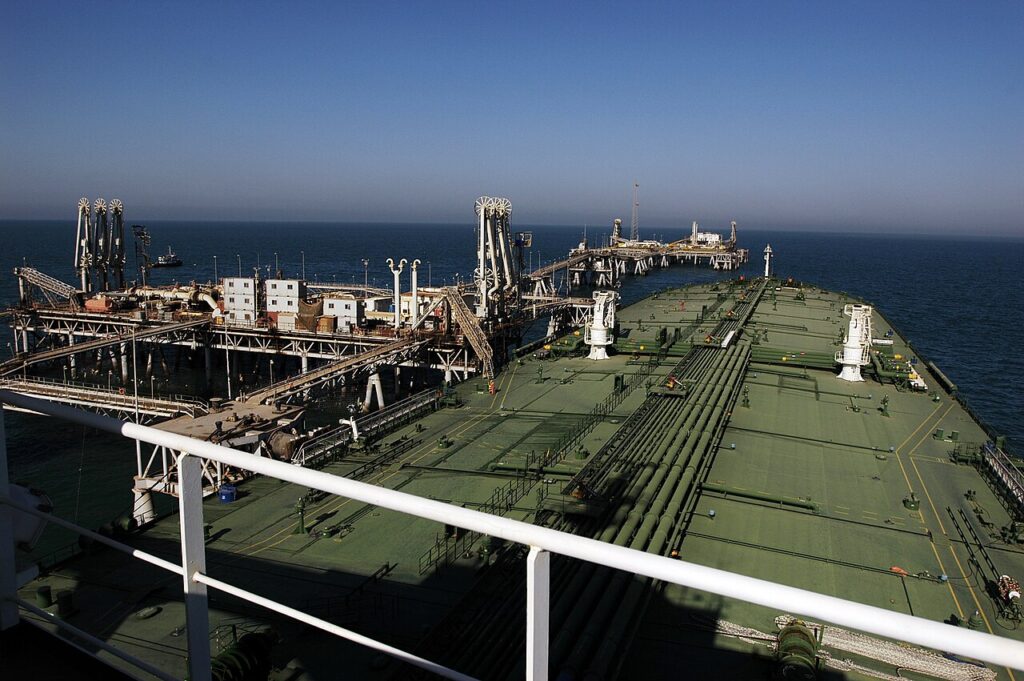
Before the conflict, around 20 million barrels of oil a day moved through the narrow waterway that carries a fifth of the world’s oil, connecting the Persian Gulf to global markets. The war changed that in weeks. Tankers were attacked, mines were laid, and shipping companies began refusing the route. Just this week, five Iranian tankers were sunk. The shock did not stay confined to crude: diesel, the fuel that moves the world’s trucks, farms and factories, spiked violently, and gas supplies to Asia — the strait’s biggest customer — were squeezed hardest of all.
What makes the IEA’s report striking is not the damage it records but the future it sketches. The agency’s central finding is that the world can, eventually, manage without the strait — but only by rebuilding the plumbing of the global energy trade at enormous cost, and by using a great deal less oil in the process.
The rewiring is already under way. Saudi Arabia has leaned on its East-West pipeline to move crude to the Red Sea; the United Arab Emirates has used its pipeline to Fujairah on the Gulf of Oman. Around 7 million barrels a day of new Gulf bypass pipeline capacity is now under construction or under consideration, at an estimated cost of $40 billion — adding about $2 to the cost of every barrel of Middle Eastern oil exported. If the strait remains severely disrupted, the IEA estimates the oil that needs to pass through it could fall to 8.5 million barrels a day by 2030, and below 2 million by 2035.
But the bigger shift, in the IEA’s telling, is on the demand side. Governments spooked by the crisis are accelerating electrification, efficiency and fuel-switching — buying electric cars, building renewables at home, insulating buildings — precisely to need less imported fuel. Under the agency’s new “Additional Response Case,” that security-driven shift cuts global oil demand by 4.4 million barrels a day by 2035 compared with current policies. Electric vehicles alone would displace more than 11 million barrels a day. Oil demand falls to 97 million barrels a day in 2035 and 85 million by 2050, against just over 101 million under current policies.
There is an irony in this that the IEA does not hide: the war that was fought, in part, over energy has become the biggest single accelerant of the move away from oil. “The impact of Hormuz is only just beginning to become clear,” said Dave Jones, chief analyst at the energy think tank Ember. “Hormuz will speed up electrification and renewables, likely faster than many people think.”
None of this means the pain is over. Between March and October, global oil demand fell by around 3.7 million barrels a day from a year earlier, as higher prices, physical shortages, government rationing measures and weaker economic activity curbed consumption. The decline was sharpest in the Middle East itself, where demand dropped 10%, and in Asia, where it fell 5%. Consumers, in other words, are paying for the shock now; the benefits of the rewiring arrive years from now.
And the Middle East is not going away. “It is not easy, but the energy world could conceivably manage without the strait,” Birol said. “It cannot manage without the Middle East.” The region will remain the world’s largest oil exporter even as the routes its oil takes are redrawn.
The report’s quiet message to governments is that the age of assuming cheap, safe, uninterrupted energy flows is over. The strait may reopen fully one day. But the pipelines, the power lines and the electric cars being built because it closed will not be unbuilt. That is what “no way back” really means.