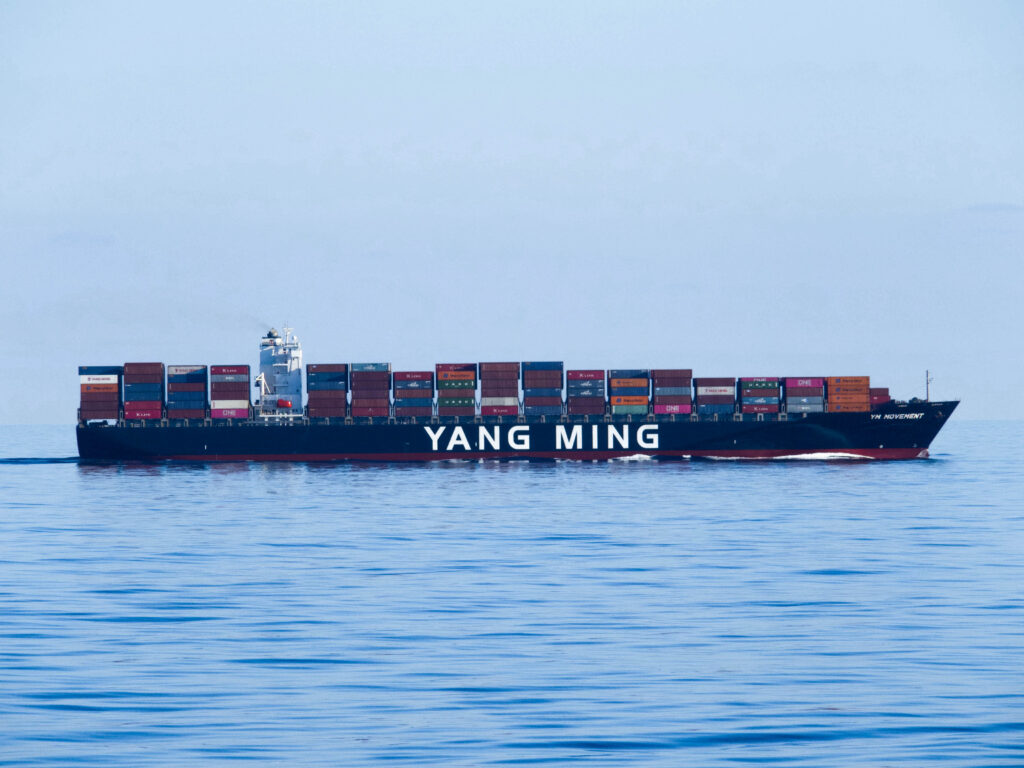
Two cargo ships went down near the Strait of Hormuz within 24 hours of each other this week, in the sharpest escalation of the shipping war since the United States and Iran began fighting in February.
The first vessel to be confirmed lost was the GFS Pride, a Singapore-registered container ship of 2,824 twenty-foot container slots — a feeder vessel, the kind that links the Gulf’s mega-ports to smaller harbors. It was struck by unknown projectiles on Tuesday while transiting the strait, caught fire, and sank on Wednesday. All 21 crew members were evacuated safely and none were injured, Singapore’s Maritime and Port Authority (MPA) said in an official statement.
A second Singapore-registered ship, the GFS Giselle, was hit a day later, on Wednesday. It survived. The vessel took hull damage but reached a safe anchorage under its own power, with all 22 crew unhurt.
And then there is the Cape Dao, the loss that tells a grimmer story. The Antigua and Barbuda-flagged bulk carrier was struck by two unidentified projectiles on September 23, about 15 nautical miles northeast of Khasab, Oman, while carrying some 170,000 tons of coal from the United Arab Emirates to India. One Indian crew member was killed in that attack. The ship lingered for three weeks — and then, on Wednesday, casualty data from the International Maritime Organization, the United Nations’ shipping agency, showed it had gone down close to the strait.
By IMO data, the GFS Pride and Cape Dao are only the second and third vessels to sink in the Middle East since the US-Iran war began on February 28. The last ship to go down before this week was the Malta-flagged container vessel Safeen Prestige, back in early March, when a projectile sparked a fire in its engine room. Four seafarers died in that incident.
Iran’s version of events differs. Iranian state media Press TV reported that the GFS Pride had “hit a sea mine on an unauthorized route” — a claim maritime experts cast doubt on, saying a drone attack was far more likely. CNN-verified video showed black smoke rising from the ship as it took on water; later footage and European satellite images showed cargo containers scattered across the water and a small oil slick trailing behind.
Tehran says it is stepping up attacks in response to the American naval blockade of its ports and the tougher sanctions imposed last month — its answer to Washington’s effort to choke off Iranian oil exports while keeping petroleum flowing through the strait. Attacks around the waterway have surged over the past 10 days. The losses follow a string of earlier strikes, including a supertanker set ablaze in the strait and a drone attack on an oil tanker at Sharjah anchorage.
Singapore’s port authority minced no words. “MPA is deeply concerned about the continued attacks on commercial shipping in the Strait of Hormuz,” it said. “Such attacks are unprovoked, unjustifiable, and a breach of international law.”
The worry is not only humanitarian. The Strait of Hormuz is the narrowest major chokepoint in the global energy system: about 20 million barrels of oil and petroleum liquids — roughly one-fifth of all the oil the world consumes — pass through it every day, according to the US Energy Information Administration. Total losses of container ships are rare events; insurance provider Allianz Commercial counted only 33 such losses worldwide between 2016 and 2025. Two in one day, in the same waterway, is the kind of statistic that moves markets.
And markets are moving. Brent crude futures fell back to $104.67 a barrel on Thursday as traders weighed the attacks against US efforts to ease shipping costs — but the underlying pressure points only one way. Iran has said openly it wants to keep oil prices high. Every ship that sinks, every crew evacuated, every satellite image of floating containers adds a risk premium to the price of crude — and, eventually, to the price of everything that moves by truck, ship or plane.
That is why two sunken cargo ships in the Gulf matter in Ohio and Osaka as much as in Oman. The waterway that carries a fifth of the world’s oil cannot become a graveyard for merchant ships without the world paying for it.


One Comment