At least 21 people are dead after a small wooden boat carrying migrants capsized off the coast of northwestern Senegal, the country’s interior ministry said on Sunday. Only one person was pulled from the water alive.
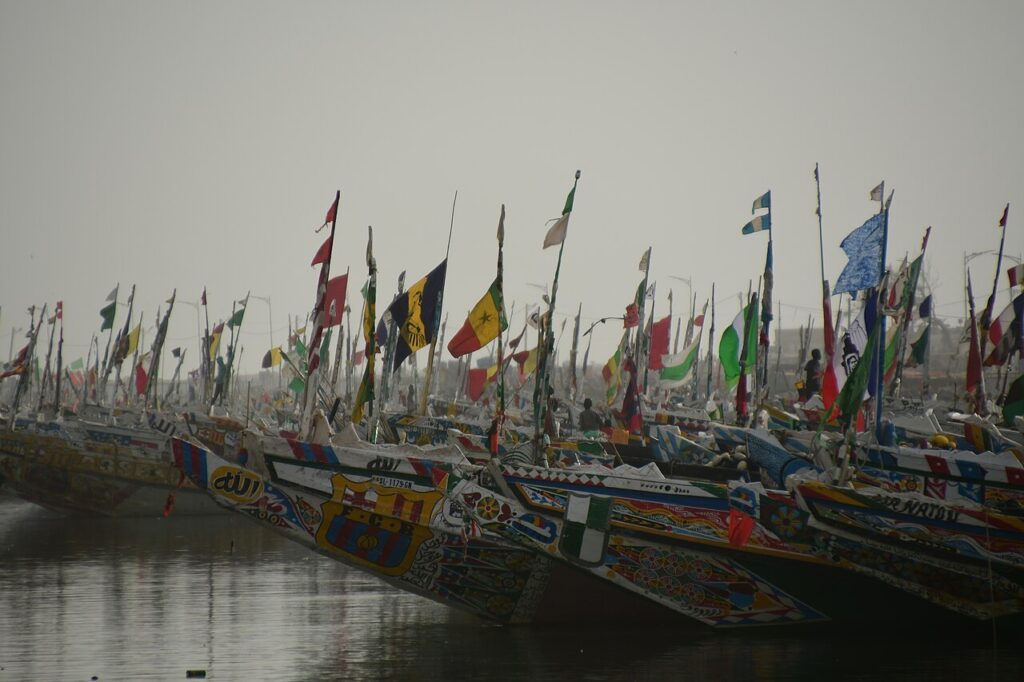
The boat, a pirogue — the flat-bottomed wooden fishing vessel used all along West Africa’s coast — ran into trouble off Kébémer, a town about 180 kilometres (112 miles) north of the capital, Dakar. The ministry said the death toll was provisional as of Saturday evening, with search and rescue operations still under way and families of the victims being helped.
In its statement, published on X, the ministry put the toll in stark terms: “Au soir du 7 novembre 2026, le bilan provisoire fait état de 21 corps sans vie et d’un rescapé.” By the evening of 7 November, 21 bodies had been recovered and one person had survived.
Local media reported that the pirogue capsized on Saturday near the Loumpoul dunes, on the stretch of coast between Dakar and the northern city of Saint-Louis. Le Soleil newspaper said most of the victims came from the Leona and Thieppe districts of the same Kébémer department — neighbours and relatives of the same small communities, now waiting for news.
Senegal’s interior minister is expected to visit the site on Monday to meet the victims’ families. The ministry did not say how many people had been on board, and it was not immediately clear where exactly the boat had set out from or how long it had been at sea before it went down.
The same ministry said on Friday that Senegalese authorities had intercepted another boat carrying 142 migrants as it attempted the same journey toward Spanish territory — a reminder of how many people are still trying to make the crossing, even as the death toll mounts.
The destination for boats like this one is almost always Spain’s Canary Islands, roughly 1,500 kilometres across open Atlantic water from the Senegalese coast. The United Nations’ migration agency, the IOM, calls the West African Atlantic Route one of the world’s deadliest migration corridors — and the numbers behind that label have barely moved even as fewer people attempt the crossing.
In October, the IOM reported that arrivals in Europe from Mali, Senegal, Guinea and The Gambia had fallen 59 per cent in the first half of 2026 compared with the same period last year. But recorded deaths and disappearances on the Atlantic route fell by only 4 per cent between 2024 and 2025 — from 1,215 to 1,172 — and 168 people were recorded dead or missing on the route in the first six months of this year alone. In July, around 143 people were feared dead after a boat that had left The Gambia drifted for 25 days off Mauritania before rescuers found it. Last month, 139 migrants died off Djibouti on another deadly route.
The IOM’s director general, Amy Pope, warned when the figures were released that “fewer arrivals in one place doesn’t mean the pressures have gone away.” Tighter controls in Morocco, Mauritania and Senegal have pushed departures further south, towards The Gambia and Guinea-Bissau, stretching some journeys to around 2,200 kilometres and days longer at sea.
Why this matters
This is not an isolated accident, and that is precisely the point. The Atlantic crossing has become deadlier per boat even as the boats themselves have grown fewer — a pattern the IOM’s own data now confirms. Every tightening of controls in one departure point has pushed the next boat further south, onto a longer, rougher stretch of ocean in a vessel built for fishing, not for a multi-day voyage. The 21 people who died off Kébémer were not the first victims of that arithmetic this year, and the provisional toll — one survivor, 21 bodies, an unknown number still unaccounted for — suggests they will not be the last. Until the route itself becomes safer or the reasons people board these boats change, the sea off West Africa will keep producing the same grim count, one pirogue at a time.
The search off Kébémer continues. The death toll may still rise. For background on why migrants keep risking deadly sea crossings, see our explainer.