Alberta has voted to stay in Canada. The Canadian Broadcasting Corporation projected early on Tuesday that roughly 76 per cent of voters in the oil-rich western province chose to remain part of the country, with only about 23 per cent backing a proposal that could have set Alberta on a path to secession. It was a decisive win for Prime Minister Mark Carney, who had warned that independence would saddle the province with years of deep division and uncertainty.
The ballot was not a direct vote on independence. Albertans were asked whether the province should begin a legal process that could lead to a second, binding referendum on separation — what critics derisively called a “referendum on a referendum.” A yes vote would have opened the door to a full separation vote later. A no keeps Alberta firmly inside Canada.
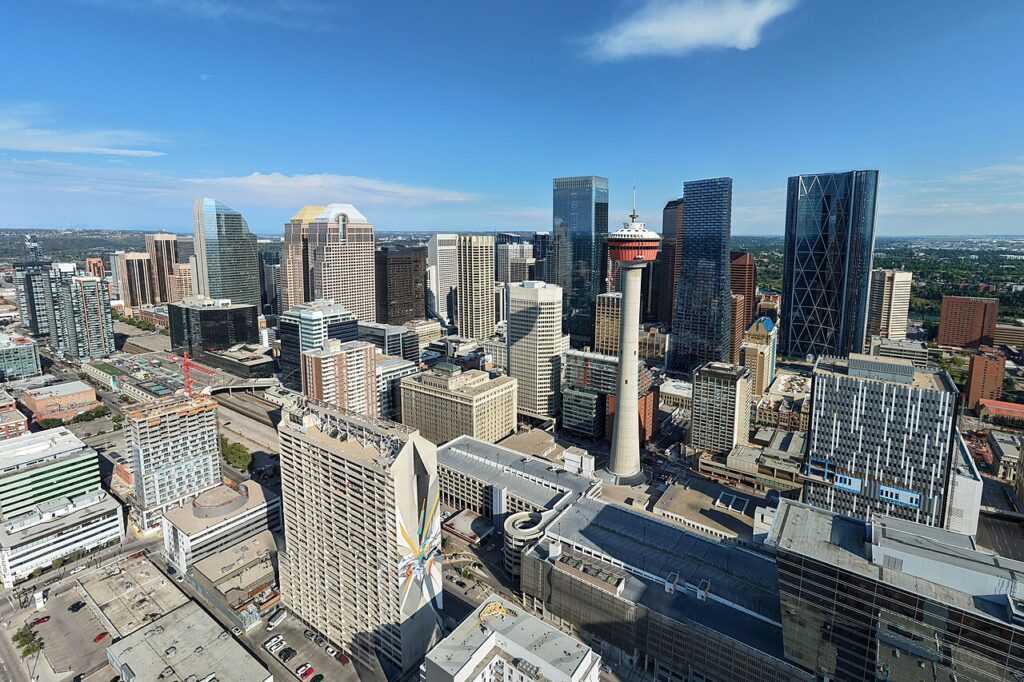
With more than a million votes counted, the remain vote was leading in every part of the province, according to the CBC projection. More than 80 per cent backed staying in the two big cities of Edmonton and Calgary, and the remain side held above 60 per cent even in the more rural central areas. Counting was delayed after late openings forced more than 100 polling stations to extend voting hours on Monday. More than 1.35 million Albertans — 43 per cent of eligible voters — cast advance or special ballots.
Why Alberta matters — and why it voted
For readers outside Canada, Alberta is the country’s energy heartland: a province roughly the size of Texas with five million people and the world’s fourth-largest proven oil reserves. It is cowboy country and a conservative stronghold, and its political culture often has more in common with the American West than with eastern Canada. Resentment of Ottawa, the federal capital, runs deep — but separatism has traditionally been a fringe cause. Former premier Jason Kenney once noted that independence parties typically drew just 1 or 2 per cent of the vote.
That changed after Carney’s Liberal Party won the 2025 federal election in the middle of a trade war with the United States. Separatist voices grew louder, and in May Alberta’s premier, Danielle Smith, announced the referendum. Smith, who took power in 2022, is not a separatist herself — she has said she opposes independence — but she faced pressure from separatists inside her governing United Conservative Party. She has refused to “demonize” independence supporters, and cited a poll showing 22 per cent support for separation, a figure she said was still too high. “We have had, from time to time, these kinds of initiatives flare up,” she told CNN in 2025. “They have all subsided when the federal government got back in its own lane.”
Carney, who grew up in Alberta, threw himself into the campaign. He called the vote a “dangerous bluff,” drawing on his time leading the Bank of England through Britain’s Brexit years to warn that separation would come with crippling economic consequences. At rallies in Calgary and Edmonton, the biggest cheers came when he spoke about diversifying Canada’s trade away from the United States — a line that landed hard as US President Donald Trump kept up tariff pressure and threats about Canadian sovereignty. “The frustrations that many Albertans have felt are real,” he said in Calgary last week, but separation would “burden” Albertans “with years of deep division and great uncertainty.” At a rally Friday in Edmonton, where he grew up, he told the crowd: “Vote like Canada’s future depends on it because it does.”
What voters said
Dave Malka, a 59-year-old Edmonton voter, said the timing of the vote — with Trump threatening Canada — made it absurd. “It seems to be happening at the absolute worst time when we should be united; instead we’re fighting among ourselves.” Others were simply done with the whole question. “I hope this squashes this for a while and we can be a united Canada,” said Jake Graham, 35, who attended a Carney rally in Calgary wearing maple-leaf pants and a Canada hockey jacket.
Separation supporters are not conceding the argument. Dustin Degenhardt, who voted in Wainwright, said Albertans have long been mistreated by Ottawa. “Alberta has essentially been treated as, you know, a colony,” he said. “They want to take and take and take from us and not return anything.”
Why this matters
The vote caps a difficult two weeks for the province, which is also mourning four Canadian soldiers who died in a grass fire at the CFB Wainwright training base. Separatist leaders insist the debate is not settled: they say the referendum turned a fringe cause into a real movement and vow to keep going. And Smith still has to manage a party divided on the issue, with a quarter of voters backing the secession path.
For the rest of the world, the result is about more than one province’s mood. Alberta’s oil underpins Canada’s economy, and a genuine independence process would have rocked energy markets and thrown a G7 economy into a constitutional crisis. A breakaway would also have handed leverage to Washington: with Trump openly questioning Canadian sovereignty, a country negotiating with itself is a country negotiating from weakness. Carney understood that, which is why he campaigned on it as a national emergency rather than a local grievance. But the 23 per cent matters too. A fringe that became a quarter of the vote — inside the province that hosts the oil, the anger, and the grievances — does not dissolve overnight. The referendum is over. The grievance that produced it is not.
On the eve of the vote, we answered readers’ questions about how it would work: Alberta Is Voting Monday on Canada’s Future. Your Questions, Answered.