France’s health and agriculture ministries announced on Thursday that a livestock virus called Shamonda has been found in a human for the first time anywhere in the world — in a severely immunocompromised patient who died earlier this month at a hospital in Lyon.
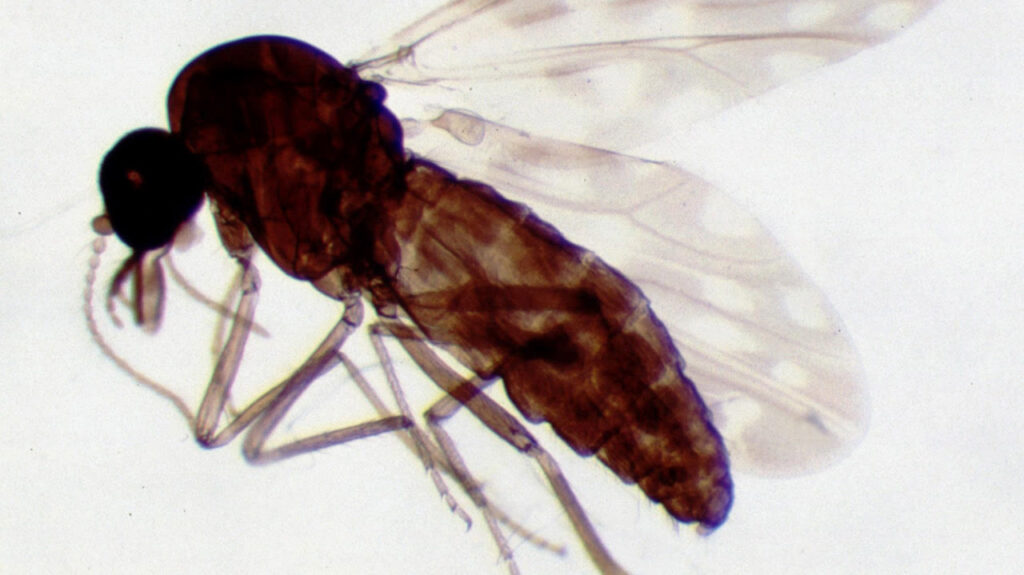
The joint statement stressed there was “no health risk to the general public identified at this time,” describing the infection as an “exceptional case involving a severely immunocompromised patient” who had been hospitalised for a serious medical condition. Investigators believe the patient was infected through the bite of a midge in eastern France, where the virus had been circulating among animals through the spring and summer.
The ministries said preliminary findings connect the virus to the patient’s decline: “The neurological complications observed in the immunocompromised patient prior to his death are very likely linked to infection with the Shamonda virus.” They cautioned, however, that clinical, biological and epidemiological investigations are still under way, and the full picture is not yet settled.
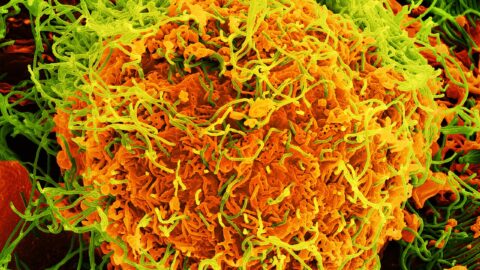
Shamonda is an orthobunyavirus — a family of viruses carried and spread chiefly by insects — and has been known to science since the mid-1960s, when it was first detected in Nigeria. It lives in cattle and other livestock, moving between animals on the mouthparts of tiny biting midges of the genus Culicoides, and causes diarrhoea, fever, lethargy and a drop in milk production. For six decades it was considered unable to infect people. This case tears up that assumption.
The timing is not a coincidence. Genomic testing confirmed Shamonda in Europe for the first time at the end of July, in sick cattle in southern Germany, Switzerland and eastern France. France’s weekly animal-health surveillance bulletin says the virus has since turned up in 14 western European countries — including Austria, Belgium, Ireland, Italy, Liechtenstein, Luxembourg, the Netherlands, Portugal, Slovenia, Spain and Jersey. Cattle remain the main hosts, though France logged sporadic infections in smaller livestock and horses over the summer.
Why this matters beyond France: one exceptional infection does not make an outbreak, and the ministries are explicit that nobody else is known to be at risk. What makes it matter is the boundary it crossed. When a pathogen jumps the species barrier for the first time, virologists have to decide whether it was a freak accident — a severely weakened immune system meeting an infected midge — or an early signal that a virus long dismissed as “animals only” can go further. The answer decides how much surveillance 14 European countries owe a two-millimetre fly.
The case also lands in a year in which animal diseases keep surprising epidemiologists, and in which the “one health” idea — that human, animal and environmental health are a single system — keeps proving itself in the field rather than the textbook. France’s investigation is explicitly being run with human, animal and environmental expertise working together.
There is precedent for single firsts turning into something bigger — Kenya recorded its first-ever Ebola case only weeks ago — and for firsts that stay firsts. The evidence so far points firmly at the second kind: a one-off infection in a vulnerable patient, not the start of an outbreak. But a virus that had never touched a human in sixty years of observation just did. That record is now broken, and the investigation is far from over.