Key takeaways
- Candida auris, a fungus that spreads through hospitals and kills roughly 45% of intensive-care patients whose blood it infects, can survive the strongest antifungal drugs doctors have.
- A study in Nature Communications found the fungus copies its entire genome — carrying two to four versions of its DNA — which speeds up the mutations it needs to resist treatment.
- Standard lab tests said the drugs should work. They failed anyway, because the resistant cells hide inside a mixed population that tests read as susceptible.
- Researchers say hospitals may need combination drug therapy — and better tests — to keep up.
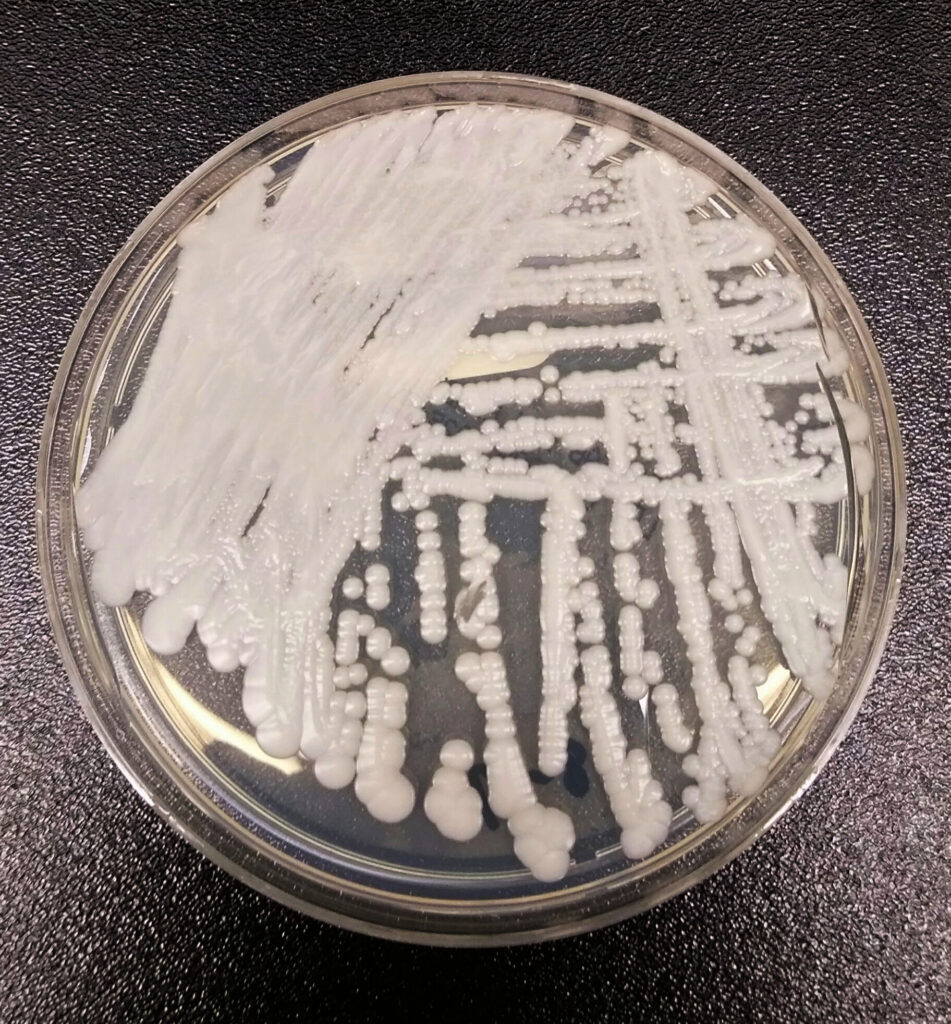
The plates were not supposed to stay in the incubator that long. A researcher testing how the hospital fungus Candida auris responds to antifungal drugs left them longer than the standard test period — and when she came back, cells that should have died had grown. That accident, described in a study published on 15 October in Nature Communications, has revealed an entirely new way for one of the world’s most feared hospital pathogens to defeat the medicines of last resort.
Candida auris was first identified in 2009 and has since caused outbreaks in more than 60 countries. The World Health Organization lists it as a critical-priority fungal pathogen. It clings to patients’ skin and to hospital equipment, spreads between patients in intensive care units, and is notoriously hard to eradicate — one British outbreak cost an estimated £1 million to control, and another forced a hospital unit to close for complete refurbishment. When the fungus enters the bloodstream of a critically ill patient, about 45% die.
Doctors fighting it rely on a class of drugs called echinocandins, described by specialists as the last line of defence. The research team — from the University of Exeter’s MRC Centre for Medical Mycology and City St George’s, University of London — began with a puzzle from two critically ill London patients. Their infections did not respond to anidulafungin, an echinocandin, even though laboratory tests showed the fungus was susceptible to the drug and genetic checks found none of the usual resistance mutations.
The answer turned out to be a numbers game. Under attack from the drug, some fungal cells temporarily copy their whole genome, carrying two to four complete sets of DNA instead of one. Extra copies mean extra chances to mutate. The population splits into two camps: slow-growing small colonies and fast-growing large ones — a strategy biologists call bet-hedging. The fast growers accumulate mutations in a gene called CRZ1, nicknamed “Crazy-one”, which governs the integrity of the fungal cell wall. With CRZ1 disabled and extra chitin thickening the wall, the drug can no longer do its work: echinocandins kill fungi by breaking down their cell walls, and these walls no longer break.
“This is a trick that other fungi have used in the past, but not one that is well known in C. auris,” said Dr Hugh Gifford of the University of Exeter, the study’s co-first author with Dr Sarah Murphy. Senior author Professor Tihana Bicanic of City St George’s said the findings show fungal infections are more complicated than previously thought, with multiple populations coexisting during a single infection — and warned that the new mechanism “weakens our antifungal drug arsenal”.
The finding also explains why the standard tests were fooled. Susceptibility testing reads the population as a whole; when resistant cells are a minority hiding among susceptible ones, the result comes back “susceptible” while the patient fails to improve. It is the second hospital-infection alarm this week, after Ebola reached Nigeria — a reminder that the hardest battles in modern medicine are increasingly fought inside hospitals themselves.
Why this matters beyond the laboratory: antifungal drug development has lagged far behind antibiotics, and there are only a handful of drug classes to begin with. If a pathogen can improvise resistance faster than tests can detect it, treatment guidelines built on those tests will lag too. The Exeter-led Fungi-CARE programme is now testing combination antifungal therapy — hitting the fungus with two drugs at once so a single trick cannot save it. Until that work delivers, the study’s practical message for hospitals is blunt: repeat the cultures, repeat the susceptibility tests, and do not trust a reassuring result when the patient in front of you is not getting better. Read the University of Exeter’s summary of the research for more detail.