Burkina Faso’s parliament voted unanimously on Tuesday to bring back the death penalty, nearly eight years after the West African country abolished capital punishment. The move, pushed by the military government of Captain Ibrahim Traoré, makes Burkina Faso one of the rare countries to reverse abolition — and rights groups warn it could be turned against journalists and critics.
The vote was taken by the Assemblée législative du peuple — the People’s Legislative Assembly, the country’s unelected parliament, all of whose 71 members are appointed under the military-led transition government. Justice Minister Edasso Rodrigue Bayala presented the revised penal code to lawmakers, and the assembly approved it without a single dissenting vote, according to a Justice Ministry statement.
What the new law covers
The revised code reintroduces the death penalty for a set of grave crimes: acts of terrorism (including for accomplices, not just perpetrators), espionage, treason, and the killing of a parent or close relative. In an unusual provision, it also makes capital punishment available for importing expired or banned products — such as counterfeit medicines or food — when those imports cause death.
Bayala said the reform was aimed at strengthening public order and the judicial response to terrorism. According to the minister, the relative leniency of the previous penal code had allowed armed groups to recruit members by telling them they would “not risk much” if arrested, the Justice Ministry said.
The new code is sweeping beyond the death penalty. It runs to 933 articles, creates new offences related to information technology, toughens road-safety penalties — which the minister described as the leading cause of death in the country — and, notably, reintroduces criminal penalties for press offences. The government says it plans to translate the code into national languages so ordinary citizens can understand it.
Who is driving the change
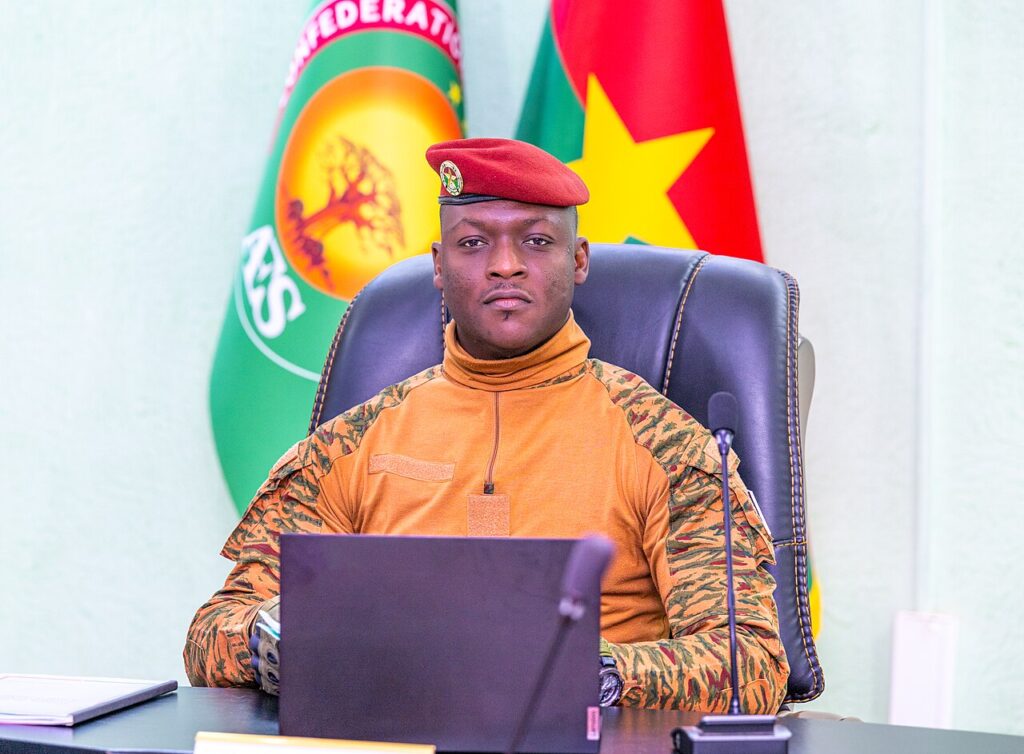
The decision bears the signature of Traoré, the 37-year-old army captain who seized power in a coup in September 2022 and has since ruled Burkina Faso alongside fellow military juntas in neighboring Mali and Niger. The three countries have formed the Alliance of Sahel States and pulled out of the West African regional bloc ECOWAS, reshaping the region’s alliances.
Traoré had signaled this step for weeks. In a September interview he warned that those convicted of espionage or treason would face the death penalty “without pity,” adding that “sentimentalism is over.” The Council of Ministers had already approved the draft revision in December 2025, setting Tuesday’s vote in motion.
The official justification is the jihadist insurgency that has tormented the country for a decade. Groups linked to al-Qaeda and the Islamic State have killed thousands of people and driven millions from their homes across Burkina Faso, Mali and Niger, overrunning villages and isolating entire towns. The government presents the death penalty as a weapon of deterrence against that violence.
From abolition to reversal in eight years
Burkina Faso formally abolished the death penalty on May 31, 2018, under the civilian government of President Roch Marc Christian Kaboré — Traoré’s elected predecessor, who was himself overthrown in an earlier 2022 coup. For eight years the country maintained a moratorium. Its last known judicial execution was in 1988, according to Amnesty International.
Reversals of this kind are rare. Over the past three decades the global trend has run firmly in the opposite direction: more than two-thirds of the world’s countries have abolished the death penalty in law or practice. Burkina Faso now joins a small number of states that have legislated its return after abolition.
Why rights groups are alarmed
Human Rights Watch, which objected when the Council of Ministers first approved the bill last year, warned that reinstating capital punishment could deepen repression, entrench a climate of fear and “send a chilling message to critics of the military government.” Amnesty International has warned that bringing back the death penalty risks wrongful executions and unfair trials, especially in a country where security courts operate under wartime pressure.
The concern is sharpened by the fine print. Reintroducing criminal penalties for press offences in the same code revision, critics say, widens the net well beyond terrorism. In a country where journalists and opposition figures have already faced detention under anti-terrorism laws, the line between a “spy” and a reporter, or a “traitor” and a dissident, is worryingly thin. No executions have been announced yet — what the law means in practice will depend on how courts and security forces apply it.
Why this matters beyond Burkina Faso
The vote is part of a broader pattern across the Sahel, where military governments that seized power by coup are rewriting the legal and political order: leaving ECOWAS, expelling Western forces, and centralizing control. The death penalty’s return is the latest signal of how far the region’s juntas are willing to go in the name of security.
Whether executions will deter insurgents is, as criminologists keep pointing out, doubtful — there is little evidence that capital punishment prevents terrorism, which thrives on ideology, not legal calculus. But the law’s real effect may be felt closer to home: in the calculation of every journalist, activist and opposition politician in Ouagadougou wondering which words might now carry the weight of a death sentence.
Burkina Faso’s parliament — appointed, not elected — has spoken with one voice. The world is now watching whether its courts will follow through, and who will be the first to find out what “without pity” means.