Kenya’s Ebola count reached eight on Sunday, and the newest patient breaks the pattern. He is not a relative of the first patient. He is not one of the health workers who treated him. He is a 49-year-old patient attendant at Nairobi Hospital — a man whose job was washing utensils and linens.
Director-General for Health Patrick Amoth announced the case in an interview on Kenya’s Citizen TV. “Today, 38 people were tested, and one tested positive for Ebola,” he said. “He is a 49-year-old man who is not a healthcare worker. He developed fever, headache and muscle pain.”
The man had been living under quarantine since October 9, after contact tracers identified him as exposed to Kenya’s first Ebola patient. He developed symptoms on Saturday, was separated from the other people in quarantine, and his test came back positive on Sunday. Officials believe he was probably exposed inside the first patient’s hospital room — through the sheets, the dishes, the surfaces a laundry and kitchen worker touches all day.
That first patient was a businessman in his forties who had been living in the Democratic Republic of Congo. He traveled by car and plane through Uganda to Nairobi, and died at Nairobi Hospital on October 5. When Kenya announced the infection the next day, it was the country’s first-ever Ebola case.
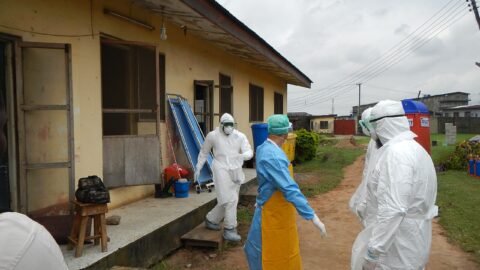
The seven other confirmed infections so far trace exactly how the virus moved: close relatives of the first patient, then three health workers — two men, 29 and 35, and a 32-year-old woman — who treated him on October 3 and 4. Every one of them was already in quarantine when they fell ill. So was the 65-year-old woman confirmed as the third case. Kenya’s containment strategy is holding in one important respect: nobody has been diagnosed while walking free in the community.
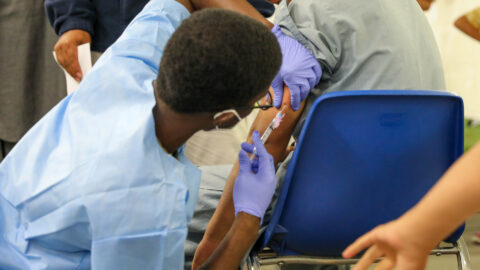
There is also cautious good news on treatment. Amoth said the six surviving previously confirmed patients received monoclonal antibodies — laboratory-made proteins that help the immune system fight the virus — and are responding well. An additional shipment of medicine arrived from Rwanda on Sunday night and will be deployed in the response.
The Bundibugyo strain behind Kenya’s outbreak has no approved vaccine and no specific approved treatment, according to the World Health Organization, though candidate products are being evaluated in clinical trials.
Contact tracing continues: by October 17, officials had identified 130 contacts of the first patient and traced 128 of them. Amoth played down the risk of wider spread, saying there was little chance that quarantined people had transmitted the disease in the community.
But Kenya’s outbreak is a spillover from a much bigger fire. Across the border in the DRC, authorities confirmed on Sunday that the virus has reached an eighth province, North Ubangi. Congolese health officials put the outbreak at more than 9,000 cases and 4,381 deaths — already the deadliest in the country’s history. Uganda recorded 20 cases, nearly all imported from the DRC, and two deaths before declaring its outbreak over in August.
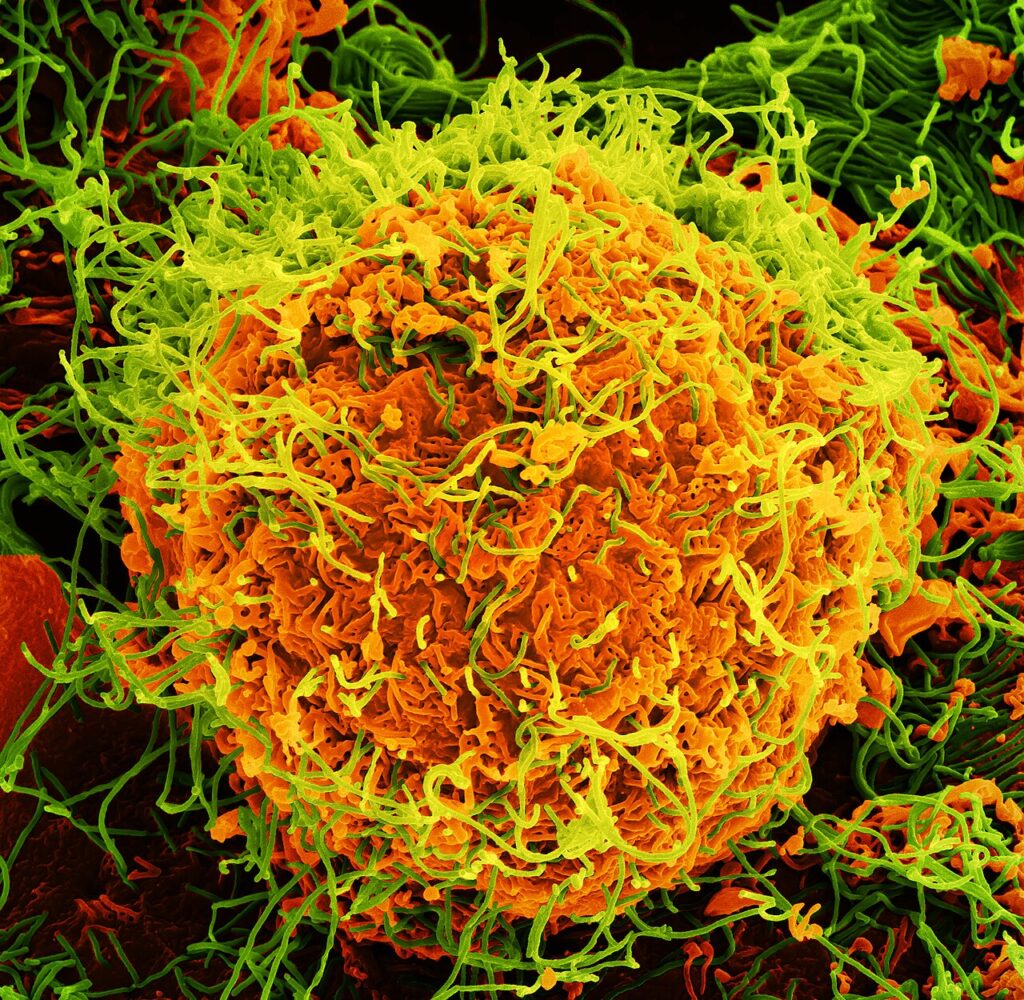
Here is why a laundry attendant’s positive test matters beyond Nairobi. Ebola doesn’t float through the air; it spreads through direct contact with the blood or body fluids of someone infected — or someone who has died of the disease. That is precisely why hospitals are both the front line and the weakest link: every sheet, every basin, every glove is a potential bridge. Nairobi is East Africa’s busiest travel hub, and every case caught inside quarantine is a chain of transmission that never reached an airport, a bus station, or a border crossing. The virus is winning the regional numbers — 9,000 cases in Congo — but in Kenya, the quarantine net has caught all eight. The test now is whether it catches nine.
Correction: An earlier version of this article stated that all seven previously confirmed patients received monoclonal antibodies and are responding well. One of the seven, the index patient, died on October 5. It has been updated to reflect that the six surviving patients received the treatment. 19 October 2026