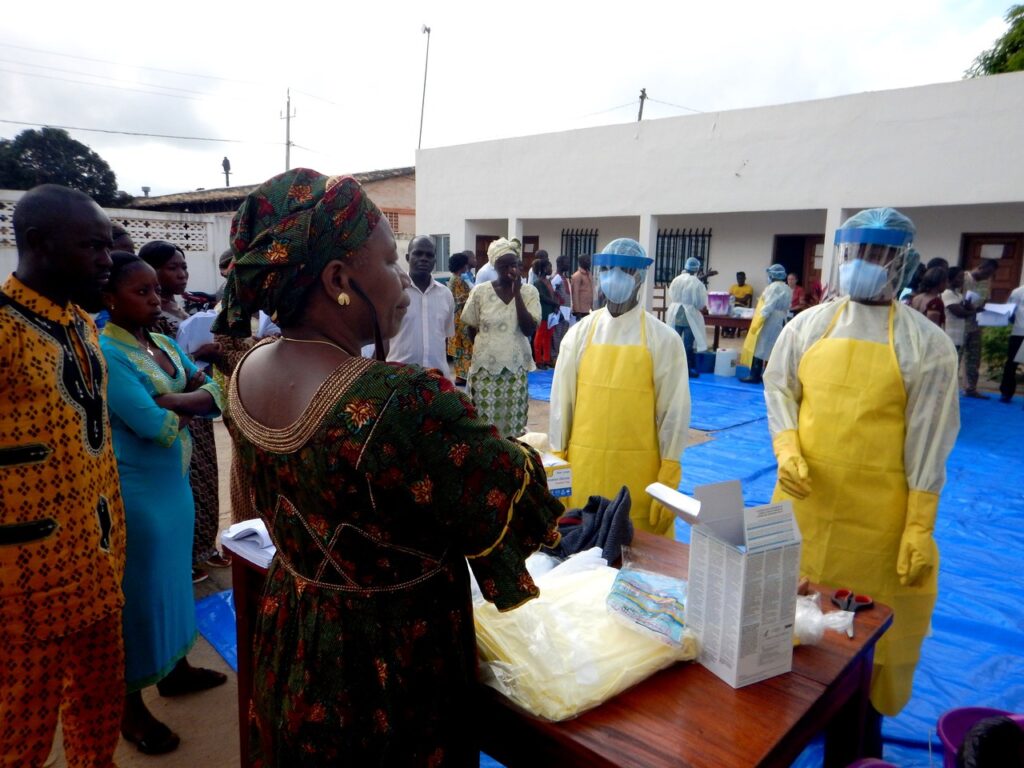
Kenya’s health ministry confirmed on Friday that a third person has tested positive for Ebola — a 65-year-old woman who was already in quarantine as a known contact of the country’s first two cases.
The ministry described her as “a primary contact and a close relative of the first and second cases.” She had been in quarantine since October 6. Once she developed a fever, sore throat and malaise, she was isolated and a specimen was collected for testing. It tested positive for Bundibugyo virus disease — the strain of Ebola behind Kenya’s first-ever outbreak — at both the National Virology Reference Laboratory and the Kenya Medical Research Institute (KEMRI) laboratory.
She has since been transferred to the Infectious Disease Unit, where she is receiving supportive care from trained health workers.
Because the patient was already in quarantine, she was diagnosed early — and that, the ministry says, is the single most hopeful fact in the announcement.
“The Ministry wishes to reassure the public that the risk remains low, as there is no evidence of community transmission of the disease,” the ministry’s statement said. Director General for Health Dr Patrick Amoth added that being in quarantine “protected the rest of her family and the general public from exposure, reducing the chances of community transmission” — and that early detection improves her chances of recovery.
The second patient — a 39-year-old relative of the first victim, whose case was confirmed on Wednesday — remains in stable condition and is responding well to supportive care, the ministry said.
First case: the businessman who landed in Nairobi on October 3
Kenya had never recorded an Ebola case before this month. The country’s first-ever Ebola case emerged when a 40-year-old Kenyan businessman who had been living in the Democratic Republic of Congo fell ill about a month ago. He travelled overland to Kampala, the Ugandan capital, then flew to Nairobi on October 3. A relative drove him to hospital. He died on October 5, two days after landing.
That death set off the contact-tracing effort now shaping this outbreak. Of 130 contacts identified, the ministry says 127 have been traced and placed in quarantine — 97.7 per cent coverage, above the global 85 per cent benchmark for breaking chains of transmission. Efforts are continuing to find the remaining three. Health officials have warned that more cases could still surface among people already in quarantine before their monitoring period ends — but that those cases would be identified and managed quickly, as this one was.
The Bundibugyo strain — and why early detection matters
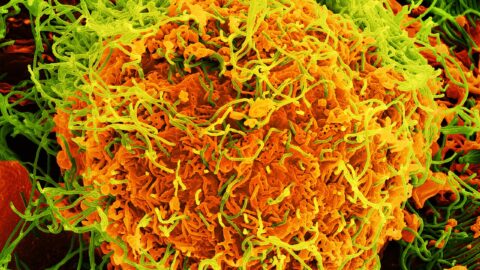
The virus involved, Bundibugyo, has killed thousands of people in the Democratic Republic of Congo, where the current outbreak — the country’s 17th — was declared in May and has claimed more than 4,000 lives, making it one of the largest Ebola epidemics on record. Uganda recorded 20 infections, almost all of them people who had travelled from the DRC, and two deaths, before being declared Ebola-free in August.
Ebola spreads through direct contact with the bodily fluids of an infected person, or with contaminated materials such as bedding and clothing. Dr Barbara Muttimos of Médecins Sans Frontières (MSF) told The Associated Press this week that people should be “honest about their exposures” and share their travel history and symptoms — adding that the chances of survival are higher when the virus is detected early.
Why this matters
Kenya is one of East Africa’s busiest travel hubs — Nairobi’s airport is the region’s main gateway, and a sprawling outbreak there would carry global risk. So far, the containment playbook is doing exactly what it is supposed to: every case has been linked to the first patient, every new detection has come from inside the quarantine net, and there is no evidence the virus is spreading in the community. Whether that holds through the end of the monitoring period will decide whether this stays a footnote — or becomes the outbreak that taught East Africa how to stop Ebola at the border.

One Comment