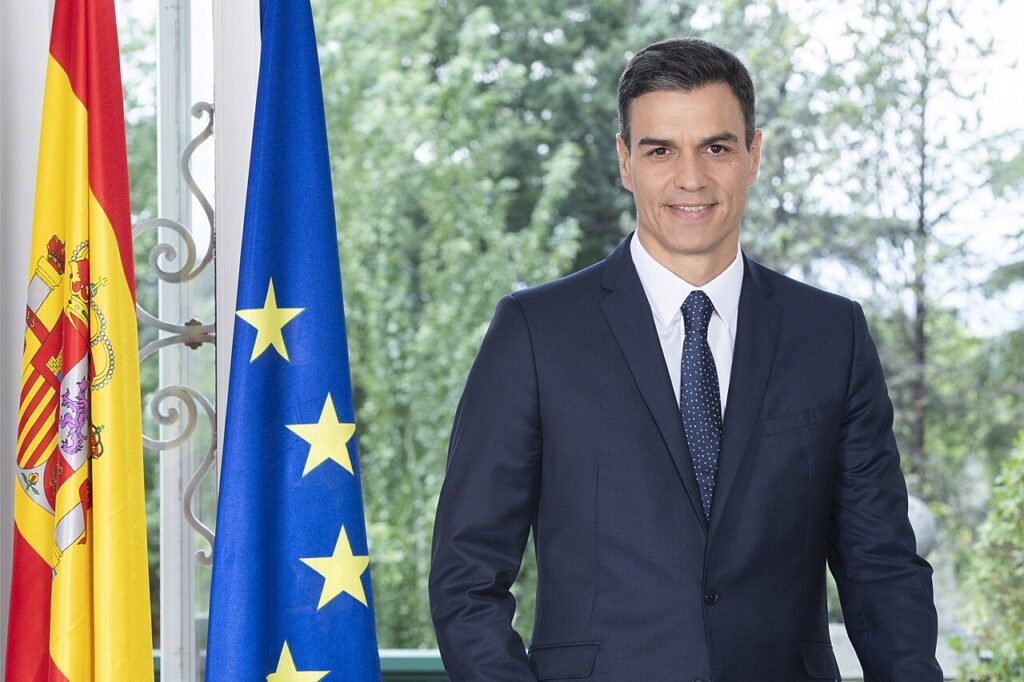
Spain woke on Thursday to flags at half-mast and three days of official mourning for the victims of the Toledo train disaster, after Prime Minister Pedro Sánchez travelled to the crash site on Wednesday evening and promised a reckoning over how two high-speed trains came to collide on a stretch of track whose safety system had failed.
The mourning period runs from Thursday, October 29, through Saturday, October 31. Sánchez announced it from the emergency command post at Urda, in Toledo province, where a Renfe high-speed service ran into the back of a stationary Iryo train on Wednesday morning, killing 68 people.
“We will get to the bottom of this. If there has been negligence, it will be known,” Sánchez said, adding that if investigators find failures in the safety system, “there will be a strong response.” He said the disaster would be examined by Spain’s independent railway accident investigation commission alongside judicial authorities, with parallel reviews by Adif, the state company that manages the rail infrastructure, and Renfe, the state-owned train operator.
“Spain is in mourning today,” Sánchez said. “Behind each and every one of the people who have died today, there are broken lives, broken families, anguish also from those families who still do not know the whereabouts of their loved one.” Town halls across Spain held a minute of silence at 8 p.m. on Wednesday.
The opposition leader, Alberto Núñez Feijóo of the People’s Party, demanded “immediate” government and judicial investigations conducted “with all available resources and without interference,” and called for a comprehensive, independent review of the country’s entire railway network. He declined to discuss political responsibility, saying it was not the day to do so.
The crash happened at 8:54 a.m. on Wednesday at kilometre 118 of the Madrid–Seville high-speed line, between the towns of Urda and Los Yébenes, about 120 kilometres south of Madrid. The Renfe AVE service, travelling from Madrid to Seville, struck the rear of an Iryo train that had stopped on the same track. Two of the Iryo train’s carriages derailed and plunged down an embankment. The two trains were carrying 544 people between them — 397 on the Renfe service and 147 on the Iryo. Regional officials in Castilla-La Mancha, the region where the crash happened, put the death toll at 68 and said 58 people were in hospital, 15 of them in a very serious condition. Officials have warned the toll could still rise as rescue teams work through the wreckage.
What caused the collision is now the central question. Transport Minister Óscar Puente has said the signalling system blacked out near Urda station at around 8:30 a.m., automatically halting services along a stretch of track. The Iryo train stopped on Adif’s orders because of the signal fault. The Renfe train was then authorised to continue — despite a red signal and a stationary train ahead — in what investigators are examining as a possible human error by a traffic controller. Puente has called that decision “inexplicable.” Officials stress the cause has not been formally established.
Why this matters beyond Spain: this is the country’s deadliest railway disaster since the Santiago de Compostela derailment in 2013, which killed 80 people, and its second deadly high-speed crash this year — a collision near Adamuz, in Córdoba, in January killed 46. Both of this year’s crashes happened on the line running south from Madrid and involved the same two operators, Renfe and the private company Iryo. Sánchez himself called it “unacceptable for a country like Spain” to suffer two such accidents in a single year, and the disaster lands a month before Spain’s general election on November 29, with campaigning already suspended by both main parties. For a country that has long held up its high-speed network as a point of national pride, the question now is not only what went wrong near Urda, but whether the system that was supposed to make such a crash impossible failed at every level at once.
Earlier coverage: the death toll rose to 68 on Wednesday evening as the transport minister pointed to the signalling blackout, after the first reports of the crash put the toll at 46.