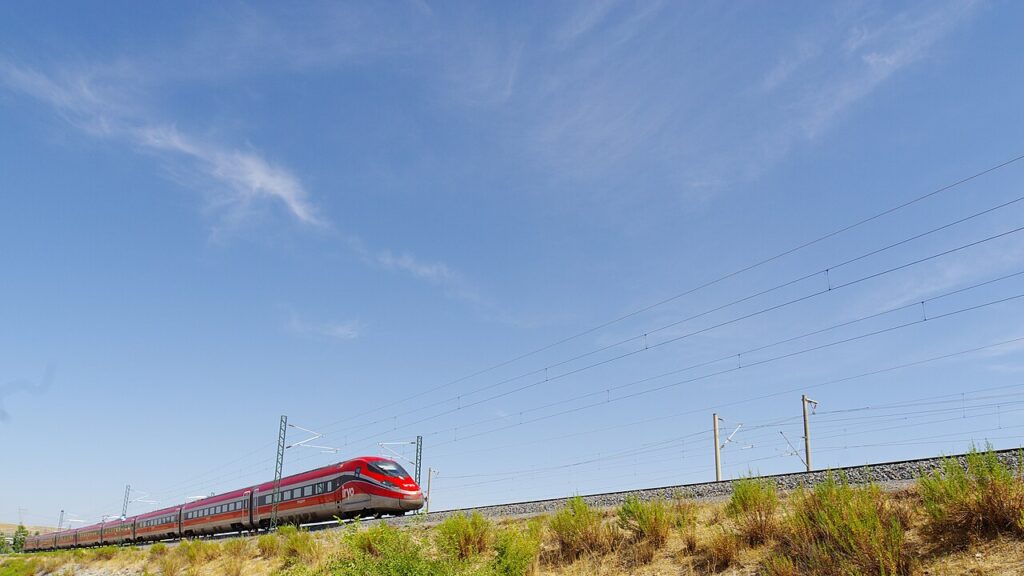
At least 46 reported dead after Renfe train hits stopped Iryo service near Toledo
At least 46 people are reported dead after two high-speed trains collided in central Spain on Wednesday morning, in the country’s second deadly high-speed rail disaster in less than a year. The crash happened shortly before 9 a.m. local time near the towns of Urda and Los Yébenes, in Toledo province, on the Madrid–Andalusia high-speed line.
According to Spain’s rail infrastructure manager Adif, a Renfe AVE service travelling from Madrid to Seville ran into the rear of an Iryo train that had stopped on the same track. Both trains were heading in the same direction. The impact knocked two carriages of the Iryo train off the rails, and Spanish media reported that at least two carriages tumbled down an embankment beside the line.
The death toll climbed steeply through the morning. Castilla-La Mancha regional government spokeswoman Esther Padilla initially confirmed 10 deaths, warning that “that number will surely rise.” By early afternoon, Spanish media citing regional Civil Protection sources put the toll at 46, with dozens more injured. Officials had not yet released a confirmed figure for the injured, and rescue work at the site was still going on — so the final toll may yet change.
More than 500 people were aboard the two trains. Padilla told state broadcaster TVE that the Renfe train was carrying 397 passengers and the Iryo train 147. Emergency services raised the region’s emergency plan to level 2, sent three medical helicopters and two mobile intensive care units to the scene, and asked the town hall in Urda to prepare a sports hall to receive the injured. Regional president Emiliano García-Page requested help from the Military Emergencies Unit and travelled to the crash scene.
Adif suspended all high-speed traffic between Madrid, Ciudad Real and Andalusia after the collision, stranding passengers across the south of the country. In a message posted on X, the operator said only that traffic had been suspended “following a rear-end collision between two trains.” Officials have not offered a cause.
Spanish Prime Minister Pedro Sánchez said he was “shocked” by the accident. “I remain in constant contact with the Minister of Transport, and with the president of Castilla-La Mancha,” he wrote on X. “Emergency services are working on the ground to assist those affected and ensure their safety, in coordination with all the involved administrations. My affection, solidarity, and support to all the victims and their families.”
The crash has an unsettling echo. In January, 45 people died when an Iryo train derailed near Adamuz, in Córdoba province, and collided with an oncoming Renfe service. That was the first fatal accident on Spain’s dedicated high-speed network since the first line opened in 1992. Investigators later concluded that a rail fracture had occurred before the Iryo train reached the site — a finding that raised hard questions about track inspection. Today’s collision is different in kind — a rear-end impact, not a derailment — but it involves the same two operators, on the same Madrid–Seville corridor, within ten months.
A railway union spokesman, Rafael Escudero, called Wednesday’s accident “very strange” in comments to broadcaster Antena 3, noting there is no commercial stop on that stretch and that modern trains carry systems designed to stop them when an obstacle lies ahead. Whether the stopped Iryo train, the signalling, or something else entirely explains the impact is now the central question for investigators.
Why this matters: Spain’s AVE network is one of the largest high-speed systems in the world and a point of national pride — a system that ran for more than three decades without a fatal crash on its dedicated lines. Two disasters in ten months, killing around 90 people between them, will test that record and the public’s trust in it in a way no single accident could. The timing sharpens the scrutiny: Spain is in the middle of an election campaign, with voters heading to the polls on November 29 after Sánchez called a snap election following his housing plan’s defeat. Rail safety and the accountability of the state operator are now unavoidable campaign issues. Beyond Spain, the crash will be watched by every country betting its transport future on high-speed rail — because the question it poses is universal: when the safety systems are supposed to make this impossible, what failed?
Spain has endured a brutal run of disasters this month, including Storm Adam’s deadly flash floods in Ibiza and Valencia. For now, though, the focus in Toledo province is narrower and grimmer: pulling survivors from the wreckage, identifying the dead, and finding out how two trains ended up on the same stretch of track at the same moment.
This is a developing story; the toll is based on reports citing regional Civil Protection sources and has not yet been confirmed as final.



One Comment