Britain’s new government has delivered its first Budget, and its central bargain is easy to state: banks will pay more tax, households will get direct help with energy bills, and defence spending will rise sharply over the rest of the decade.
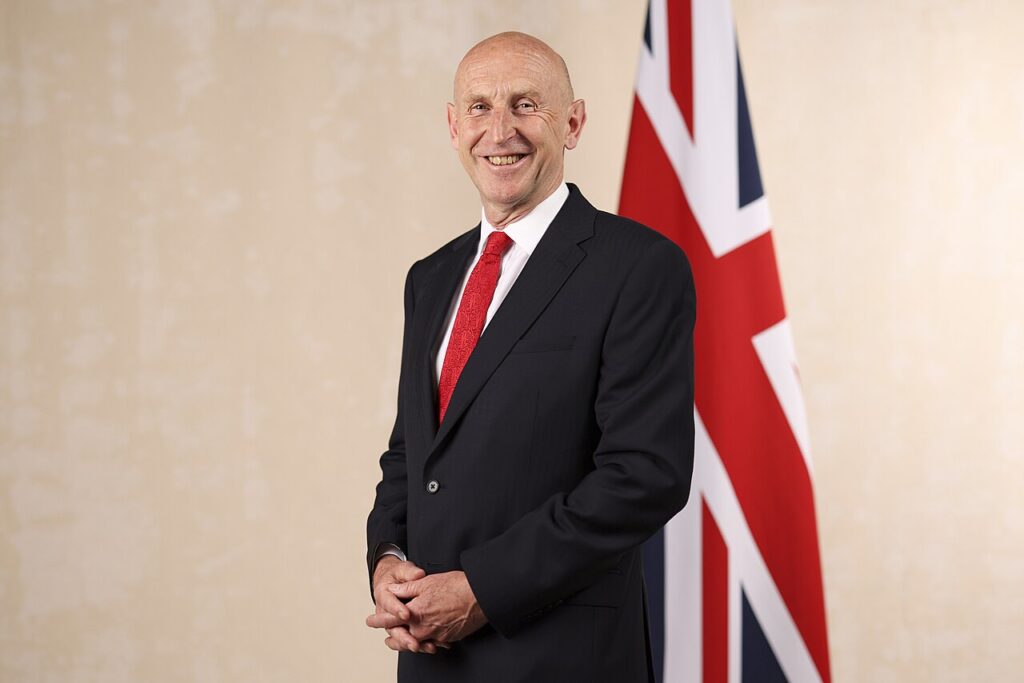
Chancellor John Healey presented the Autumn Budget 2026 to Parliament on Wednesday, October 28. It is the first Budget of Prime Minister Andy Burnham’s government, and it arrives against a difficult backdrop — inflation and borrowing costs still high, growth weak across Europe, and energy prices pushed up by the war in the Middle East.
Healey framed the package as a response to what he called global economic storms, and said fiscal discipline was his first commitment — a message aimed as much at the bond market, which finances Britain’s borrowing, as at voters. The Office for Budget Responsibility, the independent forecaster, gave him some room to move: it put the government’s headroom against its fiscal rule at £15 billion in 2029-30, rising to £22 billion the following year.
What households get
The most immediate measure is a one-off payment of £100 to 20 million households in council tax bands A to D in England, paid directly into bank accounts to help with winter energy bills. Funding will be provided to the devolved governments so they can consider similar schemes in Scotland, Wales and Northern Ireland.
Alongside the payment, the government is extending the cut in VAT on domestic electricity — from 5% to zero — until July 2027, and extending the temporary 5p per litre cut in fuel duty to the same date. Fixed fees on gas bills are being removed, a change the government says will save many households around £45 a year.
For savers and buyers, two smaller changes matter. The cash ISA limit will stay at £20,000, rather than being cut to £12,000 as had previously been announced. And from October 29, the penalty for withdrawing from a Lifetime ISA to buy a home above the £450,000 price cap falls from 25% to 20%.
Who pays: the banks
The household help is largely paid for by the banks. Healey doubled the surcharge on bank profits, from 3% to 6%, to finance the energy support. It is a politically pointed choice: the banks, which benefit when interest rates are high, are being asked to fund relief for households squeezed by the same high-rate, high-energy-price environment.
Businesses get some relief of their own. From January 2027, pubs, music venues and social clubs in England will get a further 20% reduction in business rates, and the threshold for full small business rates relief rises from £12,000 to £18,000 of rateable value. The first-year allowance for new plant and machinery rises from 40% to 50%.
Defence: 3% by 2030
Healey, who was defence secretary before becoming chancellor, confirmed that defence spending will reach 3% of GDP by 2030, with a path to 3.5% by 2035 to be set out at next year’s spending review. A £15 billion Defence Investment Plan to 2030 is now fully funded, he said, with the final £4.7 billion found by reprioritising capital budgets. The government also reaffirmed roughly £10 billion of economic and military support for Ukraine.
The commitment reflects the world the Budget was written in: Russia’s invasion of Ukraine is approaching the end of its fifth year, and the Middle East war is disrupting shipping through the Strait of Hormuz and keeping energy prices volatile. Healey has long argued that Britain’s military funding was insufficient — a position he resigned over as defence secretary — so the defence pledge is also a personal one.
The growth picture: better now, worse next year
The forecast underneath the Budget is sobering. The Office for Budget Responsibility upgraded growth for 2026 slightly, to 1.2% from a previous 1.1%, but downgraded 2027 sharply, to 1% from the 1.6% it forecast in March before the Iran war began. Growth stays below 2% through 2031.
Borrowing is forecast to fall steadily, from 4.2% of GDP this year to 1.8% by 2030-31, and Healey said the Budget puts Britain on track to eliminate the current budget deficit within three years. Whether that holds depends on forces largely outside Downing Street’s control — above all, whether the Middle East war eases and energy prices fall with it.
For readers outside Britain, the Budget is worth watching for a different reason. It is one of the first full fiscal responses in Europe to an energy shock driven by war, and its mix — taxing bank profits to fund direct household payments, while locking in higher defence spending — is a template other governments facing the same squeeze may study. For background, see our report on Andy Burnham’s claim that Russia interfered in the Brexit vote and on three British nuclear submarines at sea at once; the full Budget document is published by the UK government here.