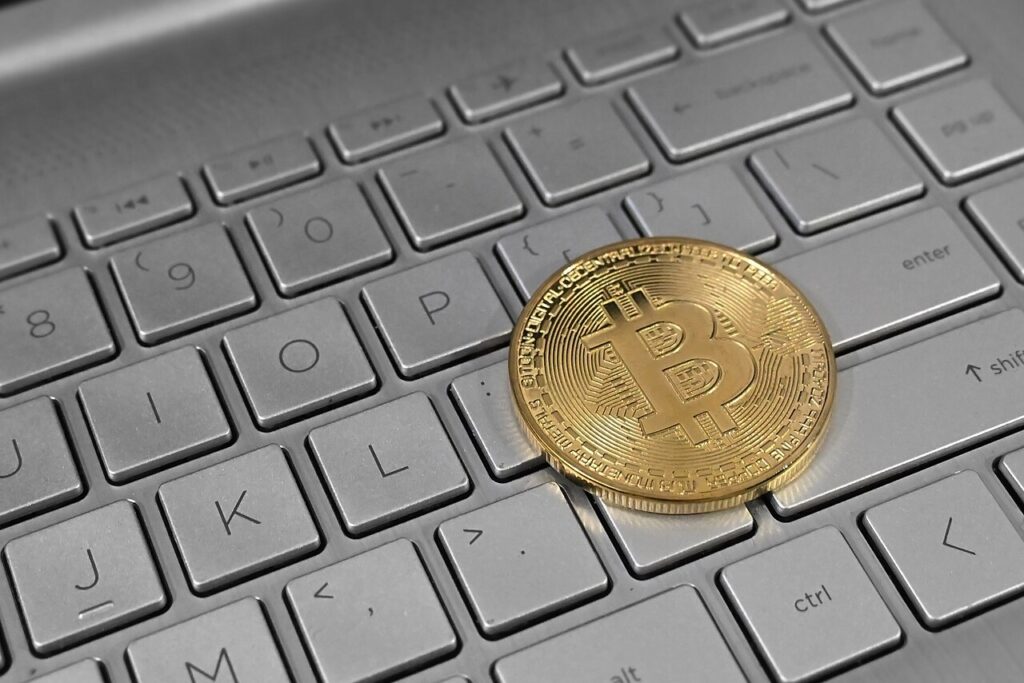
Binance, the world’s largest cryptocurrency exchange by trading volume, has suspended all deposits and withdrawals after a suspected hack drained billions of dollars’ worth of crypto from its hot wallets — and promised its customers it will cover every dollar lost.
“We are working non-stop to resolve this issue. Binance will cover all losses,” the company said in a post on X in the early hours of Friday. “As a precaution, all deposits and withdrawals are temporarily suspended while our team conducts security checks, freezes funds, and works with law enforcement.”
The exchange said $2.54 billion in assets had so far been frozen, a figure it warned “may continue to increase” as investigators trace more funds with law enforcement, issuers and blockchain intelligence firms. It promised a full post-mortem once the investigation is complete, and repeated its assurance: “User funds are safe.”
The attack began on Thursday evening. Blockchain records reviewed by CoinDesk show 167,464 ether moving out of a wallet labelled “Binance 14” at 20:24 UTC, followed by a further 28,005 ether from a second wallet, “Binance 16” — roughly 204,500 ether in total. Arkham Intelligence, a blockchain analytics firm, linked wallets holding about $5.84 billion to the incident, though that figure reflects the wallets’ holdings rather than a confirmed tally of what was stolen. Other on-chain trackers put the amount drained at around $3.3 billion.
How the attacker got in is still unconfirmed. Arkham chief executive Miguel Morel told CoinDesk the breach appeared to have started at around 4:30 p.m. Eastern Time and may have exploited EIP-7702, a feature of the Ethereum network that lets a wallet hand control to a piece of software. If those permissions fall into the wrong hands, the holder can sweep the wallet’s funds. Another possibility, Morel said, is that the attacker gained access to private keys or to the systems used to approve transactions.
Binance itself has stopped short of calling the incident a hack in its own statements, describing it as a security issue under investigation. Its founder, Changpeng Zhao, who stepped down as chief executive in 2023 but remains a major shareholder, was blunter: “It does look like a hack on Binance.” Replying to an estimate that the loss after freezes stood at about $1 billion, Zhao added: “Loss might be a bit higher than that, but will cover.”
Much of the frozen money was stopped not by Binance but by the companies that issue the dollar-pegged stablecoins at the heart of the haul. Tether chief executive Paolo Ardoino said his firm froze more than $1.567 billion in USDT, while Circle chief Jeremy Allaire said more than $800 million in USDC had been frozen. Ripple froze around $200 million in assets and World Liberty Financial froze $27 million of its USD1 stablecoin. The freezes are the reason the final loss remains unknown: crypto that cannot move cannot yet be counted as gone.
The scale, if the early estimates hold, would make this the largest crypto exchange theft on record, surpassing the $1.5 billion stolen from Bybit in February 2025. It also lands uncomfortably close to home for Binance. CoinDesk found that “Binance 14” appears in the exchange’s own 1 October proof-of-reserves report — the monthly disclosure meant to show customers their assets are fully backed. On that date Binance held exactly enough ether to cover customer balances, so the roughly 204,500 ether taken would leave its ether backing near 94% until the missing assets are replaced. Its next reserve snapshot, due 1 November, will show whether it has done so. Binance also holds an emergency fund, SAFU, worth around $1 billion in bitcoin, which could be used to plug the gap.
Markets reacted fast. BNB, Binance’s own token, traded at $694.37 shortly after the pledge, down 8.6% in 24 hours, while bitcoin fell to about $77,690, according to CoinGecko. Trading firms with exposure to the exchange moved quickly to calm clients: Wintermute said its exposure was under 20% of net equity and GSR put theirs below 5%, neither expecting disruption. Crypto.com said it was unaffected and was blocking hacker-linked addresses.
Why this matters goes beyond one exchange’s bad night. Binance handles more crypto trading than any rival, and its pitch to ordinary users has always rested on a simple promise: your money is here, backed one-to-one, and safe. A breach that reaches the very wallets listed in its proof of reserves tests that promise in public, and the answers Binance gives in the next few days — a confirmed loss figure, a funding source for the pledge, and a date for withdrawals to reopen — will matter more than the pledge itself. Until then, millions of users are locked out of moving their money, watching an industry-wide freeze operation decide how much of the haul can be clawed back. That, as much as the missing billions, is the story to watch: whether the crypto industry’s emergency machinery works when its biggest player is the victim.
The incident caps a brutal week for risk assets. Alphabet lost $500 billion in market value in a single day in its worst session ever, as investors dumped technology stocks — a reminder that this week’s selloff has spared almost nobody, from Wall Street giants to the world’s biggest crypto exchange.




One Comment