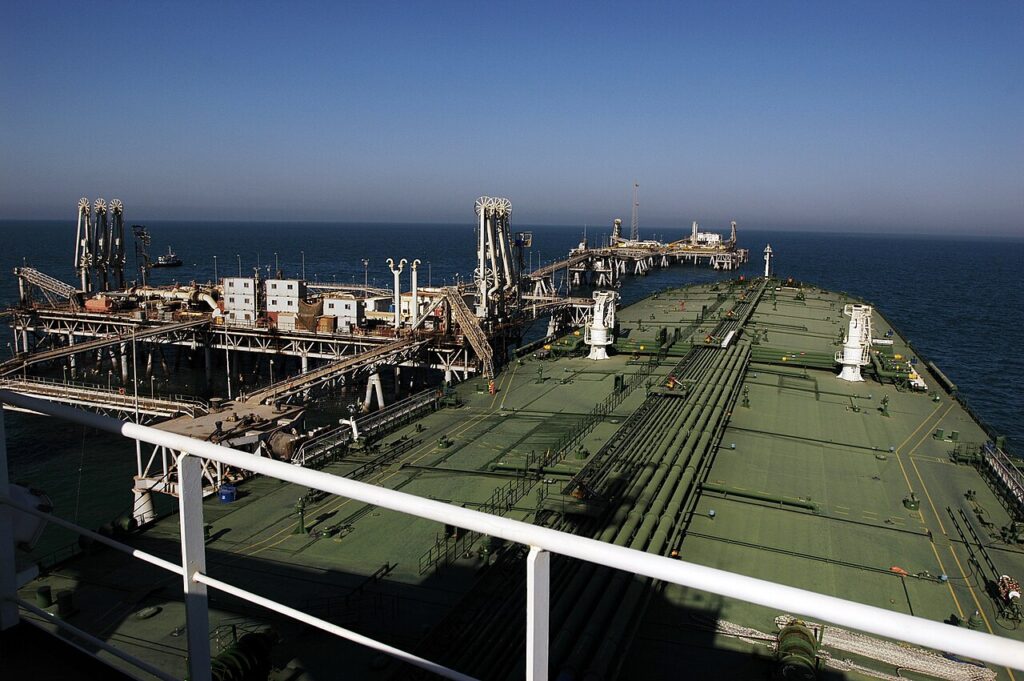
Iran’s Revolutionary Guards said on Thursday that three oil tankers exploded and caught fire after striking naval mines in the Strait of Hormuz over the previous 24 hours, in what would be the largest mine incident in the waterway since the Middle East war began in February.
According to the statement from the navy of the Islamic Revolutionary Guard Corps (IRGC), carried by Iranian state media, the three vessels were trying to leave the strait through what Tehran calls an unauthorised southern route, close to the Omani coast. The Guards said the tankers had switched off their radar and navigation systems and ignored warnings from Iranian naval forces before hitting the mines. The damaged vessels were then abandoned along the southern shores of the strait, the statement said.
The Guards did not name the tankers, say which flags they were flying, or give any information about their crews. That leaves the most important parts of the claim unverified: the Associated Press reported it could not immediately confirm the account, and no flag state or shipping company has yet claimed one of the vessels.
One independent report does point in the same direction. The United Kingdom Maritime Trade Operations centre, the British military’s shipping monitor, said on Thursday that the master of another vessel had reported a ship on fire in the strait, spotted about nine nautical miles north of Khasab, the Omani port town that sits just off the waterway. The agency said it did not know the cause of the blaze, the state of the crew, or whether the burning vessel was one of the three named by the Guards.
What is not in doubt is the target of the announcement. The Guards aimed it squarely at the United States military, which has spent weeks assuring shippers that the strait’s main transit routes are safe. American Central Command, which runs US military operations in the region, has insisted that all mines in the primary routes have been cleared, and said on Sunday it had helped Gulf countries export 1.5 billion barrels of oil through Hormuz since the summer. IRGC spokesman Hossein Mohebi answered on X: “Prove your Hormuz mine-clearing claim with independent evidence, not statements!”
The claim landed on the same day the US military denied a separate Iranian claim that Tehran had captured an American drone near the strait, and on the same day a quiet American diplomatic effort was running in parallel: Vice President JD Vance has opened a back channel to Iran’s security chief, a development covered in our earlier report on the Vance back channel. Mines in the morning, messages by the afternoon — the two tracks of this war are now running through the same narrow stretch of water.
The strait, a channel barely 33 kilometres wide at its narrowest, carries roughly a fifth of the world’s oil and gas consumption, which is why every incident here moves far beyond the Gulf. Iran has restricted traffic through it since the war began on February 28 and says it will not reopen the waterway until Tehran’s seven conditions are met — conditions set out in our earlier report on Iran’s seven conditions. Washington has answered with a counterblockade of Iranian ports. A mine claim of this size, if confirmed, would be a sharp escalation of that contest: in mid-October a single supertanker was reported hit by a mine in the strait, an incident covered in our report on the October supertanker mine strike. Three tankers at once would be something else entirely.
Why this matters beyond the Gulf: the claim does not need to be fully confirmed to change behaviour. Shipowners, insurers and charterers price risk on warnings as much as on wrecks, and a public Iranian assertion that the southern route is mined — issued hours after the US said the routes were clear — forces every operator to choose whose assurance to trust. If satellite imagery, ship-tracking data or an insurer’s casualty report confirms even one of the three vessels in the coming days, the argument over who controls Hormuz, and who can guarantee safe passage through it, enters a new phase. If nothing is confirmed, the episode will stand as a reminder of how much of this war is now fought through competing claims about a waterway the world cannot afford to lose.
What to watch next: any response from US Central Command, any flag state or owner identifying a damaged vessel, and any independent imagery or tracking evidence that pins down where, and whether, three tankers burned.
Source for the IRGC statement: ISNA’s report of the IRGC Navy statement.