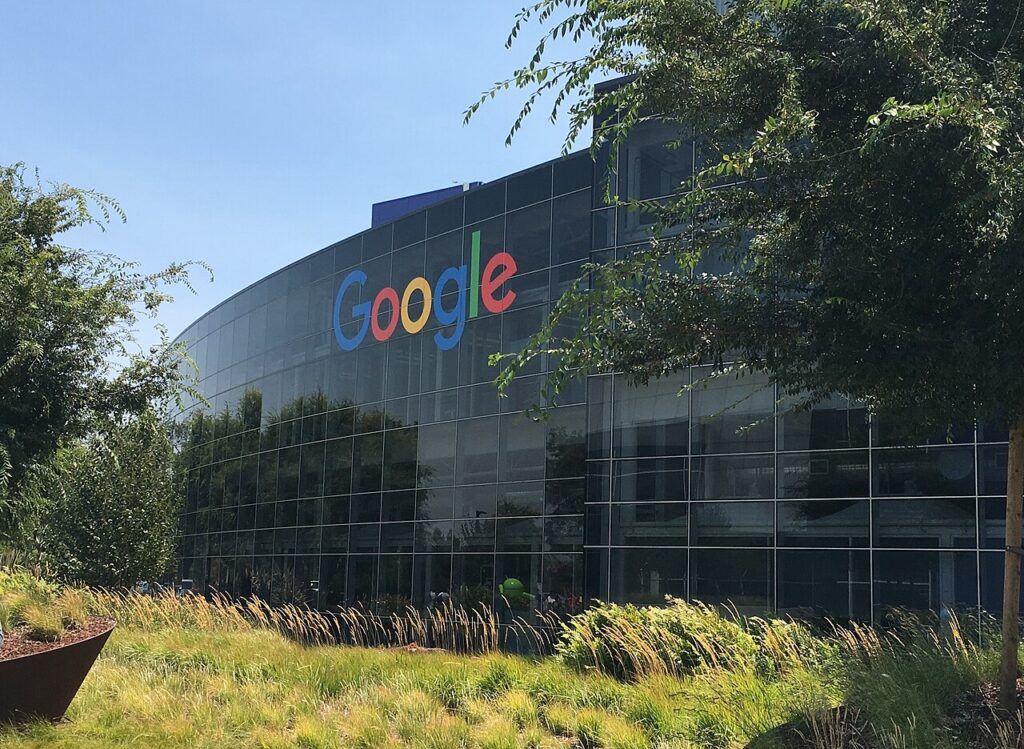
Alphabet, the parent company of Google, suffered the worst trading day in its history on Thursday, losing more than $500 billion in market value in a single session after a quarterly report showed the search advertising engine that funds its giant artificial-intelligence buildout growing more slowly than investors expected.
Alphabet shares fell 13% in New York trading, the steepest one-day drop since the company went public in 2004. By mid-morning, about $511 billion had already been erased from its market value, and the final tally made it the second-largest single-day loss for any company on record — behind only Nvidia’s roughly $589 billion plunge in January 2025.
The trigger was Alphabet’s third-quarter results, reported on Wednesday after the closing bell. Total revenue came in at $127.6 billion, below Wall Street’s $128.2 billion forecast, while adjusted earnings per share of $2.67 missed the $3.02 analysts expected — the company’s first double miss on both measures since the end of 2022. Net income fell 25% to $26.17 billion.
The disappointment was concentrated in the business that matters most. Revenue from Google Search and related advertising rose 12% to $63.4 billion — but that was down from 17% growth in the second quarter and 19% in the first, and below forecasts for a second consecutive quarter. Overall Google Services revenue of $96.3 billion also missed the $98.5 billion expected. On the earnings call, chief business officer Philipp Schindler acknowledged the drag from Google’s AI Mode, the AI-generated answers tab inside Search: “the strong growth in AI mode queries had an impact, because of the lower monetisation we were seeing in AI mode”.
At the same time, Alphabet’s spending keeps accelerating. Capital expenditure — mostly data centres and servers for AI — reached $51.4 billion in the quarter, more than double a year earlier, pushing free cash flow to negative $9.1 billion, only the second negative quarter since its 2004 listing. The company expects capital spending of about $200 billion this year, and chief financial officer Anat Ashkenazi said it would “increase significantly in 2027”.
The contrast with Microsoft, which rose after its own results beat expectations in cloud computing while keeping spending in check, sharpened the sell-off. Alphabet’s slide also dragged the Nasdaq composite lower, a reminder of how much of the wider market now rides on a handful of AI giants. As JPMorgan analysts noted, the results showed “the margin for error when a hyperscaler spending hundreds of billions on the AI infrastructure buildout” disappoints in its core business.
Why this matters goes beyond one bad day for one stock. Nothing in the report suggested Google is shrinking: total revenue grew 25%, operating income rose 30%, and cloud revenue more than doubled to $30.7 billion. What spooked investors is the funding model underneath the AI race. For years, Search’s high-margin advertising cash paid for everything Alphabet wanted to build. Thursday was the first time the numbers showed, plainly, that AI answers may earn less money than the traditional search ads they replace — at the exact moment the AI bill reaches about $200 billion a year. If the cash cow weakens while the bill grows, Alphabet must either slow its spending, squeeze more advertising into AI Mode — which Schindler said it will scale to more countries, including the UK, in the fourth quarter — or borrow more. That trade-off, not the quarter itself, is what cost the company half a trillion dollars in a day.
Investors will now watch two things: whether advertising in AI Mode starts to close the monetisation gap in the fourth quarter, and whether Search growth stabilises or keeps slowing. Alphabet’s earnings are covered in detail in our earlier report on the quarter; the AI technology at the centre of the shift is explained in our guide to Google’s Gemini models.




One Comment