A glacial lake high in Bhutan’s northern mountains burst its banks on Thursday evening, sending a surge of water down the Mo Chhu river that washed away a popular hot spring complex, damaged bridges and a highway, and put thousands of people across the border in India on flood alert overnight.
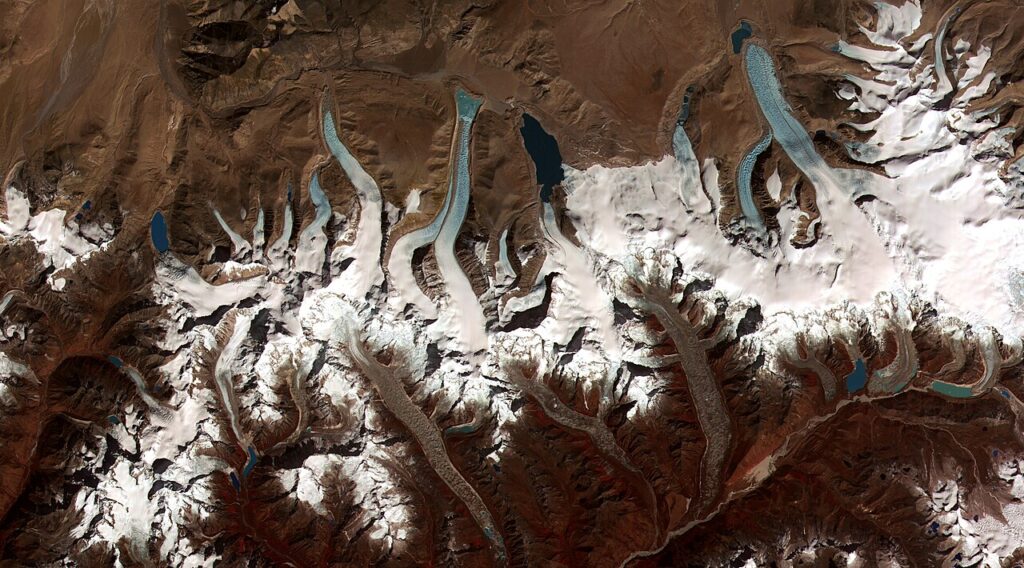
The outburst was reported at Shintaphu Lake — spelled Sintaphu in Bhutan’s official records — below Wakila Mountain in Lungo, Laya Gewog, Gasa district, in north-western Bhutan. The lake sits at the source of the Mo Chhu river and is one of 17 glacial lakes in Bhutan officially identified as potentially dangerous.
Floodwater reached Taktsemakhang at about 8:15 on Thursday evening, damaging a section of the road serving Laya and forcing its closure, according to Bhutanese reports. It later crossed Srigang in Kabesa Gewog, roughly eight kilometres from Punakha Dzong.
The damage in Bhutan is extensive but, remarkably, no one has been reported killed or injured. State broadcaster Bhutan Broadcasting Service (BBS) said no injuries or loss of life had been reported, and the area around the hot springs had been evacuated before the flood arrived. BBS said the full extent of the damage was still unclear because of “darkness and the strong flow” of the water overnight.
What is confirmed so far is serious. The facilities at Gasa Tshachu, a natural hot spring complex beside the Mo Chhu and a well-known stop for trekkers in the region, were completely washed away. Two Bailey bridges — portable prefabricated structures — are feared washed away, and a section of the Punakha-Gasa Secondary National Highway near its 31.85-kilometre point was completely washed away, closing the road to all traffic until further notice.
Across the border in India, the threat moved downstream. The river that begins as the Mo Chhu in Bhutan becomes the Sankosh when it crosses into India, and New Delhi issued a special flood advisory warning of a sudden rise in the Sankosh. A red alert is in effect for the Sankosh river system, covering Alipurduar, Cooch Behar and Jalpaiguri districts and the Darjeeling hills in West Bengal, and Dhubri district in Assam.
About 4,000 to 5,000 people in Alipurduar district have been moved into shelters in school buildings, with disaster response teams deployed and more on the way. Alipurduar police superintendent Amit Kumar Shaw urged calm while warning residents near the river to stay alert. “First of all, I would like to tell the residents of the district that there is absolutely no need to panic. The situation is currently under control,” he said. “We are in constant touch with the authorities in Bhutan. Our SDRF team is present, and an NDRF team is also on its way.”
West Bengal forest minister Manoj Oraon separately warned residents of Kumargram and nearby villages along the Sankosh late on Thursday to move to safer ground.
A glacial lake outburst flood, known as a GLOF, happens when a lake formed by a melting glacier suddenly releases its water, usually when the natural dam of rock and ice holding it back fails. Bhutan’s high valleys hold hundreds of such lakes, and warming temperatures have been swelling them for decades. The danger is not new to Gasa Tshachu: the same hot spring complex was washed away by a flash flood in August 2021, when the Mo Chhu changed course and swept through the area.
There is also an uncomfortable question about warning. An official from Bhutan’s National Centre for Hydrology and Meteorology said a water-level monitoring station at Taktsimakhang had not triggered an alert when the first reports emerged — possibly because the water had not yet reached the station. The centre is now monitoring levels at Tashithang and Yebesa, and sirens were sounded along the Mo Chhu and the wider Punatsangchhu basin.
Why this matters far beyond one Bhutanese valley is that Himalayan glacial lakes do not respect borders. The water that burst from Shintaphu Lake on Thursday night travelled through Bhutan’s river system and into India’s most densely populated floodplains within hours — the same pattern that has turned GLOFs into some of South Asia’s deadliest disasters, from the flash floods that have repeatedly swept Himalayan settlements to the storms that have battered India’s coasts this same week. Bhutan has catalogued its dangerous lakes, but Thursday’s outburst showed the gap between knowing a lake is dangerous and knowing the moment it fails — and for the millions who live downstream of the Himalaya, that gap is measured in hours, not days.
For now, the surge has moved downstream and officials say its force has eased in Bhutan. The watch now is on the Sankosh, where Indian authorities are tracking water levels and keeping shelters open until the surge has passed.