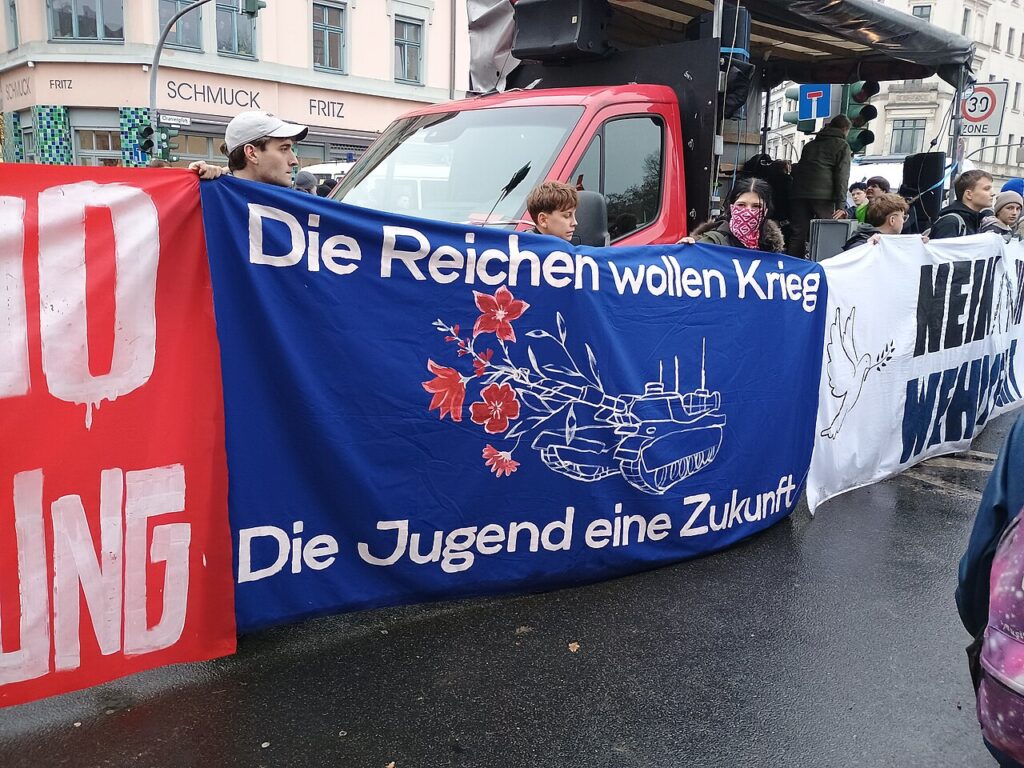
More than 160,000 people are expected to join youth-led demonstrations across Germany on Saturday, as a movement calling itself “Gen Z takes charge” brings Europe’s wave of student protest to the continent’s largest economy.
The rallies, planned in 34 cities including Berlin, Frankfurt and Munich, are organised by the campaign group Gen Z regelt. Its demands speak directly to the pressures facing younger Germans: greater investment in education, relief from rising living costs, and opposition to compulsory military service.
For the organisers, the protest is a response to years of being overlooked. An 18-year-old due to speak at the Munich rally told Reuters that the government had answered their concerns only with further cuts and new burdens, and that young people would keep exercising their right to assemble until they were heard.
The grievances are concrete as well as political. A student at Berlin’s Technical University who plans to join the march pointed to the state of his own campus, describing lecture rooms that look abandoned — a striking image for a country that prides itself on its universities.
Germany is not the first stop on this tour. Student-led activism has already shaken politics across Europe this year. In Serbia, a student movement helped unseat the country’s long-time leader at the ballot box. In France, youth and worker protests have repeatedly spilled into rioting and looting. And in Albania, the student-led “Flamingo movement” has filled the streets of Tirana for days — a story Informopedia has been following as it unfolded.
In Albania, the student-led “Flamingo movement” has filled the streets of Tirana for days.
That French precedent is exactly what German authorities say they want to avoid. Officials expect Saturday’s demonstrations to be largely peaceful, but they have warned that extremist groups may try to exploit the movement. The federal interior ministry said parts of the far-left extremist scene and some groups linked to foreign extremist movements had joined efforts to mobilise support.
The warning has had visible effects in Berlin. Along the Kurfuerstendamm, the capital’s luxury shopping boulevard, some businesses boarded up windows and planned early closures ahead of the marches. Hesse’s interior minister, Roman Poseck, said the images from France — looting, burning houses and vehicles, attacks on police — were on everyone’s mind, and that France must not be held up as a model.
Yet the campaign itself is not as straightforward as its name suggests. Questions have been raised about who is really driving it, given the broad mix of political and civil society groups involved. Germany’s national school student umbrella organisation, BSK, has distanced itself from Gen Z regelt while stressing that students’ concerns are legitimate — and it plans its own separate day of protest on November 20.
The backdrop helps explain why the message is landing. Germany is struggling to revive economic growth while facing growing pressure on pensions and public services, as baby boomers retire and the working-age population shrinks. For a generation entering adulthood in that squeeze, education funding and the cost of living are not abstract issues.
France’s own youth-and-worker protest wave has already shown how quickly such movements can grow.
What happens on Saturday will set the tone. A large, peaceful turnout would establish Gen Z regelt as a force German politics cannot ignore. Trouble on the margins, by contrast, would hand its critics exactly the argument they have been making all week. Either way, the turnout figures — and whether the November 20 student protest draws a bigger crowd — are the numbers to watch.