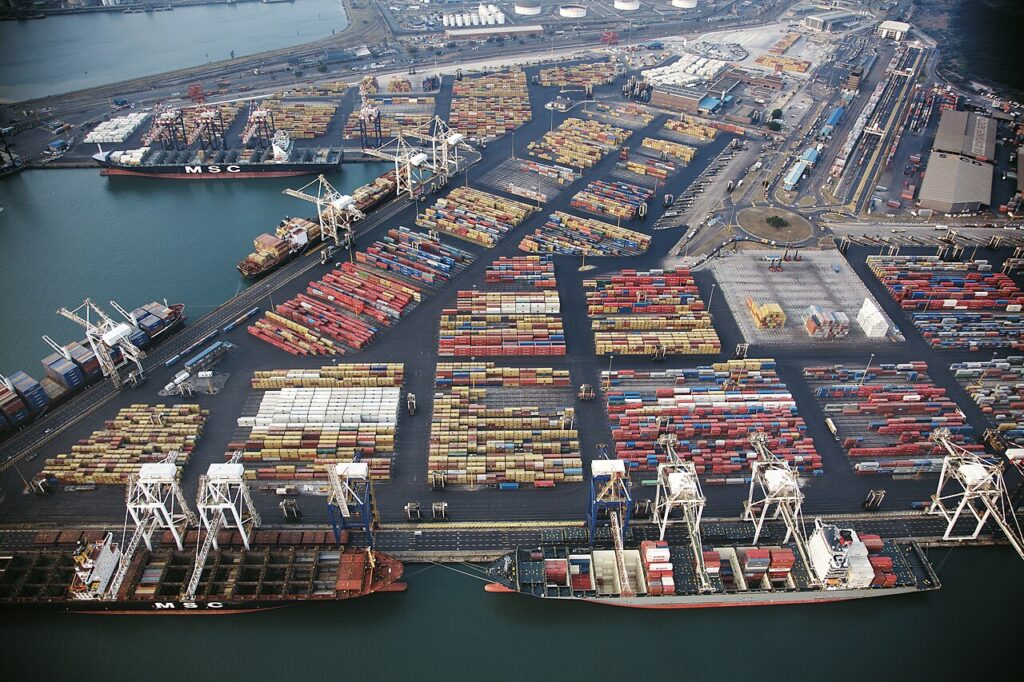
Washington has told Congress it intends to strip South Africa and Rwanda of duty-free access to the American market from January 1, 2027, ending a quarter-century-old preference. The announcement came late on Monday from the Office of the United States Trade Representative (USTR), a day before Americans vote in the midterms.
The programme at stake is the African Growth and Opportunity Act, known as AGOA. Enacted in 2000, it lets eligible sub-Saharan African countries export more than 1,800 products to the United States without import duties. Membership is reviewed every year.
US Trade Representative Jamieson Greer said President Donald Trump had notified Congress and both governments of his intention to terminate their eligibility. “President Trump found that the governments of Rwanda and South Africa are engaging in practices that are inconsistent with AGOA’s eligibility criteria,” Greer said. “These concerning and pervasive practices include, but are not limited to, barriers that undermine American trade and investment and practices that pose a threat to US national security and foreign policy interests in the region.”
Washington’s stated concerns differ by country. For South Africa, it cited trade and investment barriers, corruption, and threats to American national security and foreign-policy interests; for Rwanda, trade and investment barriers, the rule of law, political pluralism, workers’ rights and human rights. Greer added that the administration was “working to ensure our African partners take the necessary steps to meet the eligibility criteria” — leaving the door open to a return.
Losing AGOA does not mean losing the American market: South African goods will still cross the Atlantic, but at America’s standard tariffs instead of duty-free. Agricultural economist Wandile Sihlobo has noted that some products could face an additional tariff of about 3.4 percentage points, taking the total duty on certain goods from around 12.5% to roughly 15.9%.
South Africa has the most to lose. It has been AGOA’s largest beneficiary, accounting for 54% of the programme’s exports to the US over the past 25 years, and it shipped about $1.7 billion worth of goods to America under the deal in 2025 — roughly a tenth of everything it sells to the US. Vehicles and parts, citrus and fruit, wine, nuts, steel and ferroalloys travelled duty-free. Estimates reported in South African coverage put potential job losses at around 3,000 in agriculture and manufacturing, and close to 10,000 across the economy.
Rwanda’s exposure is smaller but concentrated: coffee is among its best-known US exports, and the country has been through an AGOA suspension before, in 2018. Kigali had no immediate reaction to Monday’s announcement. It comes barely a week after the US Treasury sanctioned Rwanda’s defence ministry, accusing it of directing troops to fight alongside M23 rebels in eastern Democratic Republic of Congo.
Pretoria, braced for bad news, moved quickly to calm nerves. Late on Monday, South Africa’s trade ministry said it would support the affected sectors and keep pursuing trade and investment with the United States. “AGOA remains important to South Africa, but it does not constitute the totality of the economic relationship between South Africa and the United States,” it said. Trade Minister Parks Tau had said on Friday that the country was ready for whatever Washington decided; President Cyril Ramaphosa had earlier told South Africans to prepare for an adverse decision. It follows a string of American trade measures this year — Washington waived a Russia sanctions bill last month, sparing India and China 100% tariffs.
The rupture caps a sharp deterioration in relations since Trump returned to the White House in 2025. Washington froze assistance to South Africa and accused its government of persecuting white Afrikaner farmers — an allegation Pretoria rejects. Foreign Minister Ronald Lamola said last month the country was preparing for the “worst-case scenario” on AGOA but would not “surrender its sovereignty” to American demands. US ambassador to South Africa L. Brent Bozell III wrote on X on Monday that it was “regrettable that South African policies led to the termination of AGOA for South Africa.”
Why this matters beyond the two countries: AGOA was designed to pull African economies toward export-led growth instead of aid, and cutting its biggest user tells other beneficiaries the preference now comes with political strings attached. For American shoppers the effect will be quieter — slightly dearer citrus, wine and cars — but for the workers who pick, pack and assemble those goods, the duty-free margin can decide whether an order stays in Durban or moves to a rival port. Other African exporters will watch whether Pretoria’s 60-day notice window produces a negotiation — or simply a deadline.
The termination takes effect on January 1, 2027. Whether either country addresses Washington’s concerns in the notice window, and whether a future Congress revisits the programme, will decide if this is a suspension or a permanent break.