The United States attacked Iran’s Qeshm Island on Monday, the Wall Street Journal reported, citing US officials — the latest in a series of limited strikes Washington has secretly carried out against Iran in recent weeks, even as President Donald Trump publicly talked up the chance of a deal.
Reuters, reporting the Journal’s account, said the report followed several explosions on the island, which sits at the mouth of the Strait of Hormuz, according to Iran’s state news agency IRNA. Other reports put the number of blasts at up to six, heard on Qeshm and near Bandar Abbas and Bandar Lengeh. Israeli broadcaster N12 reported that a US strike hit an air defence system on the island, but that detail has not been independently verified, and neither Washington nor Tehran has publicly confirmed the cause of the explosions. No casualty or damage figure has been confirmed. The Pentagon referred questions to US Central Command, which did not immediately respond.
The timing is what makes Monday’s disclosure so striking. Asked by reporters on Monday whether he was considering striking Iran after Tuesday’s midterm elections, Trump answered with a single word: “No.” He told reporters that Iran wanted a settlement as soon as possible and that an agreement “could happen”, adding: “We had a war with Iran. We won.” That public message — a president closing his midterm campaign by declaring the war over and won — sat alongside a private campaign that, according to the Journal, had never actually stopped.
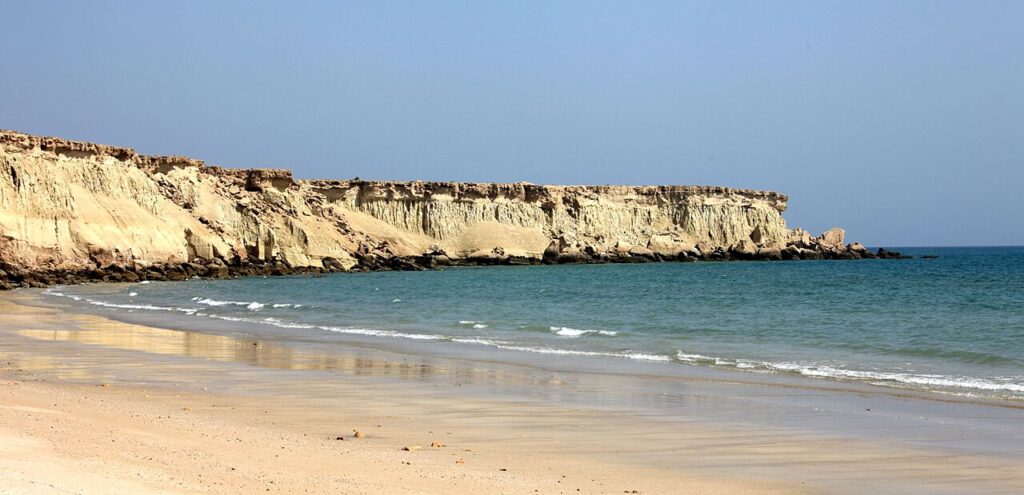
Qeshm is not a random target. It is the largest island in the Persian Gulf, lying just off Iran’s southern coast at the entrance to the Strait of Hormuz, the narrow waterway through which a large share of the world’s seaborne oil passes. The island is home to a large underground missile site, a naval base and a major desalination plant, the Journal reported, and the US has targeted it in earlier rounds of the fighting. US officials have also previously discussed seizing it.
Some of the officials who spoke to the Journal described the secret strikes as defensive: they are meant, in that account, to stop Iran from having the freedom to attack commercial ships in the strait. Unlike the earlier, loudly announced rounds of the war, these attacks have not been publicly announced. One official said the campaign has been kept quiet on purpose, so as not to signal any intention of resuming major combat operations.
The disclosure also lands in the middle of a negotiation that has not yet produced a deal. Iranian negotiators spent days in Doha talking to Qatari mediators, and those talks ended on Monday with altered proposals but no breakthrough, though Tehran said contact with Washington was continuing. Iran’s foreign ministry spokesman, Esmail Baghaei, said “the ball is in the US court”. Iran has said its condensed seven-step plan would reopen the Strait of Hormuz if Washington ended its blockade of Iranian ports and waived sanctions on Iranian oil sales. Trump has repeated his bottom line: Iran must not acquire a nuclear weapon. The Journal also reported that Central Command chief Admiral Brad Cooper briefed Trump last week, and that Gulf nations have been told to prepare for a short and intense operation shortly after the election. Readers following this arc will recall the warnings to allies to brace for possible strikes after the midterms.
Two separate Monday claims should not be folded into the strike report. Iran’s Revolutionary Guards claimed they had shot down three US drones near the Strait of Hormuz, including two reconnaissance drones south of Qeshm. The US military has not confirmed those claims, and no link between them and the Qeshm explosions has been established. Treating an unverified claim as a confirmed shoot-down would repeat the mistake this site has avoided in earlier Hormuz reporting, where competing claims outran the evidence for days.
Why this matters goes beyond one island and one night of explosions. The Strait of Hormuz is the chokepoint for Gulf oil reaching the rest of the world, so fighting at its mouth moves oil prices and shipping insurance within hours — oil fell nearly 4% on Monday on hopes mediation might produce an opening, a rally the Qeshm news undercut. A war publicly declared over but privately still being fought is harder for voters, allies and markets to price than an open war. Monday’s report does not prove a wider war is coming. It proves the choice between war and deal is still live, the military option is being exercised in secret, and the next signal — from Central Command, from Tehran, or from the Qatari-mediated talks — will matter more than the reassurances of the last few days.